
用于减少呼吸道传染病传播的社区使用口罩的微观结构评估和建议。
Microstructural evaluation and recommendations for face masks in community use to reduce the transmission of respiratory infectious diseases.
机构信息
Aalto University, Department of Communications and Networking, Espoo, Finland.
Department of Physics, University of Jyväskylä, Jyväskylä, Finland.
出版信息
Comput Methods Programs Biomed. 2022 Nov;226:107154. doi: 10.1016/j.cmpb.2022.107154. Epub 2022 Sep 24.
BACKGROUND AND OBJECTIVE
Recommendations for the use of face masks to prevent and protect against the aerosols (≤5µm) and respiratory droplet particles (≥5µm), which can carry and transmit respiratory infections including severe acute respiratory syndrome coronavirus (SARS-CoV-2), have been in effect since the early stages of the coronavirus disease 2019 (COVID-19). The particle filtration efficiency (PFE) and air permeability are the most crucial factors affecting the level of pathogen transmission and breathability, i.e. wearer comfort, which should be investigated in detail.
METHODS
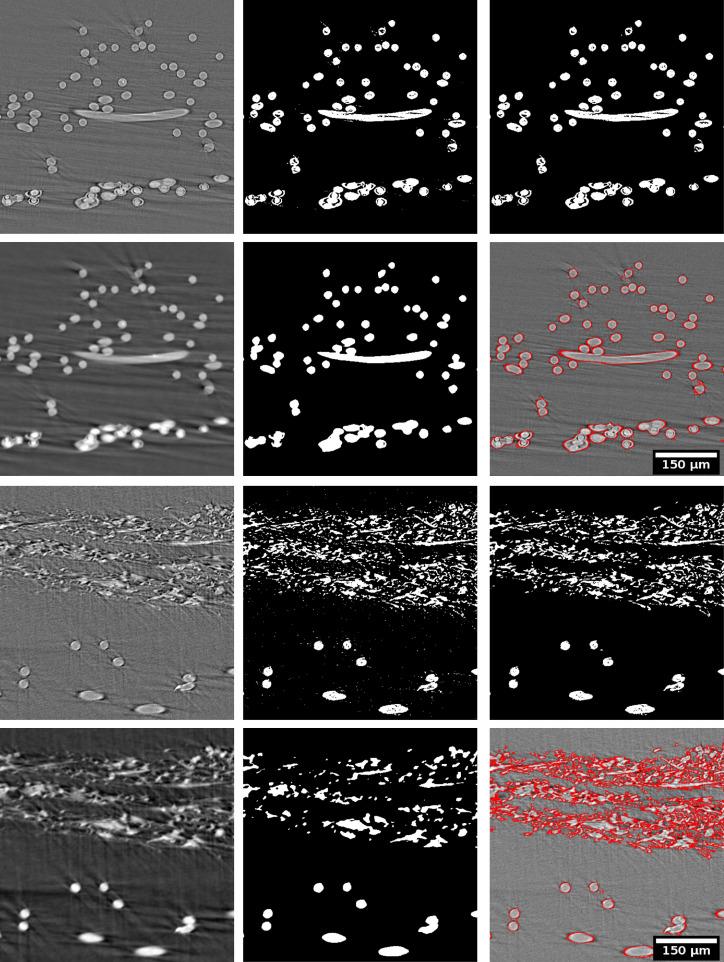
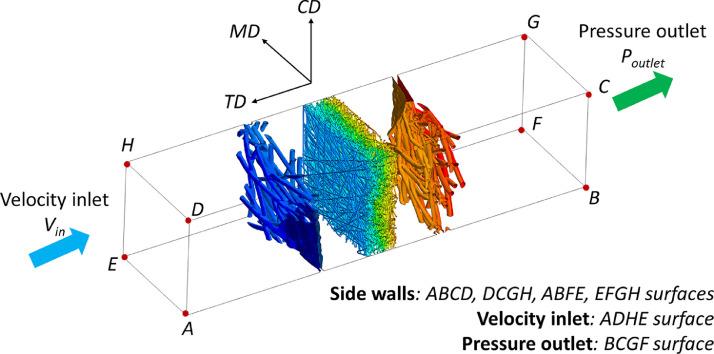
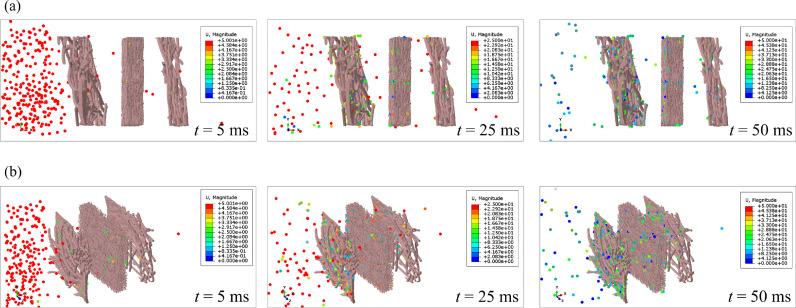
In this context, this article presents a novel assessment framework for face masks combining X-ray microtomography and computational fluid dynamics simulations. In consideration to their widespread public use, two types of face masks were assessed: (I) two layer non-woven face masks and (II) the surgical masks (made out of a melt-blown fabric layer covered with two non-woven fabric layers).
RESULTS
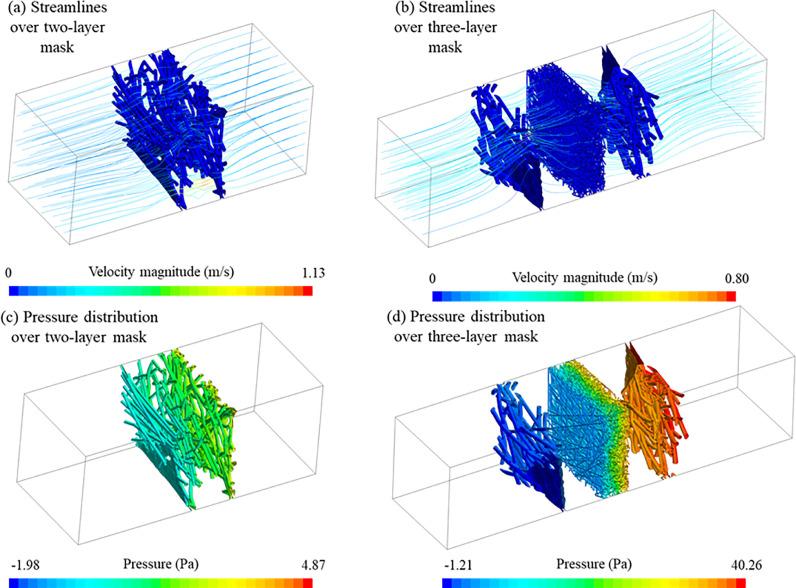
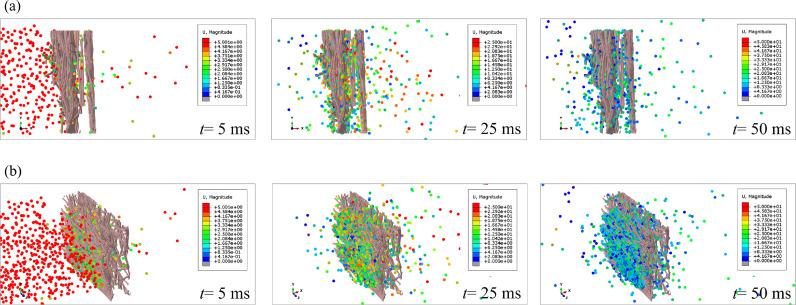
The results demonstrate that the surgical masks provide PFEs over 75% for particles with diameter over 0.1µm while two layer face masks are found out to have insufficient PFEs, even for the particles with diameter over 2µm (corresponding PFE is computed as 47.2%). Thus, existence of both the non-woven fabric layers for mechanical filtration and insertion of melt-blown fabric layer(s) for electrostatic filtration in the face masks were found to be highly critical to prevent the airborne pathogen transmission.
CONCLUSIONS
The present framework would assist in computational assessment of commonly used face mask types based on their microstructural characteristics including fiber diameter, orientation distributions and fiber network density. Therefore, it would be also possible to provide new yet feasible design routes for face masks to ensure reliable personal protection and optimal breathability.
背景与目的
自 2019 年冠状病毒病(COVID-19)早期以来,一直建议使用口罩来预防和保护气溶胶(≤5μm)和呼吸飞沫颗粒(≥5μm),这些颗粒可以携带和传播呼吸道感染,包括严重急性呼吸综合征冠状病毒(SARS-CoV-2)。颗粒过滤效率(PFE)和空气透过率是影响病原体传播和透气性(即佩戴者舒适度)水平的最重要因素,应进行详细研究。
方法
在这种情况下,本文提出了一种将 X 射线微断层扫描和计算流体动力学模拟相结合的新型口罩评估框架。考虑到它们的广泛公众使用,评估了两种类型的口罩:(I)两层非织造布口罩和(II)外科口罩(由熔喷织物层覆盖两层非织造布层制成)。
结果
结果表明,外科口罩对直径大于 0.1μm 的颗粒的 PFE 超过 75%,而两层口罩的 PFE 不足,即使对于直径大于 2μm 的颗粒也是如此(计算得出的相应 PFE 为 47.2%)。因此,口罩中存在非织造织物层用于机械过滤以及插入熔喷织物层(多个)用于静电过滤对于防止空气传播病原体的传播非常关键。
结论
本框架将有助于根据常用口罩类型的微观结构特征(包括纤维直径、取向分布和纤维网络密度)进行计算评估。因此,也有可能为口罩提供新的可行设计途径,以确保可靠的个人保护和最佳的透气性。




 Zotero 插件