
基于转录组学研究鉴定 2 型糖尿病颈动脉粥样硬化斑块相关的潜在生物标志物和通路。
Identification of potential biomarkers and pathways associated with carotid atherosclerotic plaques in type 2 diabetes mellitus: A transcriptomics study.
机构信息
Department of Very Important People (VIP) Unit, China-Japan Union Hospital of Jilin University, Changchun, China.
Department of Endocrinology, China-Japan Union Hospital of Jilin University, Changchun, China.
出版信息
Front Endocrinol (Lausanne). 2022 Sep 16;13:981100. doi: 10.3389/fendo.2022.981100. eCollection 2022.
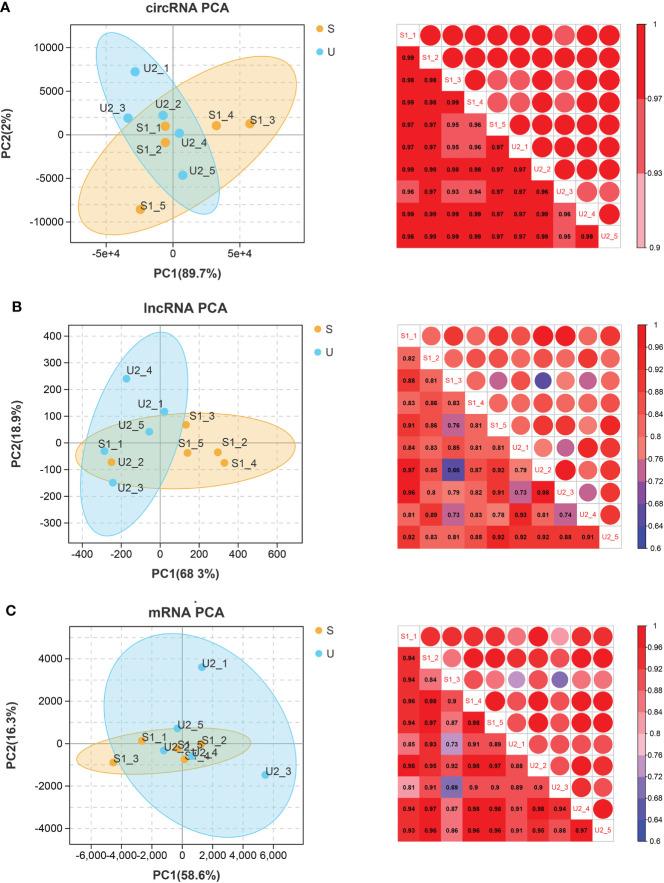
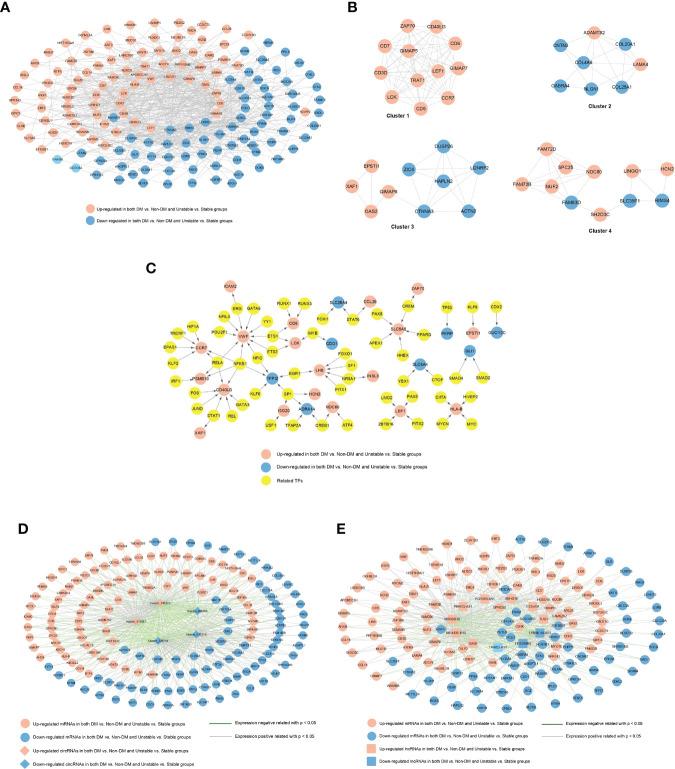
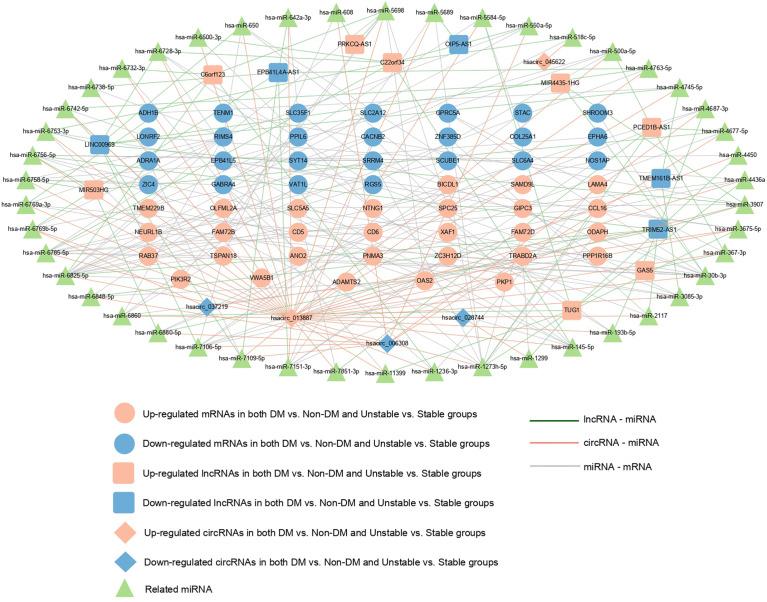
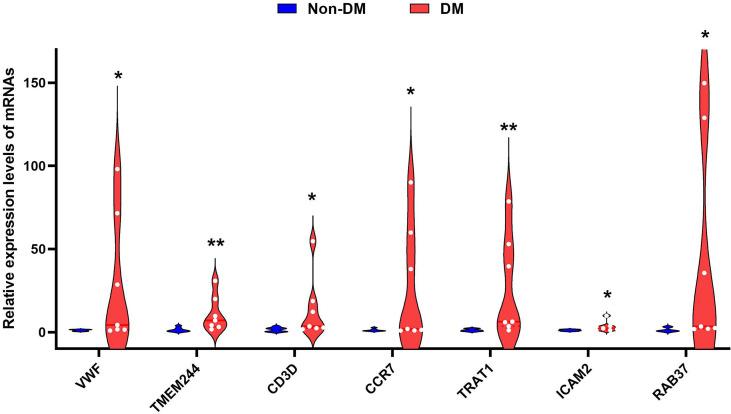
Type 2 diabetes mellitus (T2DM) affects the formation of carotid atherosclerotic plaques (CAPs) and patients are prone to plaque instability. It is crucial to clarify transcriptomics profiles and identify biomarkers related to the progression of T2DM complicated by CAPs. Ten human CAP samples were obtained, and whole transcriptome sequencing (RNA-seq) was performed. Samples were divided into two groups: diabetes mellitus (DM) versus non-DM groups and unstable versus stable groups. The Limma package in R was used to identify lncRNAs, circRNAs, and mRNAs. Gene Ontology (GO) annotation and Kyoto Encyclopedia of Genes and Genomes (KEGG) pathway analyses, protein-protein interaction (PPI) network creation, and module generation were performed for differentially expressed mRNAs. Cytoscape was used to create a transcription factor (TF)-mRNA regulatory network, lncRNA/circRNA-mRNA co-expression network, and a competitive endogenous RNA (ceRNA) network. The GSE118481 dataset and RT-qPCR were used to verify potential mRNAs.The regulatory network was constructed based on the verified core genes and the relationships were extracted from the above network. In total, 180 differentially expressed lncRNAs, 343 circRNAs, and 1092 mRNAs were identified in the DM versus non-DM group; 240 differentially expressed lncRNAs, 390 circRNAs, and 677 mRNAs were identified in the unstable versus stable group. Five circRNAs, 14 lncRNAs, and 171 mRNAs that were common among all four groups changed in the same direction. GO/KEGG functional enrichment analysis showed that 171 mRNAs were mainly related to biological processes, such as immune responses, inflammatory responses, and cell adhesion. Five circRNAs, 14 lncRNAs, 46 miRNAs, and 54 mRNAs in the ceRNA network formed a regulatory relationship. C22orf34-hsa-miR-6785-5p-RAB37, hsacirc_013887-hsa-miR-6785-5p/hsa-miR-4763-5p/hsa-miR-30b-3p-RAB37, MIR4435-1HG-hsa-miR-30b-3p-RAB37, and GAS5-hsa-miR-30b-3p-RAB37 may be potential RNA regulatory pathways. Seven upregulated mRNAs were verified using the GSE118481 dataset and RT-qPCR. The regulatory network included seven mRNAs, five circRNAs, six lncRNAs, and 14 TFs. We propose five circRNAs (hsacirc_028744, hsacirc_037219, hsacirc_006308, hsacirc_013887, and hsacirc_045622), six lncRNAs (EPB41L4A-AS1, LINC00969, GAS5, MIR4435-1HG, MIR503HG, and SNHG16), and seven mRNAs (RAB37, CCR7, CD3D, TRAT1, VWF, ICAM2, and TMEM244) as potential biomarkers related to the progression of T2DM complicated with CAP. The constructed ceRNA network has important implications for potential RNA regulatory pathways.
2 型糖尿病(T2DM)影响颈动脉粥样硬化斑块(CAPs)的形成,患者易发生斑块不稳定。阐明 T2DM 合并 CAP 进展的转录组谱并鉴定相关生物标志物至关重要。本研究获取了 10 个人类 CAP 样本,进行全转录组测序(RNA-seq)。将样本分为糖尿病(DM)与非 DM 组和不稳定与稳定组。使用 R 中的 Limma 包鉴定 lncRNA、circRNA 和 mRNA。进行基因本体论(GO)注释和京都基因与基因组百科全书(KEGG)通路分析、蛋白质-蛋白质相互作用(PPI)网络构建和模块生成,以鉴定差异表达的 mRNAs。使用 Cytoscape 创建转录因子(TF)-mRNA 调控网络、lncRNA/circRNA-mRNA 共表达网络和竞争性内源 RNA(ceRNA)网络。使用 GSE118481 数据集和 RT-qPCR 验证潜在的 mRNAs。基于验证的核心基因构建调控网络,并从上述网络中提取关系。在 DM 与非 DM 组中,鉴定到 180 个差异表达的 lncRNA、343 个 circRNA 和 1092 个 mRNA;在不稳定与稳定组中,鉴定到 240 个差异表达的 lncRNA、390 个 circRNA 和 677 个 mRNA。四个组共有的 5 个 circRNA、14 个 lncRNA 和 171 个 mRNA 变化方向一致。GO/KEGG 功能富集分析表明,171 个 mRNA 主要与免疫反应、炎症反应和细胞黏附等生物学过程有关。ceRNA 网络中的 5 个 circRNA、14 个 lncRNA、46 个 miRNA 和 54 个 mRNA 形成了调控关系。C22orf34-hsa-miR-6785-5p-RAB37、hsacirc_013887-hsa-miR-6785-5p/hsa-miR-4763-5p/hsa-miR-30b-3p-RAB37、MIR4435-1HG-hsa-miR-30b-3p-RAB37、GAS5-hsa-miR-30b-3p-RAB37 可能是潜在的 RNA 调控途径。使用 GSE118481 数据集和 RT-qPCR 验证了 7 个上调的 mRNAs。调控网络包括 7 个 mRNAs、5 个 circRNA、6 个 lncRNA 和 14 个 TF。我们提出了 5 个 circRNA(hsacirc_028744、hsacirc_037219、hsacirc_006308、hsacirc_013887 和 hsacirc_045622)、6 个 lncRNA(EPB41L4A-AS1、LINC00969、GAS5、MIR4435-1HG、MIR503HG 和 SNHG16)和 7 个 mRNAs(RAB37、CCR7、CD3D、TRAT1、VWF、ICAM2 和 TMEM244)作为与 T2DM 合并 CAP 进展相关的潜在生物标志物。构建的 ceRNA 网络对潜在的 RNA 调控途径具有重要意义。




 Zotero 插件