
X射线辐射对阿帕替尼在大鼠体内药代动力学的影响。
Effect of X-ray radiation on the pharmacokinetics of apatinib in rats.
作者信息
Dong Shi-Qi, Yang Fan, Zhang Dong-Xu, Wang Ling-Mei, Liu Jian-Feng, Zhang Ai-Jie, Fan Hui-Rong
机构信息
Key Laboratory of Radiopharmacokinetics for Innovative Drugs, Chinese Academy of Medical Sciences and Institute of Radiation Medicine, Chinese Academy of Medical Sciences and Peking Union Medical College, Tianjin, China.
出版信息
Front Pharmacol. 2022 Sep 12;13:943812. doi: 10.3389/fphar.2022.943812. eCollection 2022.
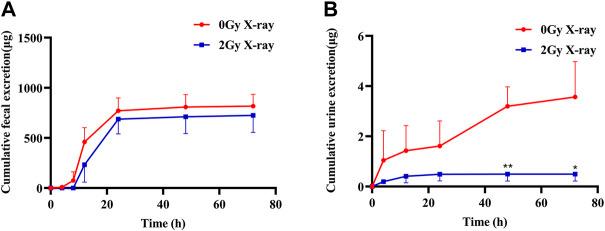
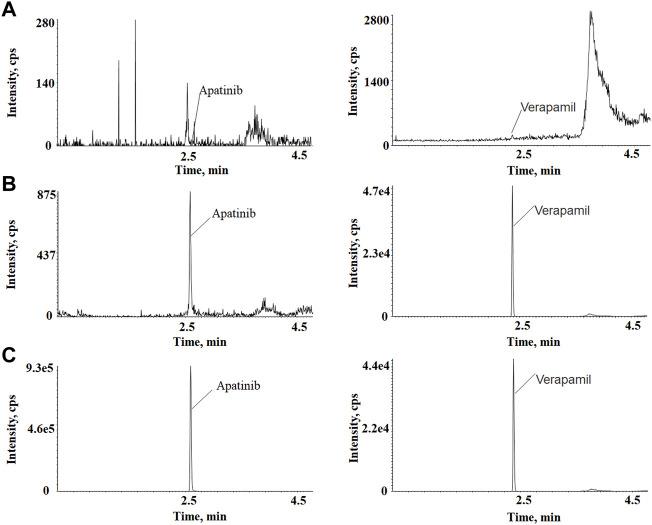
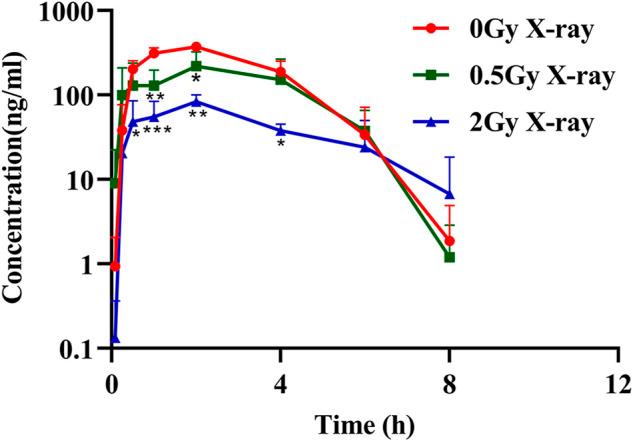
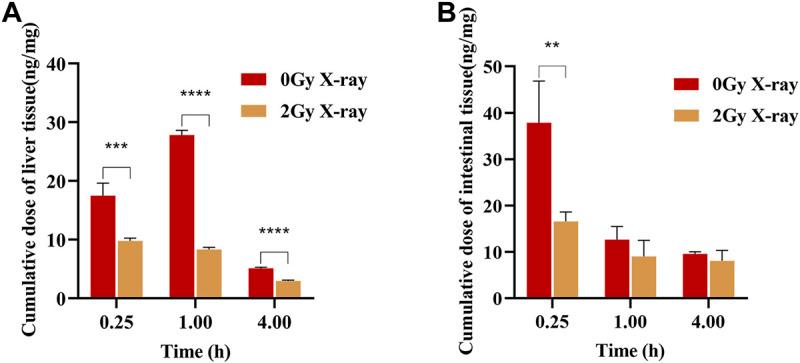
The "radiotherapy-pharmacokinetic" ("RT-PK") phenomenon refers to the fact that radiation can significantly alter the pharmacokinetic behavior of a drug. At present, it is not clear whether there is an "RT-PK" phenomenon that can affect apatinib during concurrent chemoradiotherapy. In this study, we used a rat irradiation model to study the effects of X-ray radiation on absorption, tissue distribution, and excretion of apatinib. Healthy Sprague-Dawley (SD) rats were randomly divided into control and radiation groups. The radiation group was given an appropriate dose of abdominal X-ray radiation, while the control group was not given irradiation. After 24 h of recovery, both groups were given apatinib solution 45 mg/kg by gavage. A quantitative LC-MS/MS method was developed to determine the concentration of apatinib in the rats, so as to compare the differences between the control and radiation groups and thus investigate the modulating effect of radiation on the pharmacokinetics of apatinib in rats. After abdominal X-ray irradiation, the area under the curve (AUC) of apatinib in rat plasma decreased by 33.8% and 76.3% at 0.5 and 2 Gy, respectively. Clearance (CL) and volume of distribution (Vd) increased and were positively correlated with radiation dose. X-ray radiation significantly reduced the concentration of apatinib in the liver and small intestine, and there was no tissue accumulation. In excretion studies, we found that X-ray radiation reduced the cumulative excretion of apatinib in feces and urine by 11.24% and 86.17%, respectively. Abdominal X-ray radiation decreased plasma exposure, tissue distribution, and excretion of apatinib in rats, suggesting that the RT-PK phenomenon affects apatinib. We speculate that this RT-PK phenomenon is closely related to changes in metabolic enzymes . In clinical practice, when apatinib is combined with radiotherapy, attention should be paid to adjusting the dose of apatinib and optimizing the treatment plan to alleviate the adverse effects of this RT-PK phenomenon.
“放疗-药代动力学”(“RT-PK”)现象是指辐射可显著改变药物的药代动力学行为。目前,尚不清楚在同步放化疗期间是否存在影响阿帕替尼的“RT-PK”现象。在本研究中,我们使用大鼠照射模型来研究X射线辐射对阿帕替尼吸收、组织分布和排泄的影响。将健康的Sprague-Dawley(SD)大鼠随机分为对照组和辐射组。辐射组给予适当剂量的腹部X射线辐射,而对照组不给予照射。恢复24小时后,两组均通过灌胃给予45mg/kg的阿帕替尼溶液。建立了一种定量LC-MS/MS方法来测定大鼠体内阿帕替尼的浓度,以比较对照组和辐射组之间的差异,从而研究辐射对大鼠阿帕替尼药代动力学的调节作用。腹部X射线照射后,大鼠血浆中阿帕替尼的曲线下面积(AUC)在0.5和2Gy时分别下降了33.8%和76.3%。清除率(CL)和分布容积(Vd)增加,且与辐射剂量呈正相关。X射线辐射显著降低了肝脏和小肠中阿帕替尼的浓度,且无组织蓄积。在排泄研究中,我们发现X射线辐射分别使阿帕替尼在粪便和尿液中的累积排泄减少了11.24%和86.17%。腹部X射线辐射降低了大鼠体内阿帕替尼的血浆暴露、组织分布和排泄,表明RT-PK现象影响阿帕替尼。我们推测这种RT-PK现象与代谢酶的变化密切相关。在临床实践中,当阿帕替尼与放疗联合使用时,应注意调整阿帕替尼的剂量并优化治疗方案,以减轻这种RT-PK现象的不良反应。
 Zotero 插件