
MCL-1 是癌症依赖脂肪酸氧化的主要调节因子。
MCL-1 is a master regulator of cancer dependency on fatty acid oxidation.
机构信息
Department of Pediatric Oncology and Linde Program in Cancer Chemical Biology, Dana-Farber Cancer Institute, Boston, MA 02215, USA.
Department of Cancer Biology, Dana-Farber Cancer Institute, Boston, MA 02215, USA; Department of Cell Biology, Harvard Medical School, Boston, MA 02115, USA.
出版信息
Cell Rep. 2022 Oct 4;41(1):111445. doi: 10.1016/j.celrep.2022.111445.
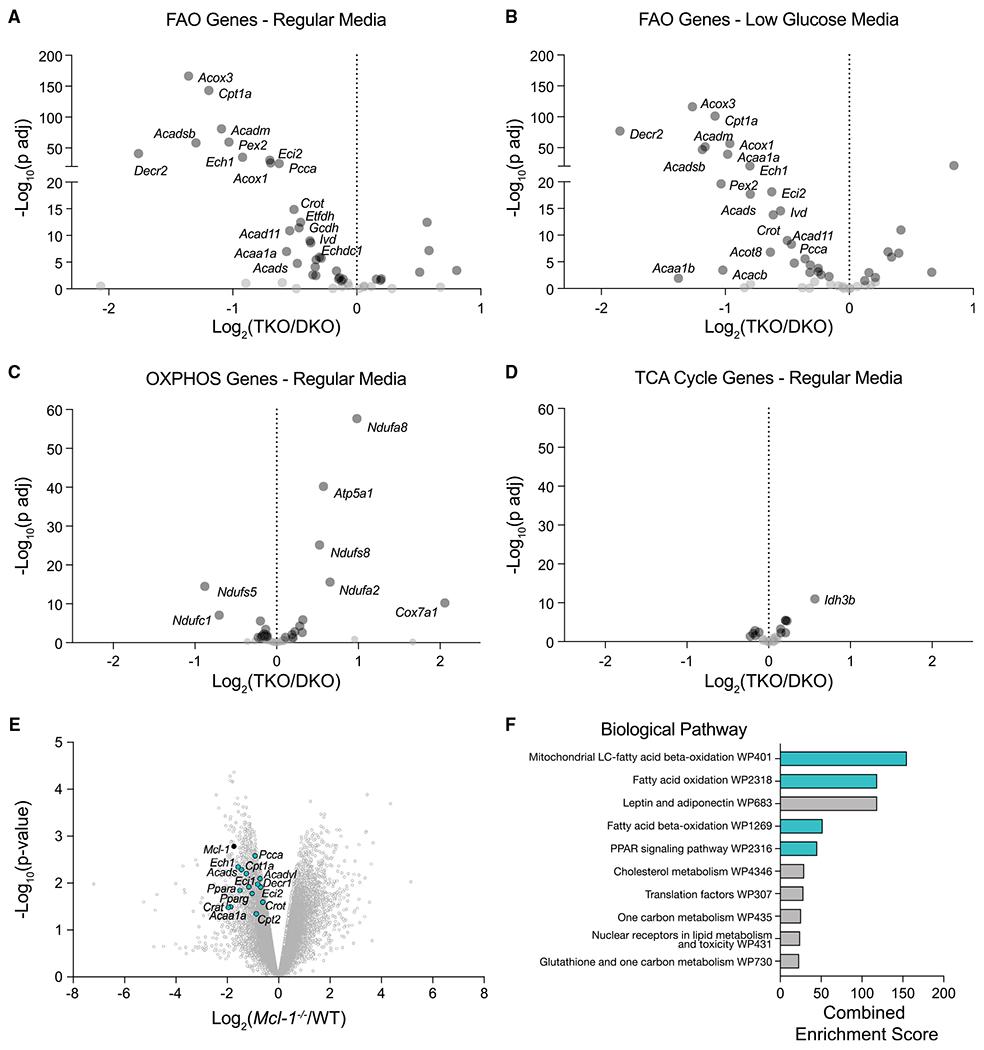
MCL-1 is an anti-apoptotic BCL-2 family protein essential for survival of diverse cell types and is a major driver of cancer and chemoresistance. The mechanistic basis for the oncogenic supremacy of MCL-1 among its anti-apoptotic homologs is unclear and implicates physiologic roles of MCL-1 beyond apoptotic suppression. Here we find that MCL-1-dependent hematologic cancer cells specifically rely on fatty acid oxidation (FAO) as a fuel source because of metabolic wiring enforced by MCL-1 itself. We demonstrate that FAO regulation by MCL-1 is independent of its anti-apoptotic activity, based on metabolomic, proteomic, and genomic profiling of MCL-1-dependent leukemia cells lacking an intact apoptotic pathway. Genetic deletion of Mcl-1 results in transcriptional downregulation of FAO pathway proteins such that glucose withdrawal triggers cell death despite apoptotic blockade. Our data reveal that MCL-1 is a master regulator of FAO, rendering MCL-1-driven cancer cells uniquely susceptible to treatment with FAO inhibitors.
MCL-1 是一种抗凋亡 BCL-2 家族蛋白,对多种细胞类型的存活至关重要,是癌症和化疗耐药性的主要驱动因素。MCL-1 在其抗凋亡同源物中具有致癌优势的机制基础尚不清楚,这暗示了 MCL-1 在凋亡抑制之外的生理作用。在这里,我们发现依赖 MCL-1 的血液系统癌症细胞由于 MCL-1 自身强制的代谢布线,特别依赖脂肪酸氧化 (FAO) 作为燃料来源。我们证明,MCL-1 对 FAO 的调节与其抗凋亡活性无关,这是基于缺乏完整凋亡途径的依赖 MCL-1 的白血病细胞的代谢组学、蛋白质组学和基因组学分析。Mcl-1 的基因缺失导致 FAO 途径蛋白的转录下调,因此尽管存在凋亡阻断,葡萄糖耗尽仍会触发细胞死亡。我们的数据表明,MCL-1 是 FAO 的主要调节因子,使 MCL-1 驱动的癌细胞对 FAO 抑制剂的治疗特别敏感。



 Zotero 插件