
重度抑郁症的分子途径集中在突触上。
Molecular pathways of major depressive disorder converge on the synapse.
机构信息
Translational Psychiatry Program, Faillace Department of Psychiatry and Behavioral Sciences, The University of Texas Health Science Center at Houston, 1941 East Rd, Houston, TX, 77054, USA.
Neuroscience Graduate Program, The University of Texas MD Anderson Cancer Center UTHealth Graduate School of Biomedical Sciences, 6767 Bertner Ave, Houston, TX, 77030, USA.
出版信息
Mol Psychiatry. 2023 Jan;28(1):284-297. doi: 10.1038/s41380-022-01806-1. Epub 2022 Oct 6.
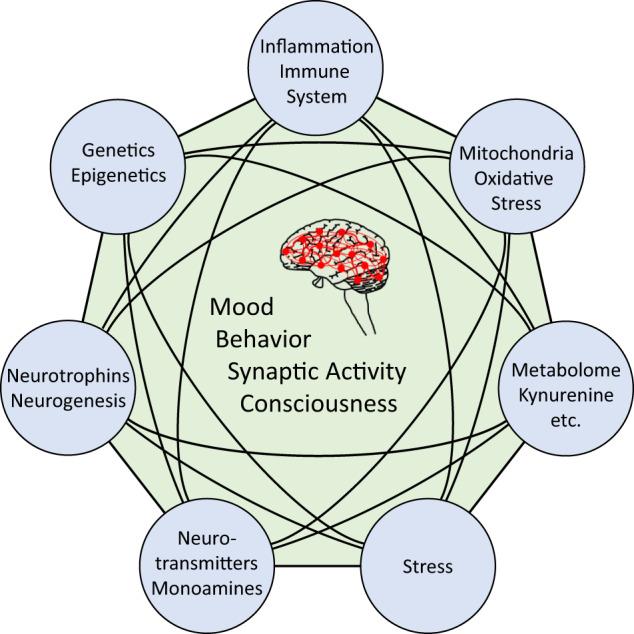
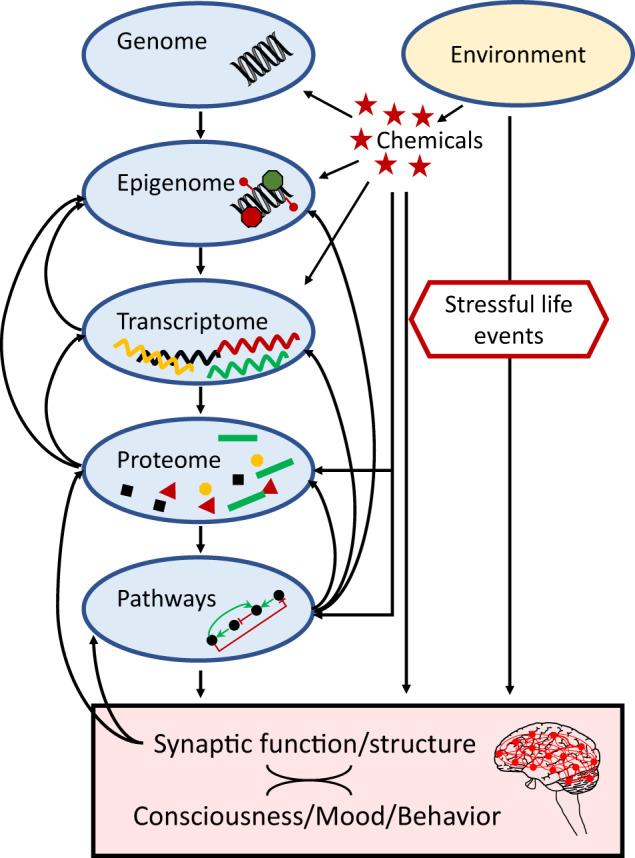
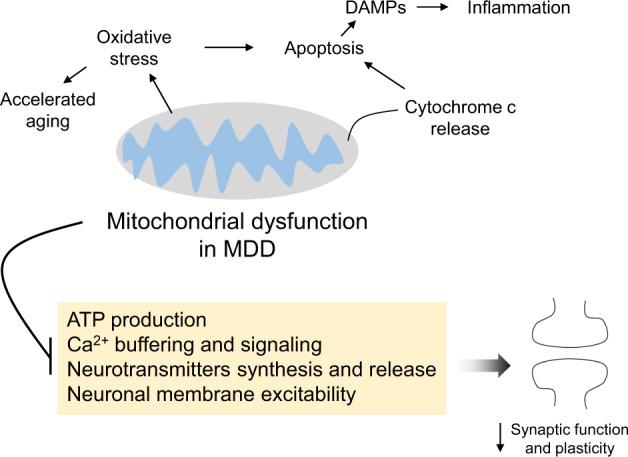
Major depressive disorder (MDD) is a psychiatric disease of still poorly understood molecular etiology. Extensive studies at different molecular levels point to a high complexity of numerous interrelated pathways as the underpinnings of depression. Major systems under consideration include monoamines, stress, neurotrophins and neurogenesis, excitatory and inhibitory neurotransmission, mitochondrial dysfunction, (epi)genetics, inflammation, the opioid system, myelination, and the gut-brain axis, among others. This review aims at illustrating how these multiple signaling pathways and systems may interact to provide a more comprehensive view of MDD's neurobiology. In particular, considering the pattern of synaptic activity as the closest physical representation of mood, emotion, and conscience we can conceptualize, each pathway or molecular system will be scrutinized for links to synaptic neurotransmission. Models of the neurobiology of MDD will be discussed as well as future actions to improve the understanding of the disease and treatment options.
重度抑郁症(MDD)是一种发病机制尚不清楚的精神疾病。在不同分子水平上的广泛研究表明,许多相互关联的通路的高度复杂性是抑郁症的基础。主要考虑的系统包括单胺、应激、神经营养因子和神经发生、兴奋性和抑制性神经传递、线粒体功能障碍、(表观)遗传学、炎症、阿片系统、髓鞘形成和肠脑轴等。本文旨在说明这些多种信号通路和系统如何相互作用,以提供对 MDD 神经生物学的更全面的认识。特别是,考虑到突触活动模式作为情绪、情感和意识的最接近的物理表现,我们可以将每个通路或分子系统与突触神经传递联系起来进行分析。本文还将讨论 MDD 的神经生物学模型以及改善对疾病的理解和治疗选择的未来措施。



 Zotero 插件