
NLRP3 炎性小体作为治疗呼吸障碍的新靶点。
The NLRP3 inflammasome as a new target in respiratory disorders treatment.
机构信息
Laboratory of Microbiome Immunobiology, Hirszfeld Institute of Immunology and Experimental Therapy, Polish Academy of Sciences, Wrocław, Poland.
出版信息
Front Immunol. 2022 Sep 20;13:1006654. doi: 10.3389/fimmu.2022.1006654. eCollection 2022.
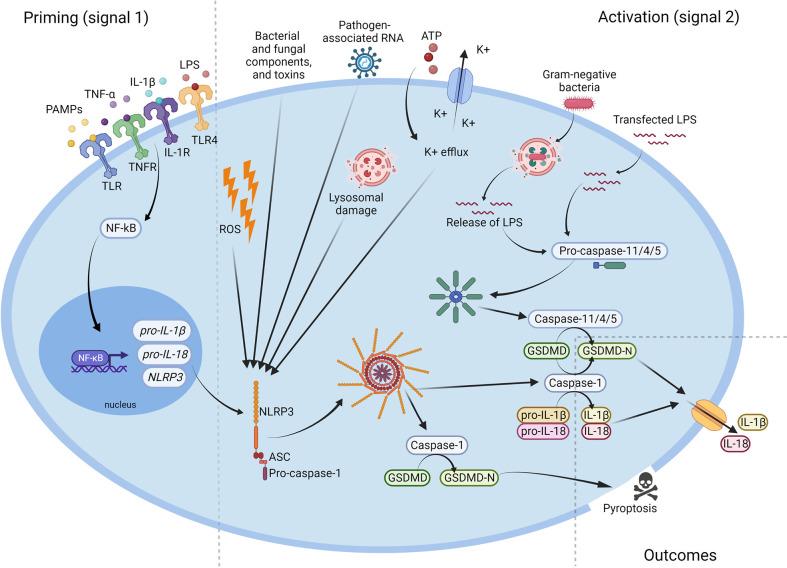
In recent years a continuous increase in new cases of respiratory disorders, such as rhinitis, asthma, and chronic obstructive pulmonary disease (COPD), has been observed. The exact pathomechanism of these diseases is still blurry, resulting in the lack of targeted and effective therapy. The conventional use of treatment strategies, such as antihistamine drugs and/or glucocorticosteroids act mainly symptomatically and have significant side effects. Specific allergen immunotherapy is only useful in the management of specific allergies and selected patients. Therefore, new therapeutic solutions are constantly being sought. The novelty of recent years has been the association between NLRP3 inflammasome activation and the development of airway inflammatory diseases. This seems to be an interesting therapeutic target that may support or even replace traditional therapies in the future. The review presented, discusses the contribution of NLRP3 inflammasome to the development of allergic rhinitis, allergic asthma, and COPD. Moreover, the modulatory properties of probiotics as potential inhibitors of NLRP3 inflammasome are emphasised.
近年来,观察到呼吸道疾病(如鼻炎、哮喘和慢性阻塞性肺疾病(COPD))的新病例持续增加。这些疾病的确切发病机制仍不清楚,导致缺乏针对性和有效的治疗方法。传统的治疗策略,如抗组胺药和/或糖皮质激素,主要作用于症状,且具有显著的副作用。特异性过敏原免疫疗法仅对特定过敏和特定患者有用。因此,人们一直在不断寻找新的治疗方法。近年来的新发现是 NLRP3 炎性小体激活与气道炎症性疾病发展之间的关联。这似乎是一个有趣的治疗靶点,将来可能支持甚至取代传统治疗方法。本文综述讨论了 NLRP3 炎性小体在过敏性鼻炎、过敏性哮喘和 COPD 发展中的作用。此外,还强调了益生菌作为 NLRP3 炎性体潜在抑制剂的调节特性。


 Zotero 插件