
基于体感系统的针刺治疗神经性疼痛的潜在机制。
Potential mechanisms of acupuncture for neuropathic pain based on somatosensory system.
作者信息
Ma Xin, Chen Wen, Yang Na-Na, Wang Lu, Hao Xiao-Wan, Tan Chun-Xia, Li Hong-Ping, Liu Cun-Zhi
机构信息
School of Acupuncture-Moxibustion and Tuina, Shandong University of Traditional Chinese Medicine, Jinan, China.
School of Acupuncture-Moxibustion and Tuina, International Acupuncture and Moxibustion Innovation Institute, Beijing University of Chinese Medicine, Beijing, China.
出版信息
Front Neurosci. 2022 Sep 20;16:940343. doi: 10.3389/fnins.2022.940343. eCollection 2022.
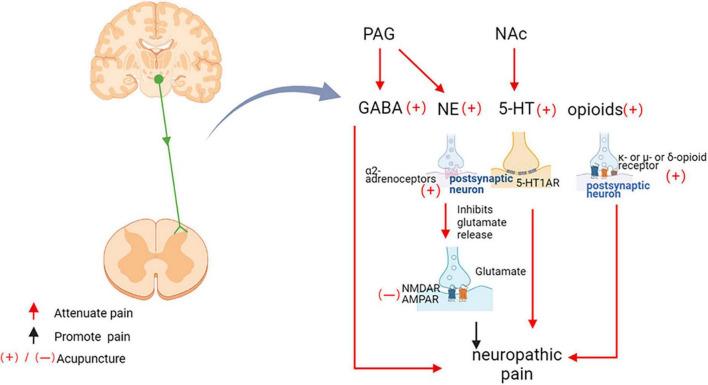
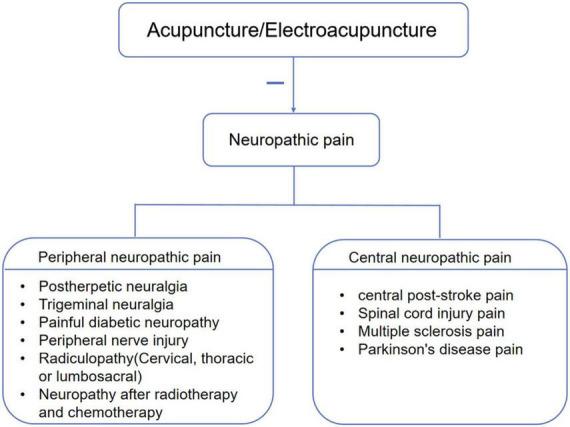
Neuropathic pain, caused by a lesion or disease of the somatosensory system, is common and distressing. In view of the high human and economic burden, more effective treatment strategies were urgently needed. Acupuncture has been increasingly used as an adjuvant or complementary therapy for neuropathic pain. Although the therapeutic effects of acupuncture have been demonstrated in various high-quality randomized controlled trials, there is significant heterogeneity in the underlying mechanisms. This review aimed to summarize the potential mechanisms of acupuncture on neuropathic pain based on the somatosensory system, and guided for future both foundational and clinical studies. Here, we argued that acupuncture may have the potential to inhibit neuronal activity caused by neuropathic pain, through reducing the activation of pain-related ion channels and suppressing glial cells (including microglia and astrocytes) to release inflammatory cytokines, chemokines, amongst others. Meanwhile, acupuncture as a non-pharmacologic treatment, may have potential to activate descending pain control system increasing the level of spinal or brain 5-hydroxytryptamine (5-HT), norepinephrine (NE), and opioid peptides. And the types of endogenously opioid peptides was influenced by electroacupuncture-frequency. The cumulative evidence demonstrated that acupuncture provided an alternative or adjunctive therapy for neuropathic pain.
由躯体感觉系统的损伤或疾病引起的神经性疼痛很常见且令人痛苦。鉴于其对人类和经济造成的沉重负担,迫切需要更有效的治疗策略。针灸已越来越多地被用作神经性疼痛的辅助或补充疗法。尽管针灸的治疗效果已在各种高质量的随机对照试验中得到证实,但其潜在机制仍存在显著异质性。本综述旨在总结基于躯体感觉系统的针灸治疗神经性疼痛的潜在机制,为未来的基础研究和临床研究提供指导。在此,我们认为针灸可能具有抑制神经性疼痛引起的神经元活动的潜力,其方式包括减少疼痛相关离子通道的激活以及抑制胶质细胞(包括小胶质细胞和星形胶质细胞)释放炎性细胞因子、趋化因子等。同时,针灸作为一种非药物治疗方法,可能具有激活下行疼痛控制系统的潜力,从而提高脊髓或大脑中5-羟色胺(5-HT)、去甲肾上腺素(NE)和阿片肽的水平。并且内源性阿片肽的类型受电针频率的影响。累积证据表明,针灸为神经性疼痛提供了一种替代或辅助治疗方法。




 Zotero 插件