
对重要药用植物布坎南氏植物(Buch.-Ham)的根和地上部分进行全面的植物化学、生物学和毒理学研究。
A comprehensive phytochemical, biological, and toxicological studies of roots and aerial parts of Buch.-Ham: An important medicinal plant.
作者信息
Anwar Sirajudheen, Faisal Nadeem Muhammad, Pervaiz Irfan, Khurshid Umair, Akmal Nimra, Aamir Khurram, Haseeb Ur Rehman Muhammad, Almansour Khaled, Alshammari Farhan, Shaikh Mohd Farooq, Locatelli Marcello, Ahemad Nafees, Saleem Hammad
机构信息
Department of Pharmacology and Toxicology, College of Pharmacy, University of Hail, Hail, Saudi Arabia.
Institute of Pharmaceutical Sciences (IPS), University of Veterinary and Animal Sciences (UVAS), Lahore, Pakistan.
出版信息
Front Plant Sci. 2022 Sep 16;13:988352. doi: 10.3389/fpls.2022.988352. eCollection 2022.
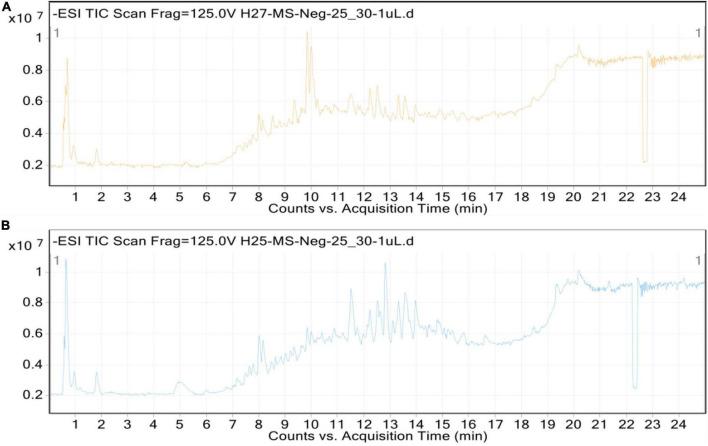
This study was designed to seek the phytochemical analysis, antioxidant, enzyme inhibition, and toxicity potentials of methanol and dichloromethane (DCM) extracts of aerial and root parts of . Total bioactive content, high-performance liquid chromatography-photodiode array detector (HPLC-PDA) polyphenolic quantification, and ultra-high performance liquid chromatography-mass spectrometry (UHPLC-MS) analysis were utilized to evaluate the phytochemical composition. Antioxidant [including 2,2-diphenyl-1-picryl-hydrazyl-hydrate (DPPH)], 2,2'-azino-bis[3-ethylbenzothiazoline-6-sulfonic acid (ABTS), ferric reducing antioxidant power assay (FRAP), cupric reducing antioxidant capacity CUPRAC, phosphomolybdenum, and metal chelation assays] and enzyme inhibition [against acetylcholinesterase (AChE), butyrylcholinesterase (BChE), α-glucosidase, α-amylase, and tyrosinase] assays were carried out for biological evaluation. The cytotoxicity was tested against MCF-7 and MDA-MB-231 breast cell lines. The root-methanol extract contained the highest levels of phenolics (37.69 mg gallic acid equivalent/g extract) and flavonoids (83.0 mg quercetin equivalent/g extract) contents, and was also the most active for DPPH (50.04 mg Trolox equivalent/g extract) and CUPRAC (139.96 mg Trolox equivalent /g extract) antioxidant assays. Likewise, the aerial-methanol extract exhibited maximum activity for ABTS (94.05 mg Trolox equivalent/g extract) and FRAP (64.23 mg Trolox equivalent/g extract) assays. The aerial-DCM extract was noted to be a convincing cholinesterase (AChE; 4.01 and BChE; 4.28 mg galantamine equivalent/g extract), and α-glucosidase inhibitor (1.92 mmol acarbose equivalent/g extract). All of the extracts exhibited weak to modest toxicity against the tested cell lines. A considerable quantities of gallic acid, catechin, 4-OH benzoic acid, syringic acid, vanillic acid, 3-OH-4-MeO benzaldehyde, epicatechin, -coumaric acid, rutin, naringenin, and carvacrol were quantified HPLC-PDA analysis. UHPLC-MS analysis of methanolic extracts from roots and aerial parts revealed the tentative identification of important phytoconstituents such as polyphenols, saponins, flavonoids, and glycoside derivatives. To conclude, this plant could be considered a promising source of origin for bioactive compounds with several therapeutic uses.
本研究旨在探寻[植物名称]地上部分和根部的甲醇提取物及二氯甲烷(DCM)提取物的植物化学分析、抗氧化、酶抑制及毒性潜力。利用总生物活性含量、高效液相色谱 - 光电二极管阵列检测器(HPLC - PDA)多酚定量分析以及超高效液相色谱 - 质谱联用(UHPLC - MS)分析来评估植物化学成分。通过抗氧化实验[包括2,2 - 二苯基 - 1 - 苦基肼基水合物(DPPH)、2,2'-联氮 - 双 - (3 - 乙基苯并噻唑啉 - 6 - 磺酸)(ABTS)、铁还原抗氧化能力测定(FRAP)、铜还原抗氧化能力(CUPRAC)、磷钼酸和金属螯合测定]以及酶抑制实验[针对乙酰胆碱酯酶(AChE)、丁酰胆碱酯酶(BChE)、α - 葡萄糖苷酶、α - 淀粉酶和酪氨酸酶]进行生物学评价。对MCF - 7和MDA - MB - 231乳腺癌细胞系进行细胞毒性测试。根部甲醇提取物的酚类含量最高(37.69毫克没食子酸当量/克提取物),黄酮类含量也最高(83.0毫克槲皮素当量/克提取物),并且在DPPH(50.04毫克 Trolox当量/克提取物)和CUPRAC(139.96毫克 Trolox当量/克提取物)抗氧化实验中也是活性最强的。同样,地上部分甲醇提取物在ABTS(94.05毫克 Trolox当量/克提取物)和FRAP(64.23毫克 Trolox当量/克提取物)实验中表现出最大活性。地上部分DCM提取物被发现是一种有效的胆碱酯酶(AChE;4.01和BChE;4.28毫克加兰他敏当量/克提取物)和α - 葡萄糖苷酶抑制剂(1.92毫摩尔阿卡波糖当量/克提取物)。所有提取物对测试细胞系均表现出弱至中等程度的毒性。通过HPLC - PDA分析定量了大量的没食子酸、儿茶素、4 - 羟基苯甲酸、丁香酸、香草酸、3 - 羟基 - 4 - 甲氧基苯甲醛、表儿茶素、对香豆酸、芦丁、柚皮苷和香芹酚。对根部和地上部分甲醇提取物的UHPLC - MS分析初步鉴定出了重要的植物成分,如多酚、皂苷、黄酮类和糖苷衍生物。总之,这种植物可被认为是具有多种治疗用途的生物活性化合物的有前景的来源。

 Zotero 插件