
慢性阻塞性肺疾病中氧化应激与自噬之间的相互作用。
The interplay between oxidative stress and autophagy in chronic obstructive pulmonary disease.
作者信息
Zhao Xiaoyu, Zhang Qiang, Zheng Rui
机构信息
Department of Pulmonary and Critical Care Medicine, Shengjing Hospital of China Medical University, Shenyang, China.
出版信息
Front Physiol. 2022 Sep 26;13:1004275. doi: 10.3389/fphys.2022.1004275. eCollection 2022.
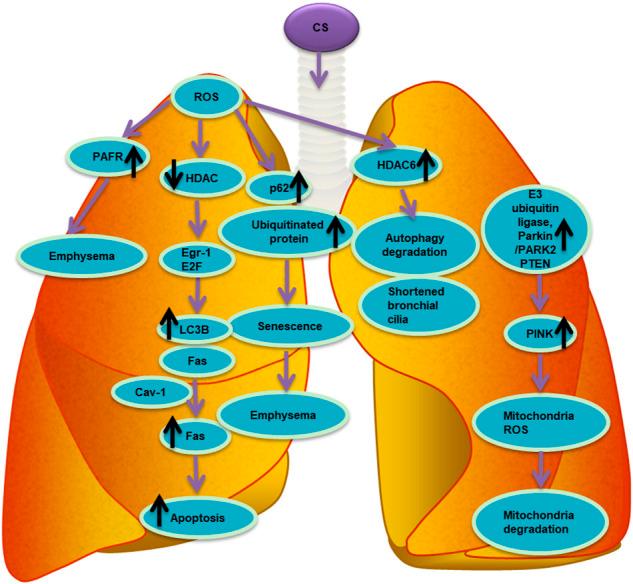
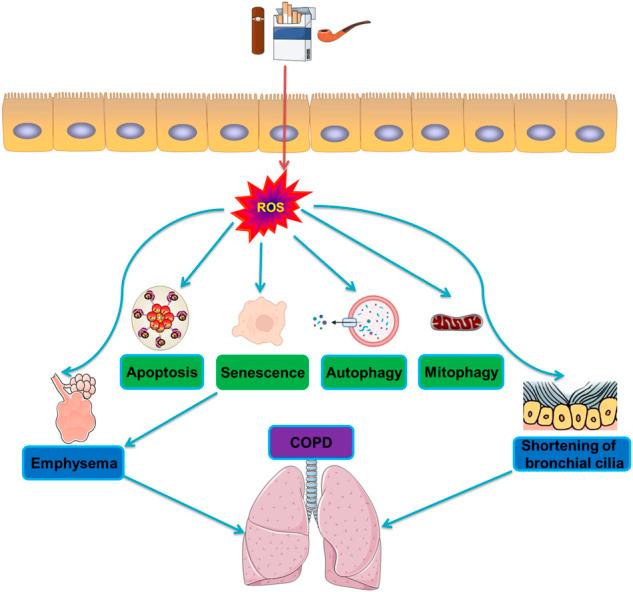
Autophagy is a highly conserved process that is indispensable for cell survival, embryonic development, and tissue homeostasis. Activation of autophagy protects cells against oxidative stress and is a major adaptive response to injury. When autophagy is dysregulated by factors such as smoking, environmental insults and aging, it can lead to enhanced formation of aggressors and production of reactive oxygen species (ROS), resulting in oxidative stress and oxidative damage to cells. ROS activates autophagy, which in turn promotes cell adaptation and reduces oxidative damage by degrading and circulating damaged macromolecules and dysfunctional cell organelles. The cellular response triggered by oxidative stress includes changes in signaling pathways that ultimately regulate autophagy. Chronic obstructive pulmonary disease (COPD) is the most common lung disease among the elderly worldwide, with a high mortality rate. As an induced response to oxidative stress, autophagy plays an important role in the pathogenesis of COPD. This review discusses the regulation of oxidative stress and autophagy in COPD, and aims to provide new avenues for future research on target-specific treatments for COPD.
自噬是一个高度保守的过程,对细胞存活、胚胎发育和组织稳态不可或缺。自噬的激活可保护细胞免受氧化应激,是对损伤的一种主要适应性反应。当自噬因吸烟、环境损伤和衰老等因素而失调时,会导致侵袭物形成增加和活性氧(ROS)产生,从而导致氧化应激和细胞氧化损伤。ROS激活自噬,自噬反过来通过降解和循环受损大分子及功能失调的细胞器来促进细胞适应并减少氧化损伤。氧化应激引发的细胞反应包括最终调节自噬的信号通路变化。慢性阻塞性肺疾病(COPD)是全球老年人中最常见的肺部疾病,死亡率很高。作为对氧化应激的一种诱导反应,自噬在COPD的发病机制中起重要作用。本综述讨论了COPD中氧化应激和自噬的调节,旨在为COPD靶向特异性治疗的未来研究提供新途径。


 Zotero 插件