
异常KCNN1表达与尤因肉瘤中渗透性超敏反应的相关性
Relevance of Abnormal KCNN1 Expression and Osmotic Hypersensitivity in Ewing Sarcoma.
作者信息
Fuest Sebastian, Post Christoph, Balbach Sebastian T, Jabar Susanne, Neumann Ilka, Schimmelpfennig Sandra, Sargin Sarah, Nass Elke, Budde Thomas, Kailayangiri Sareetha, Altvater Bianca, Ranft Andreas, Hartmann Wolfgang, Dirksen Uta, Rössig Claudia, Schwab Albrecht, Pethő Zoltán
机构信息
Institute of Physiology II, University Münster, 48149 Münster, Germany.
Department of Pediatric Hematology and Oncology, University Children's Hospital Münster, 48149 Münster, Germany.
出版信息
Cancers (Basel). 2022 Oct 1;14(19):4819. doi: 10.3390/cancers14194819.
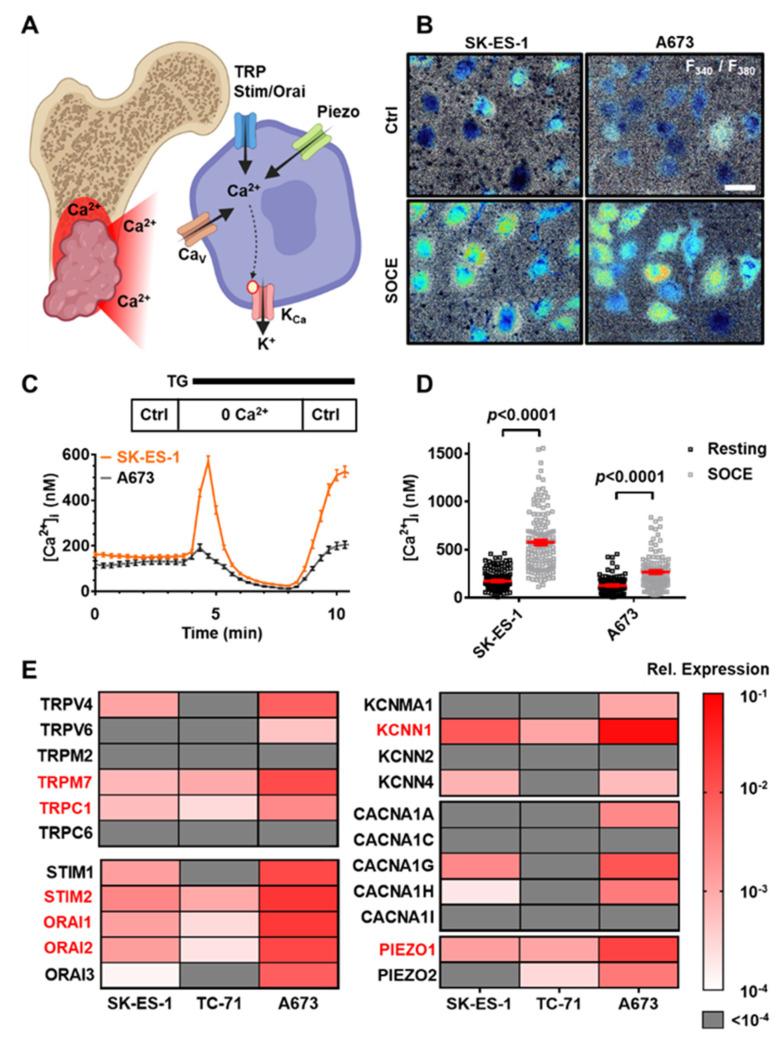
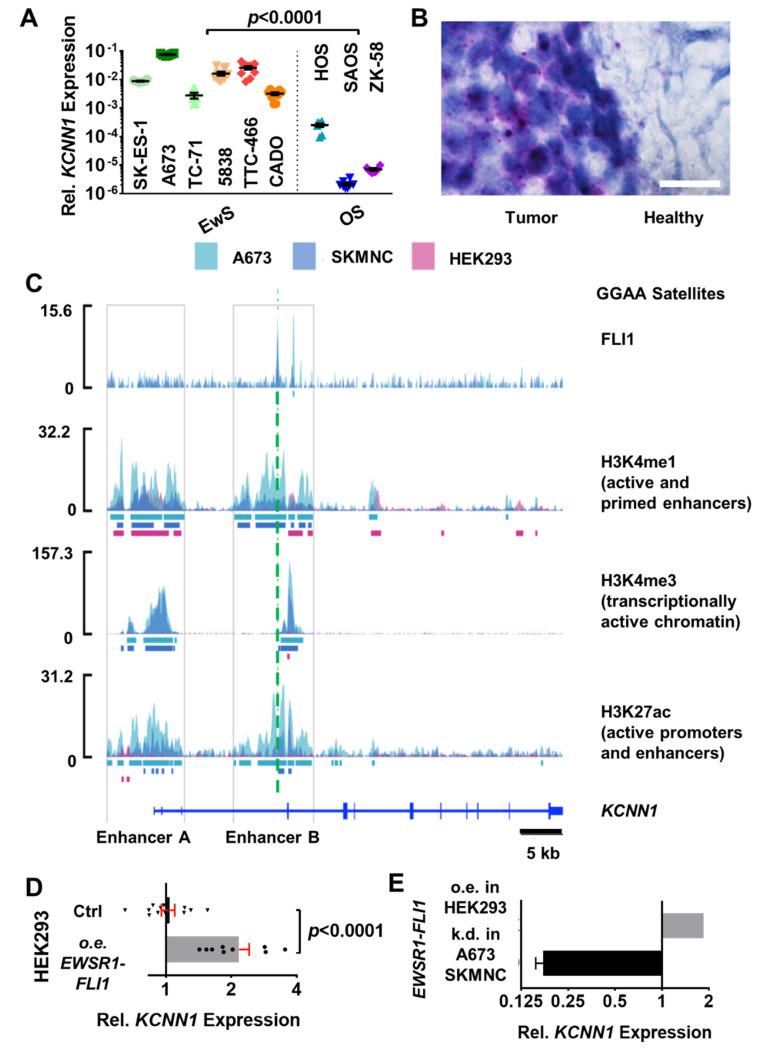
Ewing sarcoma (EwS) is a rare and highly malignant bone tumor occurring mainly in childhood and adolescence. Physiologically, the bone is a central hub for Ca homeostasis, which is severely disturbed by osteolytic processes in EwS. Therefore, we aimed to investigate how ion transport proteins involved in Ca homeostasis affect EwS pathophysiology. We characterized the expression of 22 candidate genes of Ca-permeable or Ca-regulated ion channels in three EwS cell lines and found the Ca-activated K channel K2.1 () to be exceptionally highly expressed. We revealed that expression is directly regulated by the disease-driving oncoprotein EWSR1-FL1. Due to its consistent overexpression in EwS, mRNA could be a prognostic marker in EwS. In a large cohort of EwS patients, however, mRNA quantity does not correlate with clinical parameters. Several functional studies including patch clamp electrophysiology revealed no evidence for K2.1 function in EwS cells. Thus, elevated expression is not translated to K2.1 channel activity in EwS cells. However, we found that the low K conductance of EwS cells renders them susceptible to hypoosmotic solutions. The absence of a relevant K conductance in EwS thereby provides an opportunity for hypoosmotic therapy that can be exploited during tumor surgery.
尤因肉瘤(EwS)是一种罕见的高度恶性骨肿瘤,主要发生于儿童和青少年时期。从生理角度来看,骨骼是钙稳态的核心枢纽,而尤因肉瘤中的溶骨过程会严重扰乱这一稳态。因此,我们旨在研究参与钙稳态的离子转运蛋白如何影响尤因肉瘤的病理生理学。我们对三种尤因肉瘤细胞系中22个钙通透或钙调节离子通道候选基因的表达进行了表征,发现钙激活钾通道K2.1()异常高表达。我们发现其表达直接受疾病驱动癌蛋白EWSR1-FL1调控。由于其在尤因肉瘤中持续过表达,K2.1 mRNA可能是尤因肉瘤的一个预后标志物。然而,在一大群尤因肉瘤患者中,K2.1 mRNA数量与临床参数并无关联。包括膜片钳电生理学在内的多项功能研究表明,尤因肉瘤细胞中没有K2.1功能的证据。因此,尤因肉瘤中K2.1表达升高并未转化为K2.1通道活性。然而,我们发现尤因肉瘤细胞的低钾电导使其易受低渗溶液影响。尤因肉瘤中缺乏相关钾电导,从而为在肿瘤手术期间可利用的低渗疗法提供了机会。



 Zotero 插件