
原核锌指蛋白 Ros 中结构锌离子被铜(I)或(II)取代不会导致功能域。
Copper (I) or (II) Replacement of the Structural Zinc Ion in the Prokaryotic Zinc Finger Ros Does Not Result in a Functional Domain.
机构信息
Department of Environmental, Biological and Pharmaceutical Science and Technology, University of Campania "Luigi Vanvitelli", Via Vivaldi 43, 81100 Caserta, Italy.
Institute of Biostructures and Bioimaging, National Research Council (IBB-CNR), Via Pietro Castellino 111, 80131 Naples, Italy.
出版信息
Int J Mol Sci. 2022 Sep 20;23(19):11010. doi: 10.3390/ijms231911010.
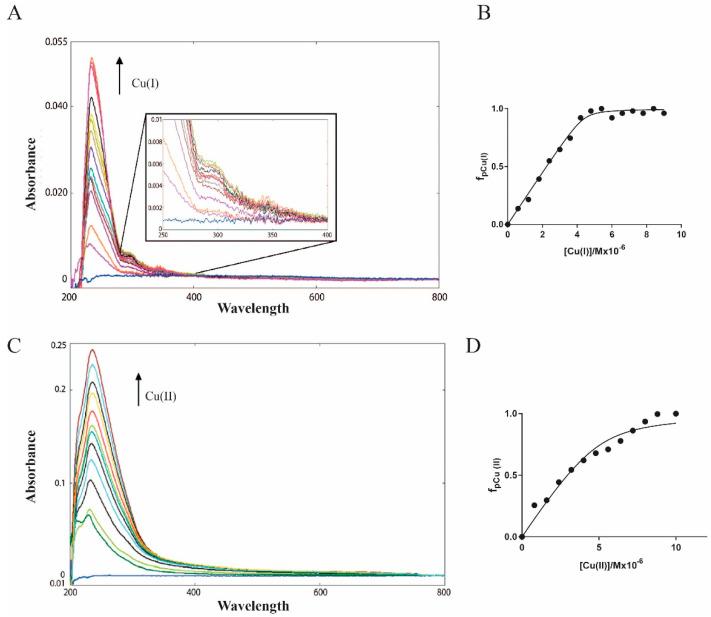
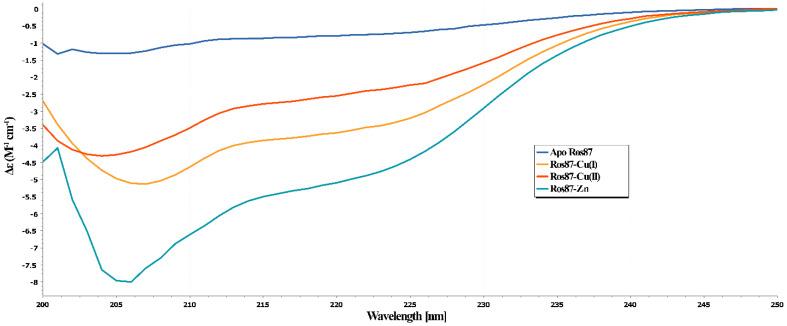
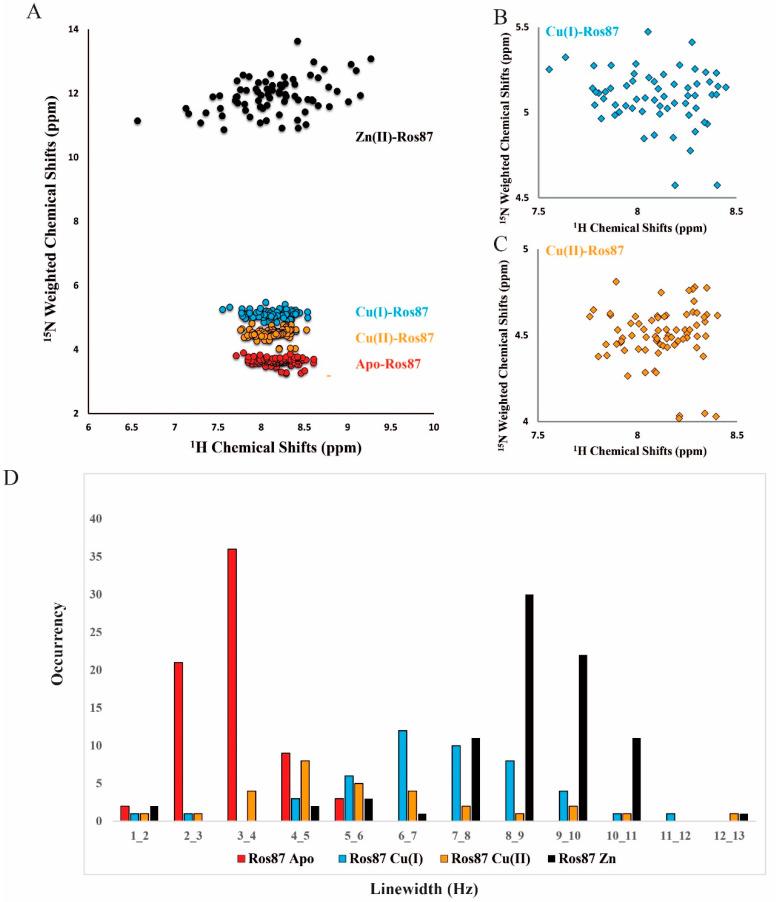
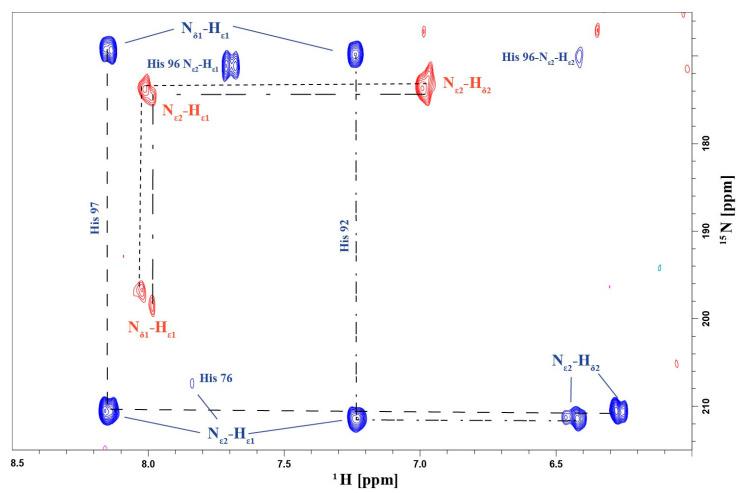
A strict interplay is known to involve copper and zinc in many cellular processes. For this reason, the results of copper's interaction with zinc binding proteins are of great interest. For instance, copper interferences with the DNA-binding activity of zinc finger proteins are associated with the development of a variety of diseases. The biological impact of copper depends on the chemical properties of its two common oxidation states (Cu(I) and Cu(II)). In this framework, following the attention addressed to unveil the effect of metal ion replacement in zinc fingers and in zinc-containing proteins, we explore the effects of the Zn(II) to Cu(I) or Cu(II) replacement in the prokaryotic zinc finger domain. The prokaryotic zinc finger protein Ros, involved in the horizontal transfer of genes from to a host plant infected by it, belongs to a family of proteins, namely Ros/MucR, whose members have been recognized in different bacteria symbionts and pathogens of mammals and plants. Interestingly, the amino acids of the coordination sphere are poorly conserved in most of these proteins, although their sequence identity can be very high. In fact, some members of this family of proteins do not bind zinc or any other metal, but assume a 3D structure similar to that of Ros with the residues replacing the zinc ligands, forming a network of hydrogen bonds and hydrophobic interactions that surrogates the Zn-coordinating role. These peculiar features of the Ros ZF domain prompted us to study the metal ion replacement with ions that have different electronic configuration and ionic radius. The protein was intensely studied as a perfectly suited model of a metal-binding protein to study the effects of the metal ion replacement; it appeared to tolerate the Zn to Cd substitution, but not the replacement of the wildtype metal by Ni(II), Pb(II) and Hg(II). The structural characterization reported here gives a high-resolution description of the interaction of copper with Ros, demonstrating that copper, in both oxidation states, binds the protein, but the replacement does not give rise to a functional domain.
铜和锌在许多细胞过程中相互作用,这是众所周知的。因此,铜与锌结合蛋白相互作用的结果非常令人关注。例如,铜干扰锌指蛋白的 DNA 结合活性与多种疾病的发展有关。铜的生物学影响取决于其两种常见氧化态(Cu(I)和 Cu(II))的化学性质。在这个框架内,继揭示金属离子取代锌指和含锌蛋白的作用之后,我们研究了原核锌指结构域中 Zn(II)到 Cu(I)或 Cu(II)取代的影响。参与从到受感染宿主植物基因水平转移的原核锌指蛋白 Ros 属于一个蛋白质家族,即 Ros/MucR,其成员已在不同的细菌共生体和哺乳动物和植物的病原体中被识别。有趣的是,在大多数这些蛋白质中,配位球的氨基酸序列保守性较差,尽管它们的序列同一性可能非常高。事实上,该蛋白质家族的一些成员不结合锌或任何其他金属,但会形成与 Ros 相似的 3D 结构,用取代锌配体的残基形成氢键和疏水相互作用网络,替代锌的配位作用。这些 Ros ZF 结构域的特殊特征促使我们研究用具有不同电子构型和离子半径的离子进行金属离子取代。该蛋白作为一种研究金属离子取代影响的金属结合蛋白的理想模型得到了深入研究;它似乎可以耐受 Zn 到 Cd 的取代,但不能耐受野生型金属被 Ni(II)、Pb(II)和 Hg(II)取代。这里报道的结构特征给出了铜与 Ros 相互作用的高分辨率描述,证明了铜在两种氧化态下都能与蛋白质结合,但取代不会产生功能性结构域。



 Zotero 插件