
钩藤中土木香内酯和菊糖生物合成的空间分子相互作用的综合转录网络
An Integrative Transcriptional Network Revealed Spatial Molecular Interplay Underlying Alantolactone and Inulin Biosynthesis in Hook f.
机构信息
Biotechnology Department, CSIR-Institute of Himalayan Bioresource Technology (CSIR-IHBT), Palampur 176061, Himachal Pradesh, India.
Academy of Scientific and Innovative Research (AcSIR), Ghaziabad 201002, Uttar Pradesh, India.
出版信息
Int J Mol Sci. 2022 Sep 23;23(19):11213. doi: 10.3390/ijms231911213.
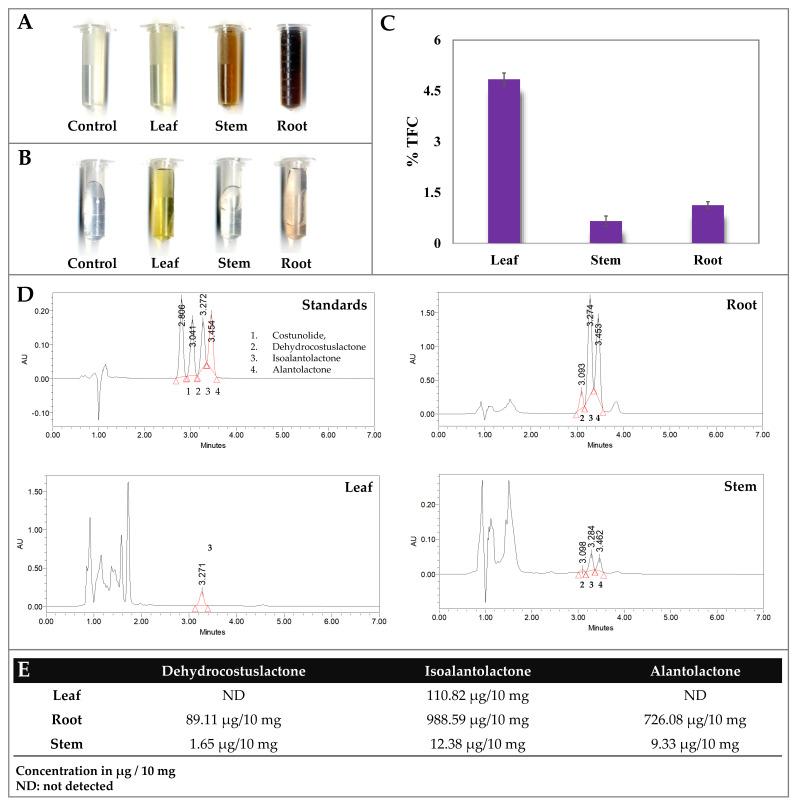
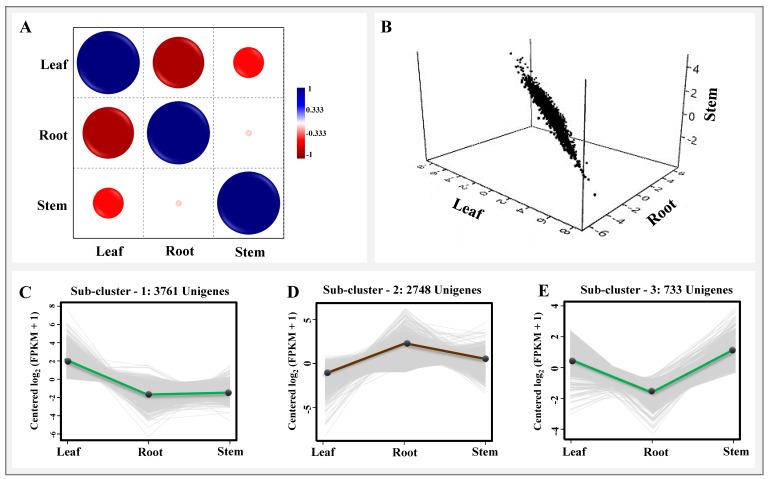
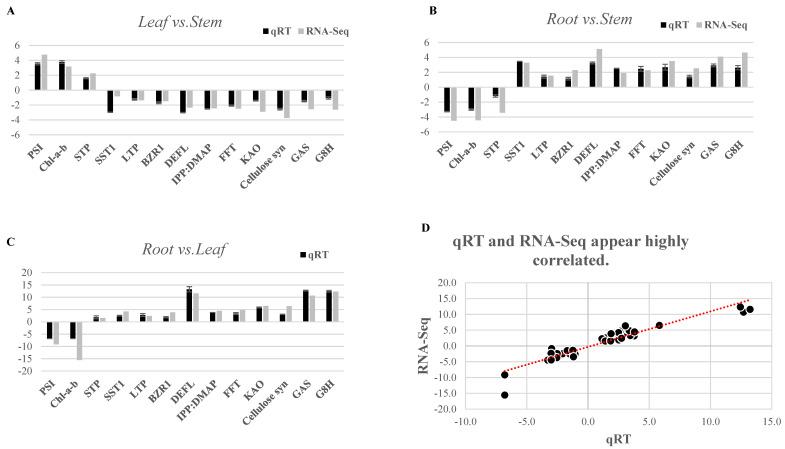
Hook. f. (Pushkarmula), a perennial Himalayan herb known for its aromatic and phytopharmaceutical attributes, is not yet explored at genomic/transcriptomic scale. In this study, efforts were made to unveil the global transcriptional atlas underlying organ-specific specialized metabolite biosynthesis by integrating RNA-Seq analysis of 433 million sequenced reads with the phytochemical analysis of leaf, stem, and root tissues. Overall, 7242 of 83,772 assembled nonredundant unigenes were identified exhibiting spatial expression in leaf (3761), root (2748), and stem (733). Subsequently, integration of the predicted transcriptional interactome network of 2541 unigenes (71,841 edges) with gene ontology and KEGG pathway enrichment analysis revealed isoprenoid, terpenoid, diterpenoid, and gibberellin biosynthesis with antimicrobial activities in root tissue. Interestingly, the root-specific expression of germacrene-mediated alantolactone biosynthesis (GAS, GAO, G8H, IPP, DMAP, and KAO) and antimicrobial activities (BZR1, DEFL, LTP) well-supported with both quantitative expression profiling and phytochemical accumulation of alantolactones (726.08 μg/10 mg) and isoalantolactones (988.59 μg/10 mg), which suggests "roots" as the site of alantolactone biosynthesis. A significant interaction of leaf-specific carbohydrate metabolism with root-specific inulin biosynthesis indicates source (leaf) to sink (root) regulation of inulin. Our findings comprehensively demonstrate the source-sink transcriptional regulation of alantolactone and inulin biosynthesis, which can be further extended for upscaling the targeted specialized metabolites. Nevertheless, the genomic resource created in this study can also be utilized for development of genome-wide functionally relevant molecular markers to expedite the breeding strategies for genetic improvement of
钩。f.(Pushkarmula),一种多年生喜马拉雅草本植物,以其芳香和植物药属性而闻名,尚未在基因组/转录组规模上进行探索。在这项研究中,我们努力通过整合 RNA-Seq 分析的 4.33 亿个测序reads 与叶、茎和根组织的植物化学分析,揭示器官特异性特化代谢物生物合成的全球转录图谱。总的来说,在叶(3761)、根(2748)和茎(733)中显示空间表达的 83772 个组装的非冗余单体中,有 7242 个被鉴定。随后,将 2541 个单体的预测转录互作网络(71841 个边)与基因本体和 KEGG 途径富集分析进行整合,揭示了根组织中具有抗菌活性的异戊二烯、萜烯、二萜和赤霉素生物合成。有趣的是,在根组织中, germacrene 介导的 alantolactone 生物合成(GAS、GAO、G8H、IPP、DMAP 和 KAO)和抗菌活性(BZR1、DEFL、LTP)的根特异性表达,与 alantolactones(726.08μg/10mg)和 isoalantolactones(988.59μg/10mg)的定量表达谱和植物化学积累都很好地支持,这表明“根”是 alantolactone 生物合成的部位。叶特异性碳水化合物代谢与根特异性菊粉生物合成的显著相互作用表明了从源(叶)到汇(根)的菊粉调节。我们的研究结果全面展示了 alantolactone 和菊粉生物合成的源-汇转录调控,这可以进一步扩展到靶向特化代谢物的规模化生产。然而,本研究创建的基因组资源也可用于开发全基因组功能相关的分子标记,以加速遗传改良的育种策略。




 Zotero 插件