
初步结构-活性关系研究 MMV 病原体框化合物 MMV675968(2,4-二氨基喹唑啉)揭示了. 的新型抑制剂
Preliminary Structure-Activity Relationship Study of the MMV Pathogen Box Compound MMV675968 (2,4-Diaminoquinazoline) Unveils Novel Inhibitors of .
机构信息
Antimicrobial and Biocontrol Agents Unit (AmBcAU), Laboratory for Phytobiochemistry and Medicinal Plants Studies, Department of Biochemistry, Faculty of Science, University of Yaoundé I, Yaoundé P.O. Box 812, Cameroon.
Research Unit in Bioinformatics (RUBi), Department of Biochemistry and Microbiology, Rhodes University, Grahamstown 6139, South Africa.
出版信息
Molecules. 2022 Oct 4;27(19):6574. doi: 10.3390/molecules27196574.
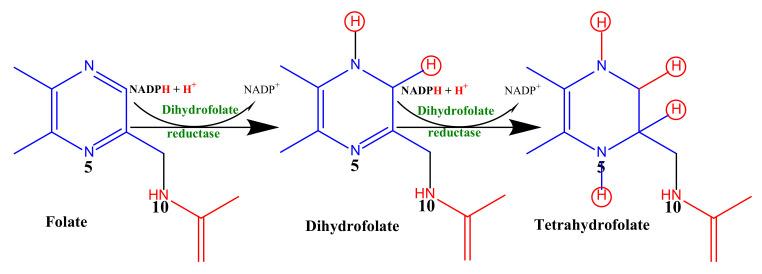
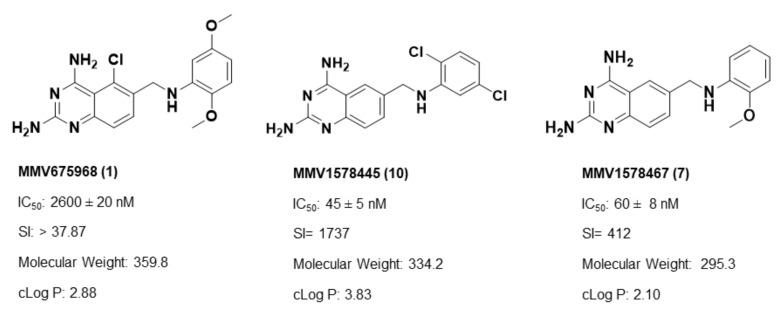
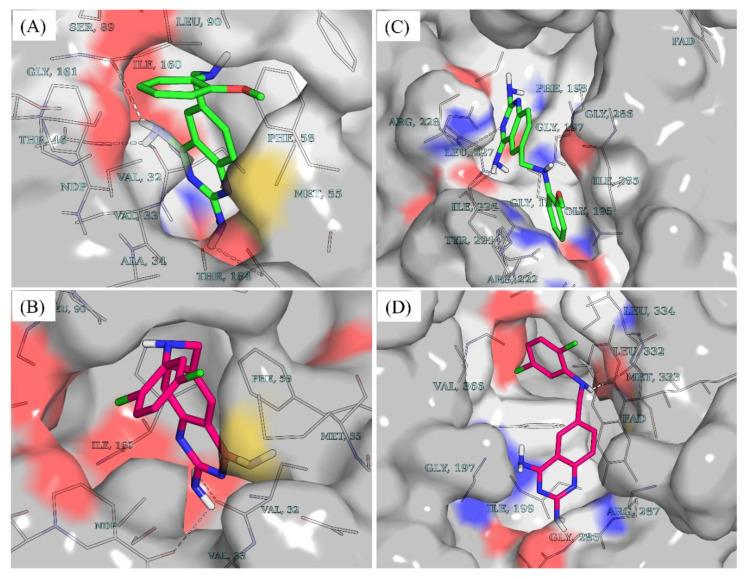
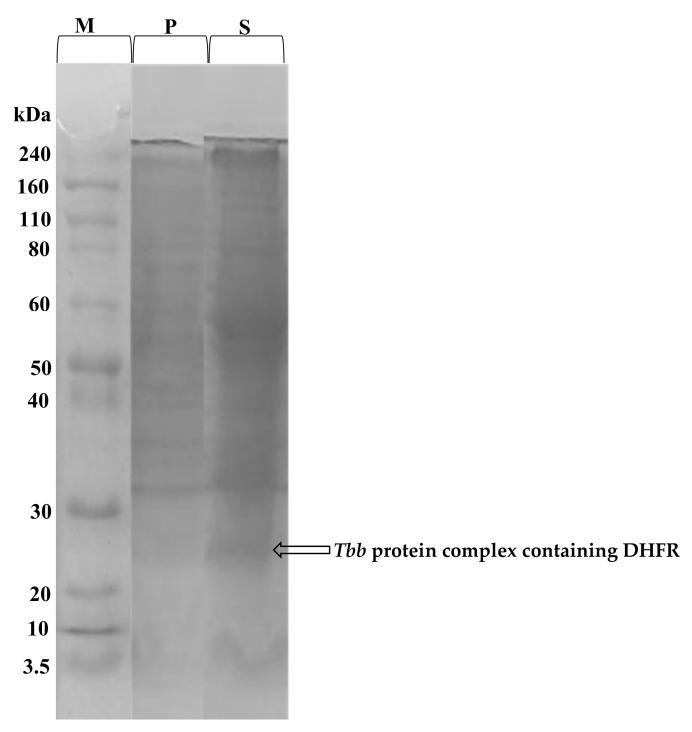
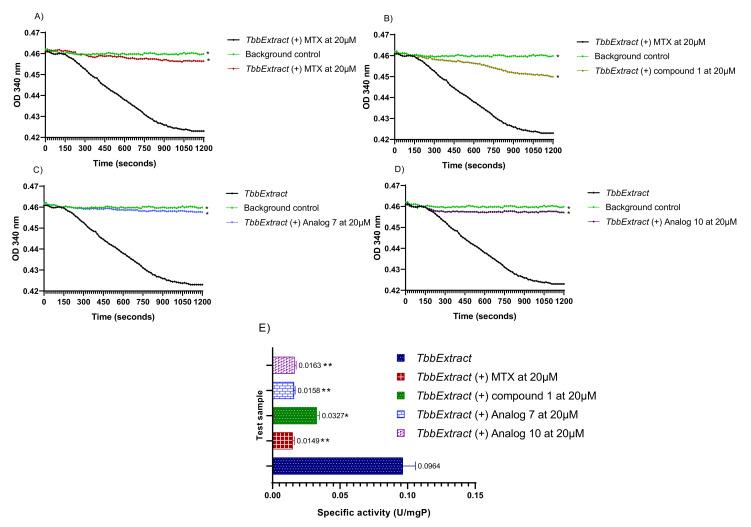
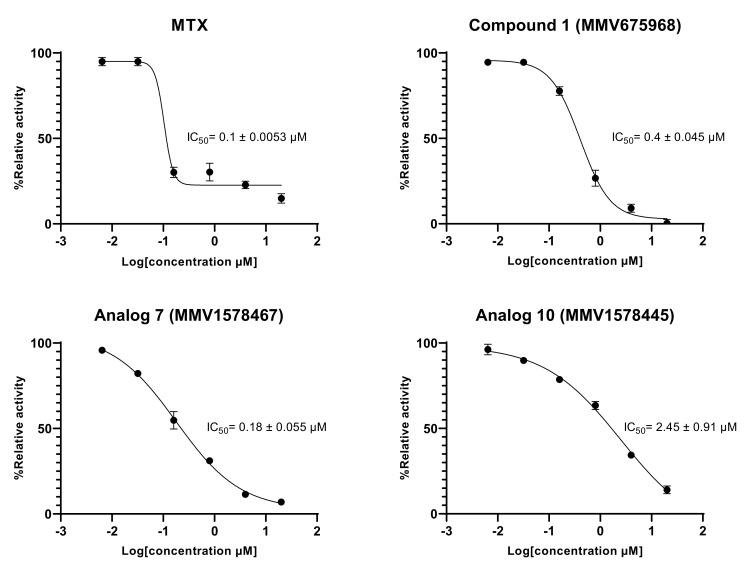
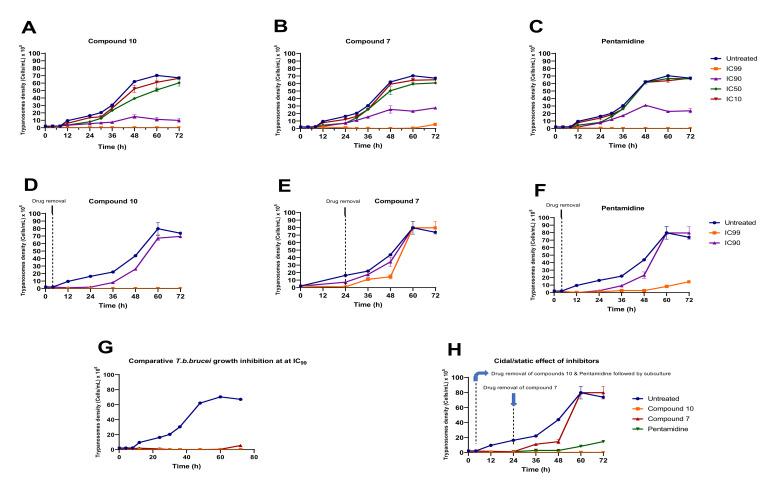
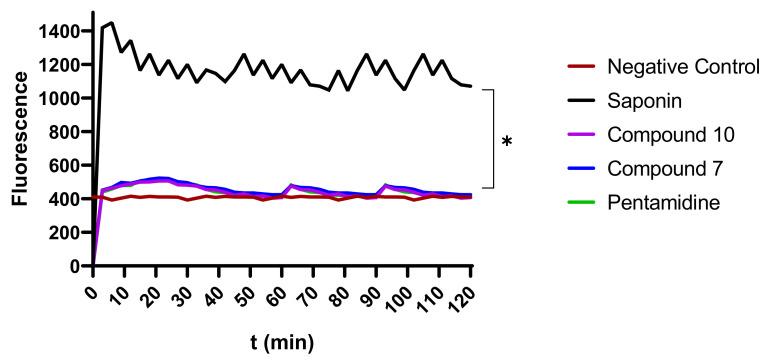
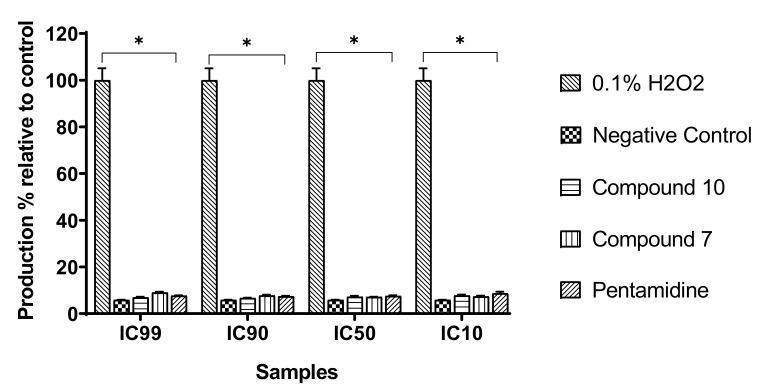
New drugs are urgently needed for the treatment of human African trypanosomiasis (HAT). In line with our quest for novel inhibitors of trypanosomes, a small library of analogs of the antitrypanosomal hit (MMV675968) available at MMV as solid materials was screened for antitrypanosomal activity. In silico exploration of two potent antitrypanosomal structural analogs (-MMV1578647 and -MMV1578445) as inhibitors of dihydrofolate reductase (DHFR) was achieved, together with elucidation of other antitrypanosomal modes of action. In addition, they were assessed in vitro for tentative inhibition of DHFR in a crude trypanosome extract. Their ADMET properties were also predicted using dedicated software. Overall, the two diaminoquinazoline analogs displayed approximately 40-fold and 60-fold more potency and selectivity in vitro than the parent hit, respectively (MMV1578445 (): IC = 0.045 µM, SI = 1737; MMV1578467 (): IC = 0.06 µM; SI = 412). Analogs and were also strong binders of the DHFR enzyme in silico, in all their accessible protonation states, and interacted with key DHFR ligand recognition residues Val32, Asp54, and Ile160. They also exhibited significant activity against trypanosome protein isolate. MMV1578445 () portrayed fast and irreversible trypanosome growth arrest between 4-72 h at IC. Analogs and induced in vitro ferric iron reduction and DNA fragmentation or apoptosis induction, respectively. The two potent analogs endowed with predicted suitable physicochemical and ADMET properties are good candidates for further deciphering their potential as starting points for new drug development for HAT.
新型药物对于治疗非洲人类锥虫病(HAT)迫在眉睫。为了寻找新型抗锥虫药物,我们以固态形式筛选了 MMV 公司提供的抗锥虫命中靶标(MMV675968)的小分子类似物库,以寻找具有抗锥虫活性的化合物。我们对两种具有潜在抗锥虫作用的结构类似物(-MMV1578647 和 -MMV1578445)进行了二氢叶酸还原酶(DHFR)抑制剂的计算机模拟探索,同时阐明了其他抗锥虫作用机制。此外,我们还在粗制锥虫提取物中评估了它们对 DHFR 的体外抑制作用。还使用专用软件预测了它们的 ADMET 性质。总的来说,与母本命中靶标相比,这两种二氨基喹唑啉类似物在体外的效力和选择性分别提高了约 40 倍和 60 倍(MMV1578445():IC = 0.045 µM,SI = 1737;MMV1578467():IC = 0.06 µM;SI = 412)。类似物 和 也是 DHFR 酶在计算机模拟中的强结合物,在所有可及的质子化状态下均如此,并且与 DHFR 配体识别残基 Val32、Asp54 和 Ile160 相互作用。它们还对锥虫蛋白分离物表现出显著的活性。MMV1578445()在 IC 时在 4-72 小时内快速且不可逆地抑制锥虫生长。类似物 和 分别诱导体外铁还原和 DNA 片段化或凋亡诱导。这两种具有潜在效力的类似物具有预测的适当理化性质和 ADMET 性质,是进一步阐明它们作为 HAT 新药开发起点的潜力的良好候选物。



 Zotero 插件