
线粒体DNA单倍群和STING DNA传感系统对癌症相关基因的差异调节
Differential modulation of cancer-related genes by mitochondrial DNA haplogroups and the STING DNA sensing system.
作者信息
Schneider Kevin, Chwa Marilyn, Atilano Shari R, Nashine Sonali, Udar Nitin, Boyer David S, Jazwinski S Michal, Miceli Michael V, Nesburn Anthony B, Kuppermann Baruch D, Kenney M Cristina
机构信息
Department of Ophthalmology, Gavin Herbert Eye Institute University of California Irvine Irvine California USA.
Retina-Vitreous Associates Medical Group Beverly Hills California USA.
出版信息
FASEB Bioadv. 2022 Aug 26;4(10):675-689. doi: 10.1096/fba.2019-00044. eCollection 2022 Oct.
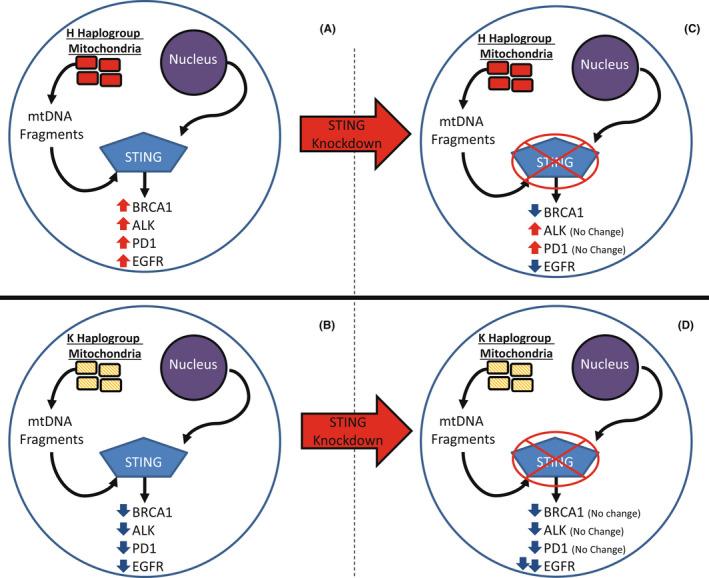
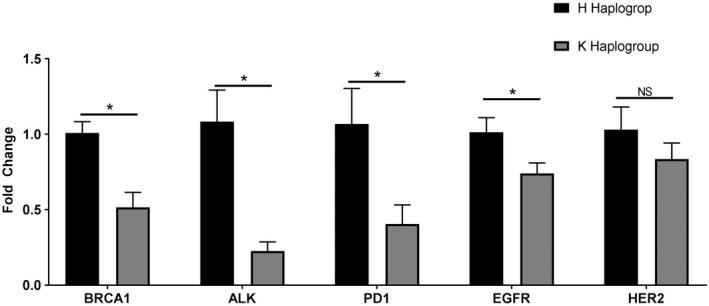
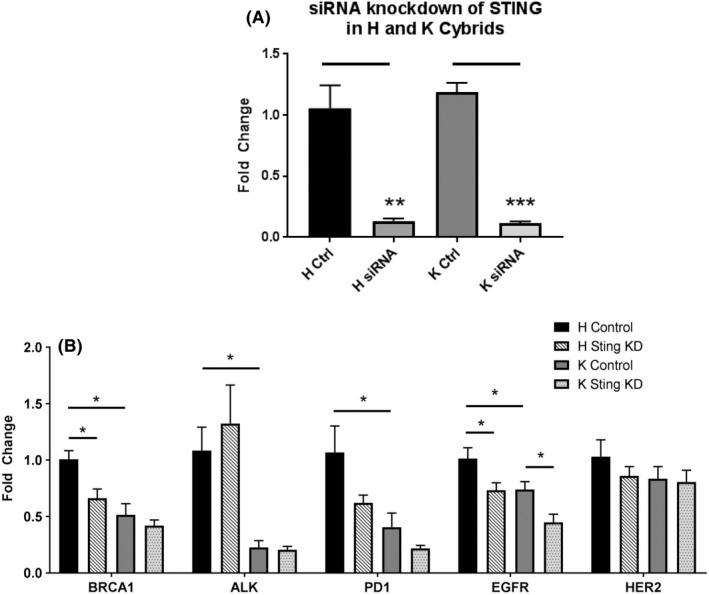
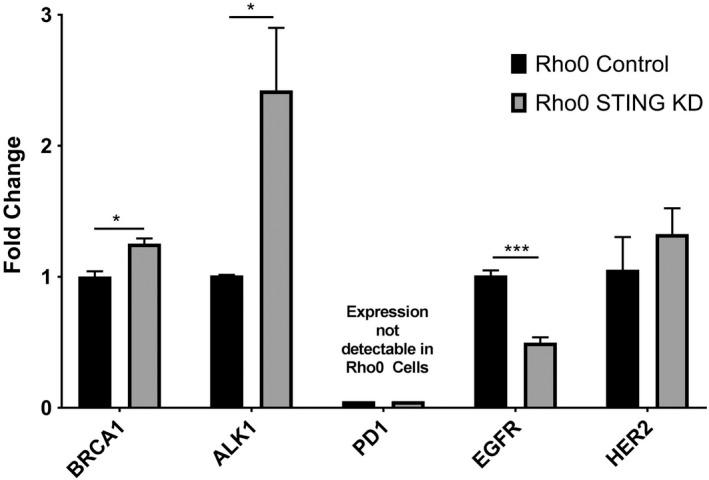
Activation of the Simulator of Interferon Genes (STING) system by mitochondrial (mt) DNA can upregulate type 1 interferon genes and enhance immune responses to combat bacterial and viral infections. In cancers, the tumor-derived DNA activates STING leading to upregulation of IFN-beta and induction of antitumor T cells. The entire mtDNA from the cell lines was sequenced using next-generation sequencing (NGS) technology with independent sequencing of both strands in both directions, allowing identification of low-frequency heteroplasmy SNPs. There were 15 heteroplasmy SNPs showing a range from 3.4% to 40.5% occurrence in the K cybrid cell lines. Three H haplogroup cybrids possessed SNP heteroplasmy that ranged from 4.39% to 30.7%. The present study used qRT-PCR to determine if cybrids of H and K haplogroups differentially regulate expression levels of five cancer genes (, , , and ) and seven STING subunits genes (, , , , , , and ). Some cybrids underwent siRNA knockdown of STING followed by qRT-PCR in order to determine the impact of STING on gene expression. Rho (lacking mtDNA) ARPE-19 cells were used to determine if mtDNA is required for the expression of the cancer genes studied. Our results showed that (a) K cybrids have lower expression levels for , , , and genes but increased transcription for and compared to H cybrids; (b) STING KD decreases expression of in both H and K cybrids, and (c) expression is negligible in Rho cells. Our findings suggest that the STING DNA sensing pathway may be a previously unrecognized pathway to target modulation of cancer-related genes and the expression requires the presence of mtDNA.
线粒体(mt)DNA激活干扰素基因刺激物(STING)系统可上调1型干扰素基因,并增强对抗细菌和病毒感染的免疫反应。在癌症中,肿瘤来源的DNA激活STING,导致IFN-β上调并诱导抗肿瘤T细胞。使用下一代测序(NGS)技术对细胞系的整个mtDNA进行测序,两条链在两个方向上独立测序,从而能够鉴定低频异质性单核苷酸多态性(SNP)。在K细胞质杂种细胞系中有15个异质性SNP,其出现频率范围为3.4%至40.5%。三个H单倍群细胞质杂种具有4.39%至30.7%的SNP异质性。本研究使用qRT-PCR来确定H和K单倍群的细胞质杂种是否差异调节五个癌症基因(、、、和)和七个STING亚基基因(、、、、、、和)的表达水平。一些细胞质杂种进行了STING的siRNA敲低,然后进行qRT-PCR,以确定STING对基因表达的影响。使用Rho(缺乏mtDNA)ARPE-19细胞来确定mtDNA是否是所研究癌症基因表达所必需的。我们的结果表明:(a)与H细胞质杂种相比,K细胞质杂种的、、、和基因表达水平较低,但和的转录增加;(b)STING敲低(KD)降低了H和K细胞质杂种中的表达;(c)Rho细胞中的表达可忽略不计。我们的研究结果表明,STING DNA传感途径可能是一条以前未被认识的靶向调节癌症相关基因的途径,并且的表达需要mtDNA的存在。

 Zotero 插件