
丛枝菌根真菌(AMF)对植物营养和生长的影响取决于喀斯特物种鸡眼草(L.)的基质砾石含量和斑块度。
Effects of AMF on plant nutrition and growth depend on substrate gravel content and patchiness in the karst species L.
作者信息
Shen Kaiping, He Yuejun, Xu Xinyang, Umer Muhammad, Liu Xiao, Xia Tingting, Guo Yun, Wu Bangli, Xu Han, Zang Lipeng, Gao Lu, Jiao Min, Yang Xionggui, Yan Jiawei
机构信息
Forestry College, Research Center of Forest Ecology, Guizhou University, Guiyang, China.
Forestry Survey and Planning Institute of Guizhou Province, Guiyang, China.
出版信息
Front Plant Sci. 2022 Sep 29;13:968719. doi: 10.3389/fpls.2022.968719. eCollection 2022.
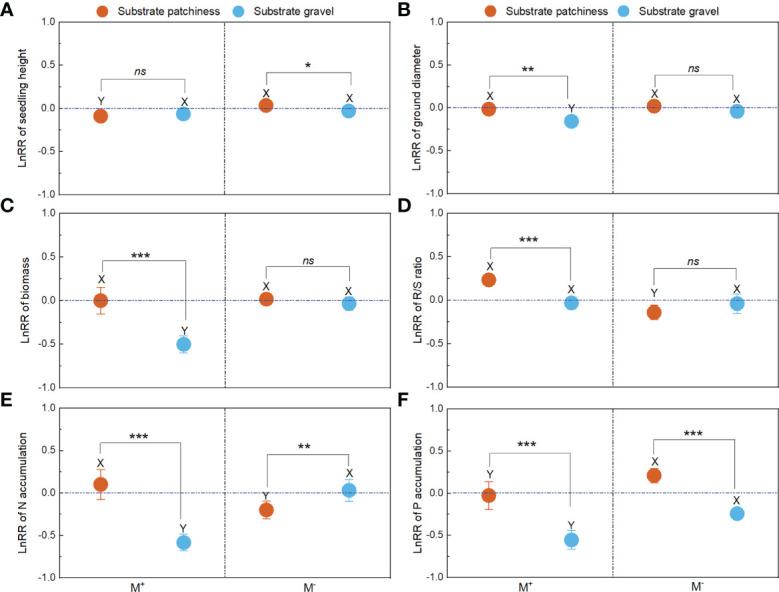
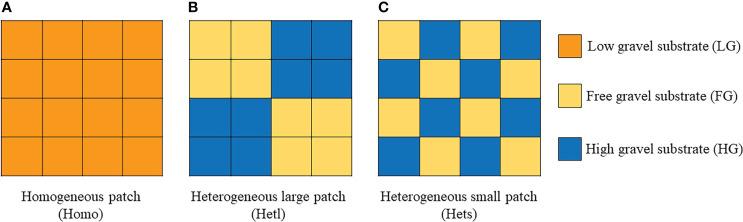
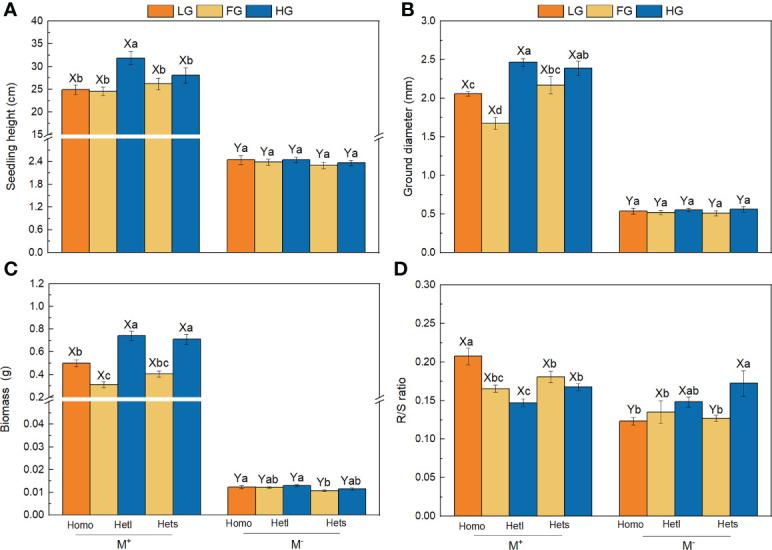
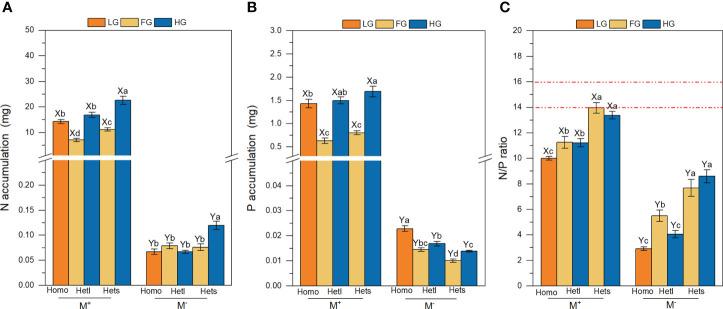
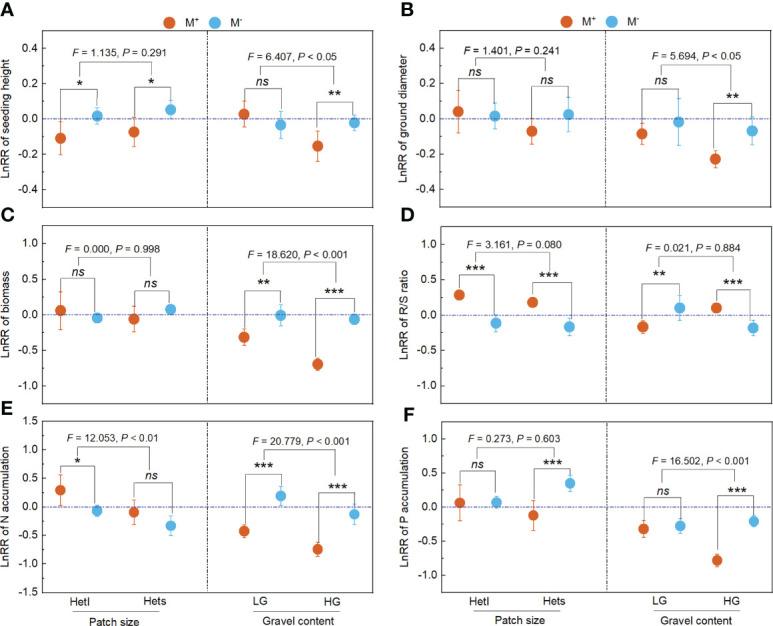
Karst ecosystems represent a typical heterogeneous habitat, and it is ubiquitous with varying interactive patches of rock and soil associated with differential weathering patterns of carbonate rocks. Arbuscular mycorrhizae fungi (AMF) play an important role in regulating plant growth and nutrition in heterogeneous karst habitats. However, it remains unclear how AMF affects the growth and nutrition of plants in heterogeneous karst soil with varying patches and weathering gravel. A heterogeneous experiment with L. was conducted in a grid microcosm through patching karst soil with different gravel contents. The experimental treatments included the AMF treatments inoculated with (M) or without (M) fungus ; the substrate patchiness treatments involved different sizes of the homogeneous patch (Homo), the heterogeneous large patch (Hetl), and the heterogeneous small patch (Hets); the substrate gravel treatments in the inner patch involved the free gravel (FG), the low gravel (LG) 20% in 80% soil, and the high gravel (HG) 40% in 60% soil. Plant traits related to growth and nutrients were analyzed by comparing substrate gravel content and patch size. The results showed that AMF was more beneficial in increasing the aboveground biomass of under the LG and HG substrates with a higher root mycorrhizal colonization rate than under the FG substrate with a lower root mycorrhizal colonization rate. AMF enhanced higher growth and nutrients for under the LG and HG substrates than under the FG substrate and under the Hets than under the Hetl. Moreover, AMF alleviated the limited supply of N for under all heterogeneous treatments. Furthermore, the response ratio LnRR of presented that the substrate gravel promoted the highest growth, N and P absorption than the substrate patchiness with M treatment, and the gravel content had a more effect on plant growth and nutrition as compared to the patch size. Overall, this study suggests that plant growth and nutrition regulated by AMF mainly depend on the substrate gravel content rather than the spatial patchiness in the heterogeneous karst habitat.
喀斯特生态系统是典型的异质生境,其广泛存在着与碳酸盐岩不同风化模式相关的岩石和土壤交互斑块。丛枝菌根真菌(AMF)在调节喀斯特异质生境中植物的生长和营养方面发挥着重要作用。然而,尚不清楚AMF如何影响具有不同斑块和风化砾石的喀斯特异质土壤中植物的生长和营养。通过在网格微宇宙中用不同砾石含量的喀斯特土壤进行斑块化处理,对某植物进行了异质性实验。实验处理包括接种(M)或不接种(M)真菌的AMF处理;底物斑块处理涉及不同大小的同质斑块(Homo)、异质大斑块(Hetl)和异质小斑块(Hets);内部斑块中的底物砾石处理包括自由砾石(FG)、80%土壤中含20%砾石的低砾石(LG)和60%土壤中含40%砾石的高砾石(HG)。通过比较底物砾石含量和斑块大小,分析了与生长和养分相关的植物性状。结果表明,与根菌根定殖率较低的FG底物相比,AMF在根菌根定殖率较高的LG和HG底物下,对增加某植物地上生物量更有益。与FG底物相比,AMF在LG和HG底物下对某植物的生长和养分促进作用更高,与Hetl相比,在Hets下更高。此外,在所有异质处理下,AMF缓解了某植物氮供应的限制。此外,某植物的响应比LnRR表明,与M处理的底物斑块相比,底物砾石促进生长、氮和磷吸收的作用最高,与斑块大小相比,砾石含量对植物生长和营养的影响更大。总体而言,本研究表明,AMF调节的植物生长和营养主要取决于底物砾石含量,而非喀斯特异质生境中的空间斑块性。
 Zotero 插件