
磁场疗法可增强前交叉韧带重建术后肌肉线粒体生物能量代谢并降低全身神经酰胺水平:东南亚随机对照试验。
Magnetic field therapy enhances muscle mitochondrial bioenergetics and attenuates systemic ceramide levels following ACL reconstruction: Southeast Asian randomized-controlled pilot trial.
作者信息
Stephenson Mary C, Krishna Lingaraj, Pannir Selvan Rina Malathi, Tai Yee Kit, Kit Wong Craig Jun, Yin Jocelyn Naixin, Toh Shi-Jie, Torta Federico, Triebl Alexander, Fröhlich Jürg, Beyer Christian, Li Jing Ze, Tan Sara S, Wong Chun-Kit, Chinnasamy Duraimurugan, Pakkiri Leroy Sivappiragasam, Lee Drum Chester, Wenk Markus R, Totman John J, Franco-Obregón Alfredo
机构信息
Centre for Translational MR Research, Yong Loo Lin School of Medicine, National University of Singapore, Singapore.
Division of Sports Medicine and Surgery, Department of Orthopaedic Surgery, National University Hospital, National University Health System, Singapore.
出版信息
J Orthop Translat. 2022 Oct 13;35:99-112. doi: 10.1016/j.jot.2022.09.011. eCollection 2022 Jul.
BACKGROUND
Metabolic disruption commonly follows Anterior Cruciate Ligament Reconstruction (ACLR) surgery. Brief exposure to low amplitude and frequency pulsed electromagnetic fields (PEMFs) has been shown to promote and murine myogeneses via the activation of a calcium-mitochondrial axis conferring systemic metabolic adaptations. This randomized-controlled pilot trial sought to detect local changes in muscle structure and function using MRI, and systemic changes in metabolism using plasma biomarker analyses resulting from ACLR, with or without accompanying PEMF therapy.
METHODS
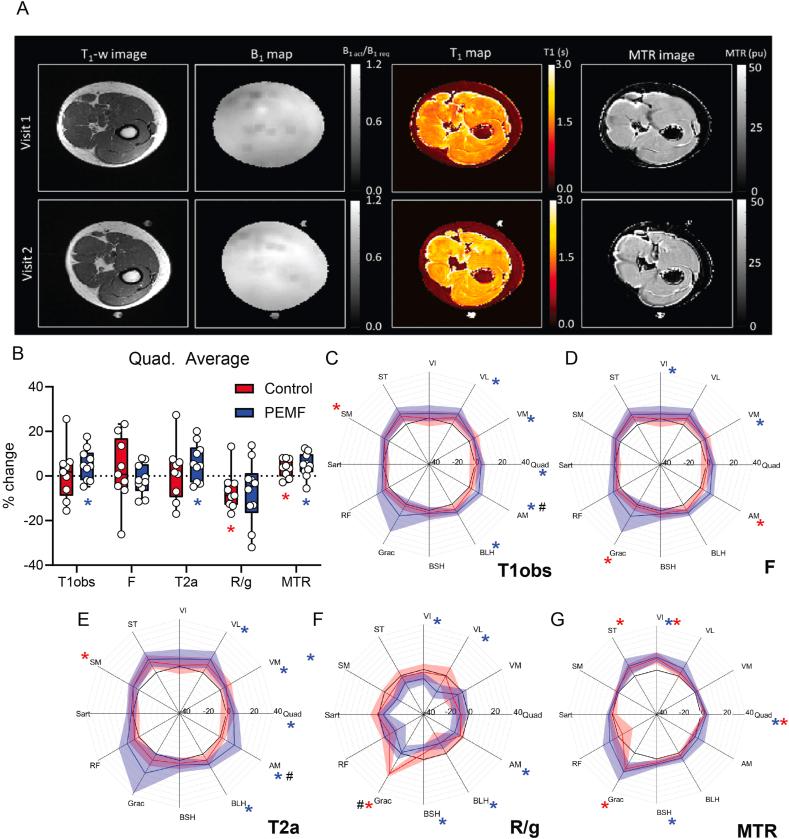
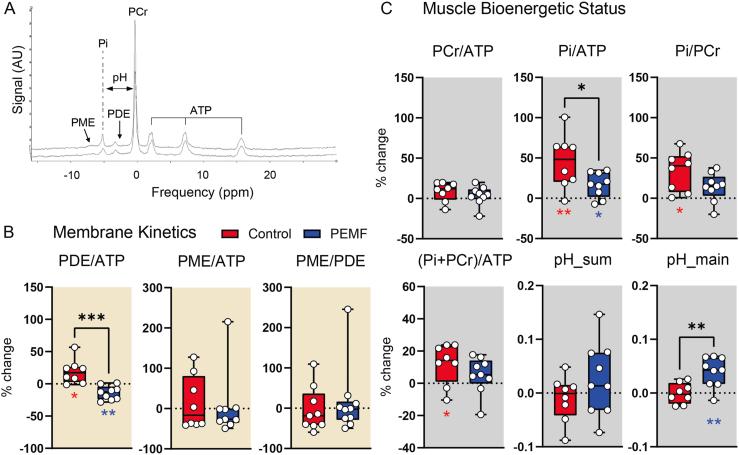
20 patients requiring ACLR were randomized into two groups either undergoing PEMF or sham exposure for 16 weeks following surgery. The operated thighs of 10 patients were exposed weekly to PEMFs (1 mT for 10 min) for 4 months following surgery. Another 10 patients were subjected to sham exposure and served as controls to allow assessment of the metabolic repercussions of ACLR and PEMF therapy. Blood samples were collected prior to surgery and at 16 weeks for plasma analyses. Magnetic resonance data were acquired at 1 and 16 weeks post-surgery using a Siemens 3T Tim Trio system. Phosphorus (P) Magnetic Resonance Spectroscopy (MRS) was utilized to monitor changes in high-energy phosphate metabolism (inorganic phosphate (P), adenosine triphosphate (ATP) and phosphocreatine (PCr)) as well as markers of membrane synthesis and breakdown (phosphomonoesters (PME) and phosphodiester (PDE)). Quantitative Magnetization Transfer (qMT) imaging was used to elucidate changes in the underlying tissue structure, with T1-weighted and 2-point Dixon imaging used to calculate muscle volumes and muscle fat content.
RESULTS
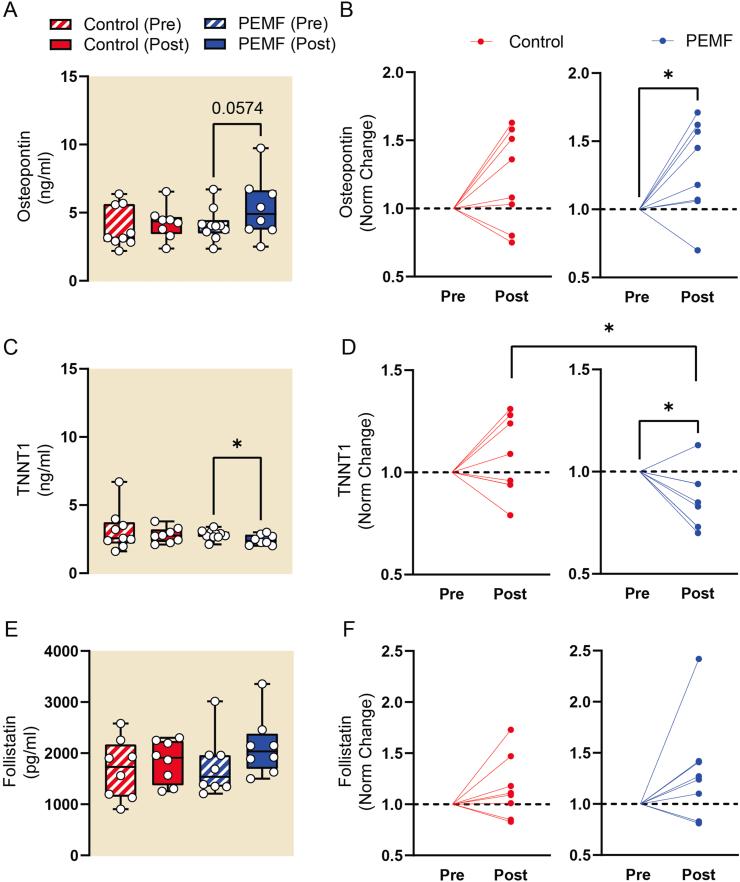
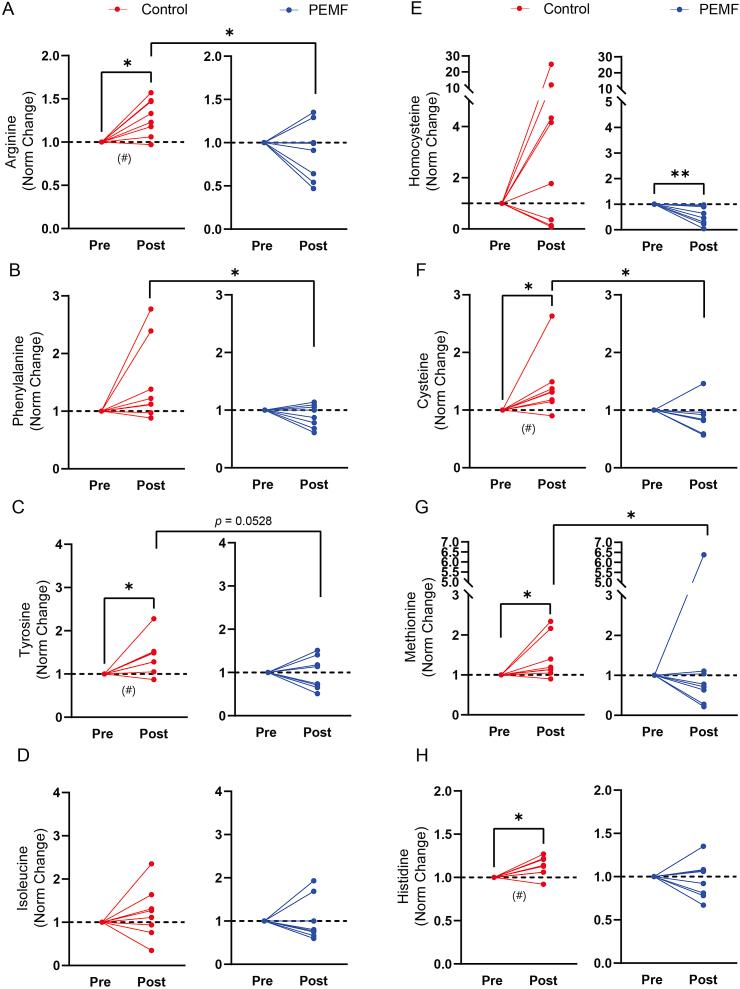
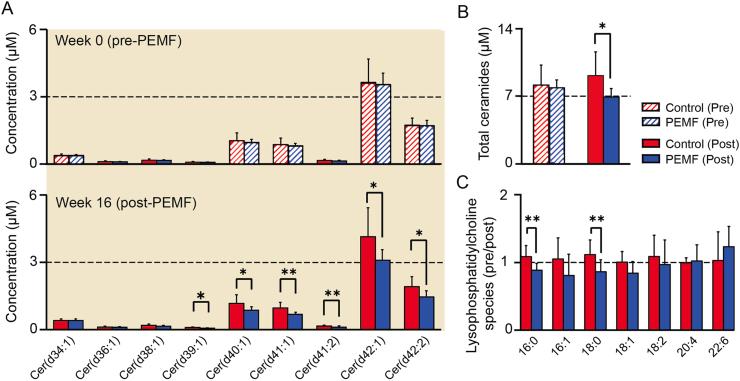
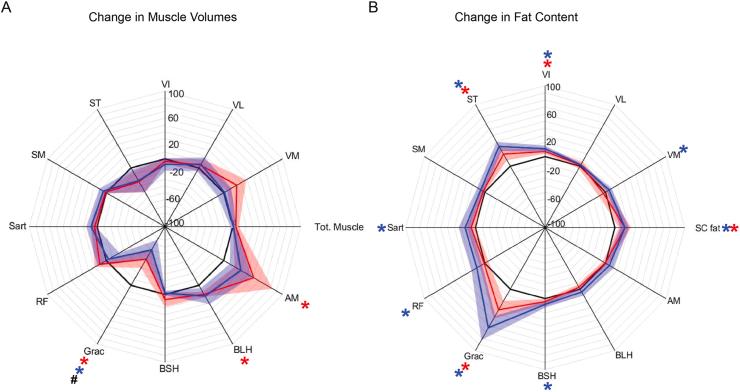
Improvements in markers of high-energy phosphate metabolism including reductions in ΔP/ATP, P/PCr and (P + PCr)/ATP, and membrane kinetics, including reductions in PDE/ATP were detected in the PEMF-treated cohort relative to the control cohort at study termination. These were associated with reductions in the plasma levels of certain ceramides and lysophosphatidylcholine species. The plasma levels of biomarkers predictive of muscle regeneration and degeneration, including osteopontin and TNNT1, respectively, were improved, whilst changes in follistatin failed to achieve statistical significance. Liquid chromatography with tandem mass spectrometry revealed reductions in small molecule biomarkers of metabolic disruption, including cysteine, homocysteine, and methionine in the PEMF-treated cohort relative to the control cohort at study termination. Differences in measurements of force, muscle and fat volumes did not achieve statistical significance between the cohorts after 16 weeks post-ACLR.
CONCLUSION
The detected changes suggest improvements in systemic metabolism in the post-surgical PEMF-treated cohort that accords with previous preclinical murine studies. PEMF-based therapies may potentially serve as a manner to ameliorate post-surgery metabolic disruptions and warrant future examination in more adequately powered clinical trials.
THE TRANSLATIONAL POTENTIAL OF THIS ARTICLE
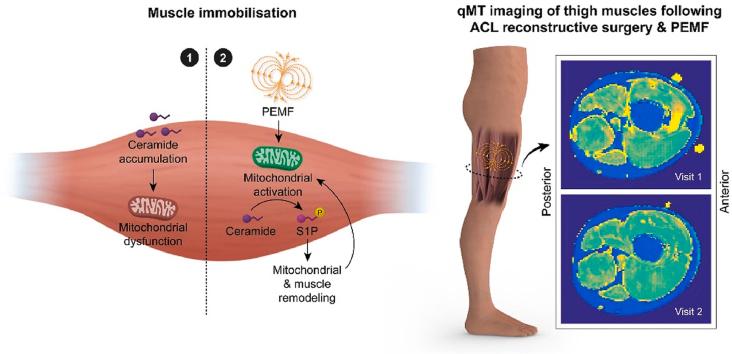
Some degree of physical immobilisation must inevitably follow orthopaedic surgical intervention. The clinical paradox of such a scenario is that the regenerative potential of the muscle mitochondrial pool is silenced. The unmet need was hence a manner to maintain mitochondrial activation when movement is restricted and without producing potentially damaging mechanical stress. PEMF-based therapies may satisfy the requirement of non-invasively activating the requisite mitochondrial respiration when mobility is restricted for improved metabolic and regenerative recovery.
背景
前交叉韧带重建(ACLR)手术后常出现代谢紊乱。研究表明,短暂暴露于低振幅和低频脉冲电磁场(PEMF)可通过激活钙 - 线粒体轴促进细胞增殖和小鼠肌生成,从而带来全身代谢适应。这项随机对照试验旨在通过MRI检测肌肉结构和功能的局部变化,并通过血浆生物标志物分析检测ACLR手术(无论是否伴有PEMF治疗)后代谢的全身变化。
方法
20例需要进行ACLR手术的患者被随机分为两组,术后分别接受16周的PEMF治疗或假暴露治疗。10例患者术后每周接受PEMF暴露(1 mT,持续10分钟),共4个月。另外10例患者接受假暴露,并作为对照,以评估ACLR和PEMF治疗对代谢的影响。术前及术后16周采集血样进行血浆分析。术后1周和16周使用西门子3T Tim Trio系统采集磁共振数据。利用磷(P)磁共振波谱(MRS)监测高能磷酸代谢(无机磷(P)、三磷酸腺苷(ATP)和磷酸肌酸(PCr))的变化,以及膜合成和分解的标志物(磷酸单酯(PME)和磷酸二酯(PDE))。采用定量磁化传递(qMT)成像来阐明基础组织结构的变化,使用T1加权和两点Dixon成像来计算肌肉体积和肌肉脂肪含量。
结果
在研究结束时,相对于对照组,PEMF治疗组中高能磷酸代谢标志物有所改善,包括ΔP/ATP、P/PCr和(P + PCr)/ATP降低,膜动力学指标也有所改善,包括PDE/ATP降低。这些变化与某些神经酰胺和溶血磷脂酰胆碱种类的血浆水平降低有关。预测肌肉再生和退变的生物标志物血浆水平分别得到改善,其中骨桥蛋白和TNNT1有所改善,而卵泡抑素的变化未达到统计学意义。液相色谱 - 串联质谱分析显示,在研究结束时,相对于对照组,PEMF治疗组中代谢紊乱的小分子生物标志物(包括半胱氨酸、同型半胱氨酸和蛋氨酸)有所减少。ACLR术后16周,两组之间的力量、肌肉和脂肪体积测量差异未达到统计学意义。
结论
检测到的变化表明,术后接受PEMF治疗的队列全身代谢有所改善,这与之前的临床前小鼠研究结果一致。基于PEMF的治疗可能潜在地改善术后代谢紊乱,值得在更有充分动力的临床试验中进一步研究。
本文的转化潜力
骨科手术干预后不可避免地会有一定程度的身体固定。这种情况的临床悖论在于肌肉线粒体池的再生潜力被抑制。因此,未满足的需求是一种在活动受限且不产生潜在有害机械应力的情况下维持线粒体激活的方法。基于PEMF的治疗可能满足在活动受限以改善代谢和再生恢复时非侵入性激活所需线粒体呼吸的要求。
 Zotero 插件