
鉴定 MRTX1133 的结合特性,为癌症治疗寻找潜在的 KRAS 抑制剂提供了一个途径。
Characterization of the binding of MRTX1133 as an avenue for the discovery of potential KRAS inhibitors for cancer therapy.
机构信息
Bio-computation and Drug Design Laboratory, School of Health Sciences, University of KwaZulu-Natal, Westville Campus, Durban, 4001, South Africa.
Department of Physiotherapy, School of Health Sciences, University of KwaZulu-Natal, Westville Campus, Durban, 4001, South Africa.
出版信息
Sci Rep. 2022 Oct 22;12(1):17796. doi: 10.1038/s41598-022-22668-1.
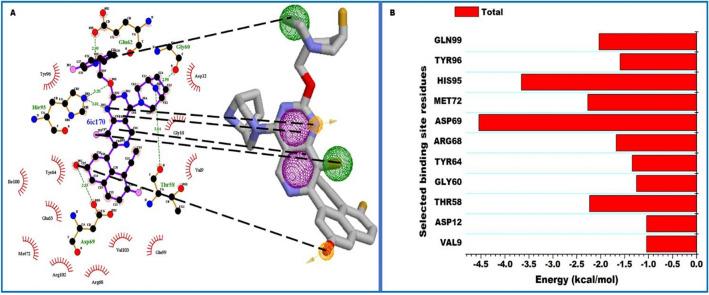
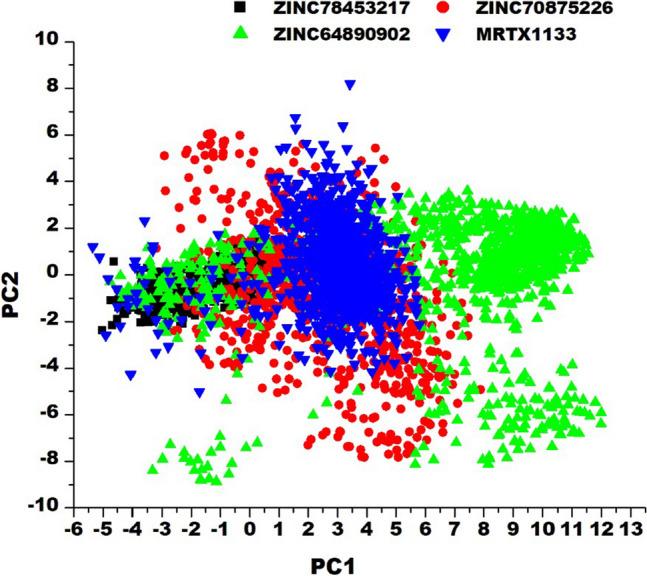
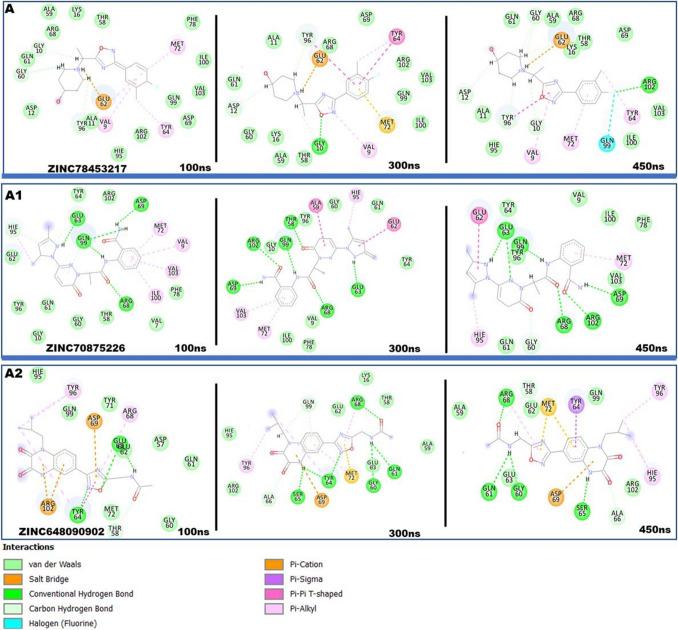
The Kirsten rat sarcoma (KRAS) oncoprotein has been on drug hunters list for decades now. Initially considered undruggable, recent advances have successfully broken the jinx through covalent inhibition that exploits the mutated cys12 in the switch II binding pocket (KRAS). Though this approach has achieved some level of success, patients with mutations other than cys12 are still uncatered for. KRAS is the most frequent KRAS mutated oncoprotein. It is only until recently, MRTX1133 has been discovered as a potential inhibitor of KRAS. This study seeks to unravel the structural binding mechanism of MRTX1133 as well as identify potential drug leads of KRAS based on structural binding characteristics of MRTX1133. It was revealed that MRTX1133 binding stabilizes the binding site by increasing the hydrophobicity which resultantly induced positive correlated movements of switches I and II which could disrupt their interaction with effector and regulatory proteins. Furthermore, MRTX1133 interacted with critical residues; Asp69 (- 4.54 kcal/mol), His95 (- 3.65 kcal/mol), Met72 (- 2.27 kcal/mol), Thr58 (- 2.23 kcal/mol), Gln99 (- 2.03 kcal/mol), Arg68 (- 1.67 kcal/mol), Tyr96 (- 1.59 kcal/mol), Tyr64 (- 1.34 kcal/mol), Gly60 (- 1.25 kcal/mol), Asp12 (- 1.04 kcal/mol), and Val9 (- 1.03 kcal/mol) that contributed significantly to the total free binding energy of - 73.23 kcal/mol. Pharmacophore-based virtual screening based on the structural binding mechanisms of MRTX1133 identified ZINC78453217, ZINC70875226 and ZINC64890902 as potential KRAS inhibitors. Further, structural optimisations and biochemical testing of these compounds would assist in the discovery of effective KRAS inhibitors.
克氏大鼠肉瘤(KRAS)癌蛋白几十年来一直是药物猎手的目标。最初被认为是不可成药的,但最近的进展通过利用突变的开关 II 结合口袋中的半胱氨酸 12(KRAS)的共价抑制成功地打破了这种魔咒。虽然这种方法取得了一定的成功,但除了半胱氨酸 12 以外的突变的患者仍然没有得到治疗。KRAS 是最常见的 KRAS 突变癌蛋白。直到最近,才发现 MRTX1133 是一种潜在的 KRAS 抑制剂。本研究旨在揭示 MRTX1133 的结构结合机制,并根据 MRTX1133 的结构结合特征确定 KRAS 的潜在药物先导物。结果表明,MRTX1133 的结合通过增加疏水性来稳定结合位点,从而导致开关 I 和 II 的正相关运动,这可能破坏它们与效应物和调节蛋白的相互作用。此外,MRTX1133 与关键残基相互作用;天冬氨酸 69(-4.54 kcal/mol)、组氨酸 95(-3.65 kcal/mol)、蛋氨酸 72(-2.27 kcal/mol)、苏氨酸 58(-2.23 kcal/mol)、谷氨酰胺 99(-2.03 kcal/mol)、精氨酸 68(-1.67 kcal/mol)、酪氨酸 96(-1.59 kcal/mol)、酪氨酸 64(-1.34 kcal/mol)、甘氨酸 60(-1.25 kcal/mol)、天冬氨酸 12(-1.04 kcal/mol)和缬氨酸 9(-1.03 kcal/mol),这些残基对 -73.23 kcal/mol 的总自由结合能有显著贡献。基于 MRTX1133 的结构结合机制的基于药效团的虚拟筛选鉴定出 ZINC78453217、ZINC70875226 和 ZINC64890902 为潜在的 KRAS 抑制剂。此外,这些化合物的结构优化和生化测试将有助于发现有效的 KRAS 抑制剂。





 Zotero 插件