
基于网络药理学的方法探讨青蒿鳖甲汤通过 MAPK 和 PI3K/AKT 通路干预慢性肝病炎症-癌变过程的作用机制。
Network Pharmacology-Based Exploration on the Intervention of Qinghao Biejia Decoction on the Inflammation-Carcinoma Transformation Process of Chronic Liver Disease via MAPK and PI3k/AKT Pathway.
机构信息
School of Traditional Chinese Medicine, Southern Medical University, Guangzhou 510515, China.
Guangdong Provincial Key Laboratory of Chinese Medicine Pharmaceutics, Guangzhou 510515, China.
出版信息
Biomed Res Int. 2022 Oct 14;2022:9202128. doi: 10.1155/2022/9202128. eCollection 2022.
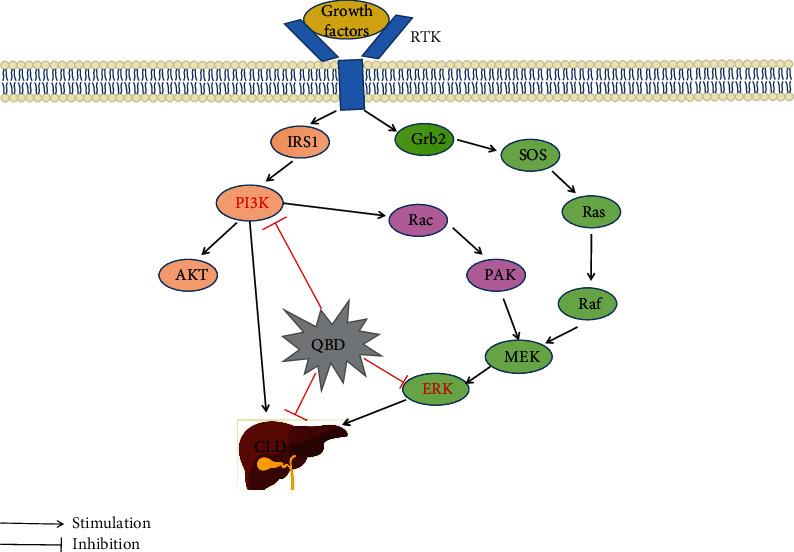
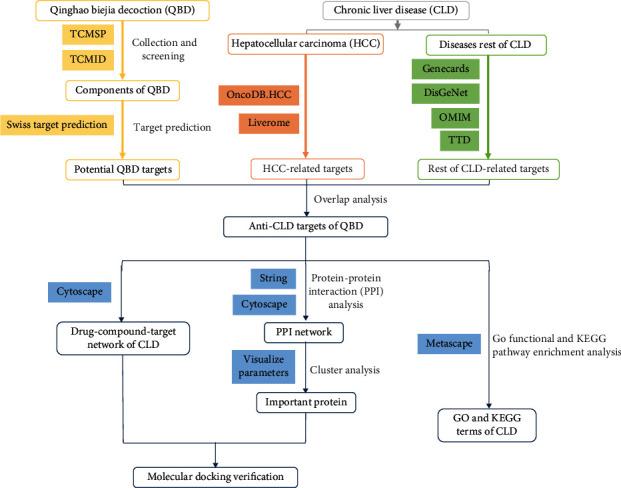
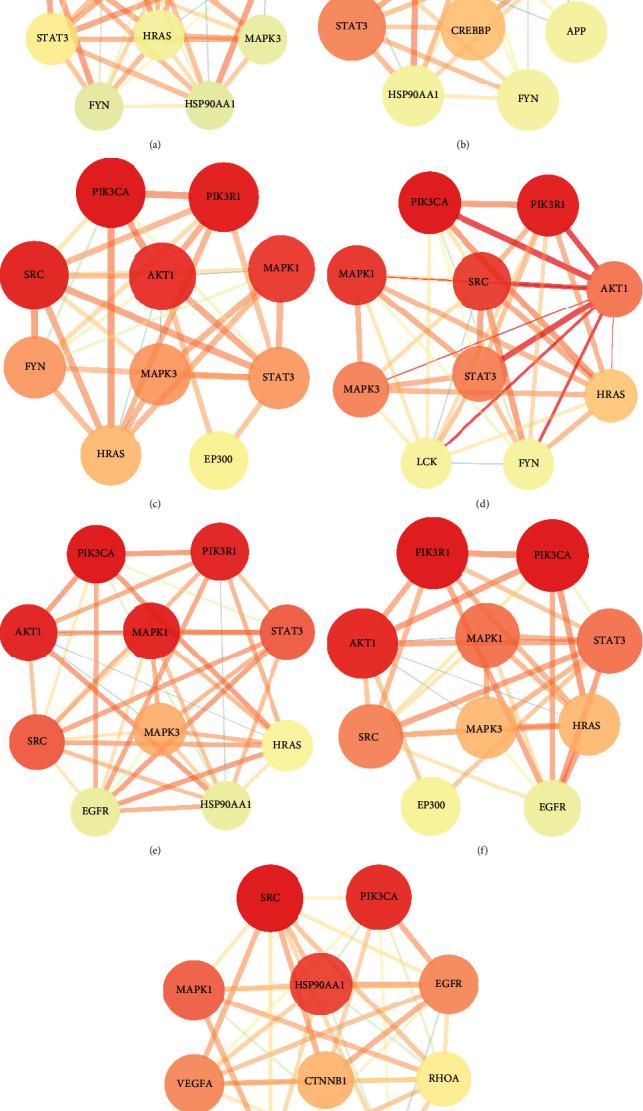
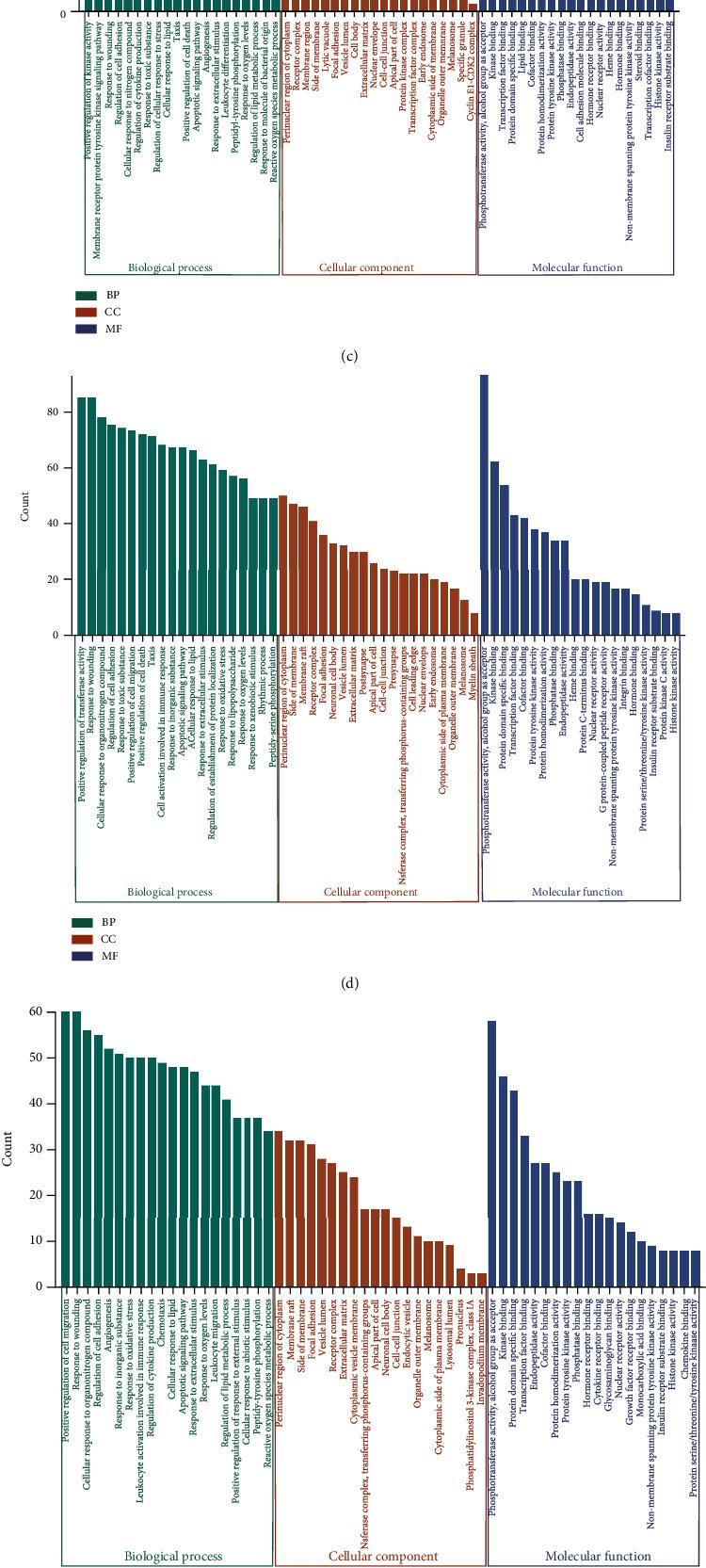
Chronic liver disease(CLD) is a slow-developing and long-term disease that can cause serious damage to the liver. Thus far, it has been associated with viral hepatitis, non-alcoholic fatty liver disease(NAFLD), alcoholic liver disease(ALD), hepatic fibrosis(HF), liver cirrhosis (LC), and liver cancer. Qinghao Biejia Decoction (QBD) is a classic ancient Chinese herbal prescription with strong immune-enhancing, anti-inflammatory, and anti-tumor effects. In this study, we used a network pharmacology approach to investigate the molecular mechanisms of QBD in the inflammation-carcinoma transformation process of chronic liver disease. Two key drug targets, MAPK1 and PIK3CA, were screened using network pharmacology and molecular docking techniques, revealing dihydroartemisinin, artesunate, 12-O-Nicotinoylisolineolone, caffeic acid, and diincarvilone A as active ingredients involved in QBD mechanisms. The main signaling pathways involved were the PI3K-AKT signaling pathway and MAPK signaling pathway. In summary, our results indicated that QBD affects the inflammatory transformation of chronic liver disease through MAPK1 and PIK3CA and signaling pathways MAPK and PI3K/AKT. These data provide research direction for investigating the mechanisms underlying the inflammation-carcinoma transformation process in QBD for chronic liver disease.
慢性肝病(CLD)是一种缓慢发展和长期存在的疾病,可导致严重的肝脏损伤。迄今为止,它与病毒性肝炎、非酒精性脂肪性肝病(NAFLD)、酒精性肝病(ALD)、肝纤维化(HF)、肝硬化(LC)和肝癌有关。青蒿鳖甲汤(QBD)是一种经典的中药古方,具有很强的免疫增强、抗炎和抗肿瘤作用。在这项研究中,我们使用网络药理学方法研究了 QBD 在慢性肝病炎症-癌转化过程中的分子机制。使用网络药理学和分子对接技术筛选出两个关键药物靶点,MAPK1 和 PIK3CA,揭示二氢青蒿素、青蒿琥酯、12-O-烟酰异亮氨酸酮、咖啡酸和二异丁香烯 A 作为 QBD 机制相关的活性成分。涉及的主要信号通路是 PI3K-AKT 信号通路和 MAPK 信号通路。总之,我们的结果表明,QBD 通过 MAPK1 和 PIK3CA 以及信号通路 MAPK 和 PI3K/AKT 影响慢性肝病的炎症转化。这些数据为研究 QBD 治疗慢性肝病炎症-癌转化过程的机制提供了研究方向。




 Zotero 插件