
膳食海参皂甙与能量限制对减肥和体重反弹的抗肥胖作用比较研究。
A Comparative Study of the Anti-Obesity Effects of Dietary Sea Cucumber Saponins and Energy Restriction in Response to Weight Loss and Weight Regain in Mice.
机构信息
College of Food Science and Engineering, Ocean University of China, Qingdao 266003, China.
Laboratory for Marine Drugs and Bioproducts, Pilot National Laboratory for Marine Science and Technology, Qingdao 266237, China.
出版信息
Mar Drugs. 2022 Oct 1;20(10):629. doi: 10.3390/md20100629.
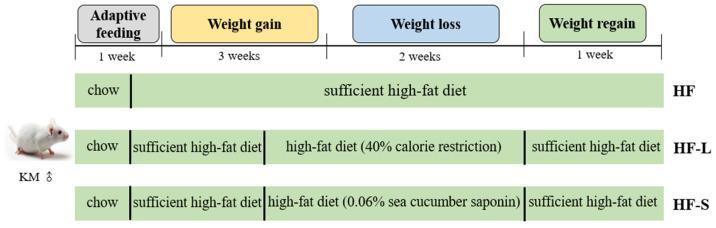
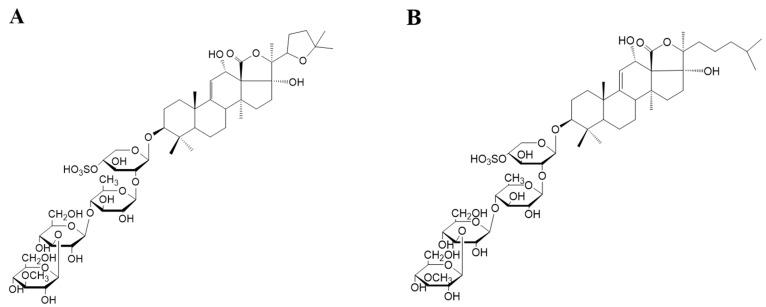
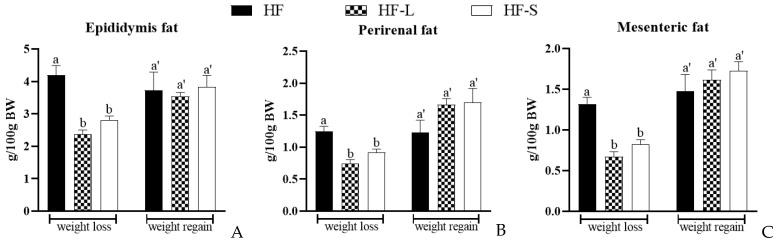
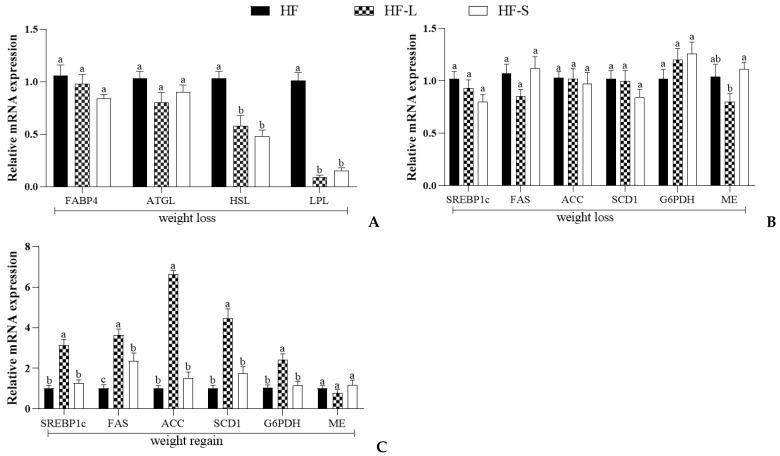
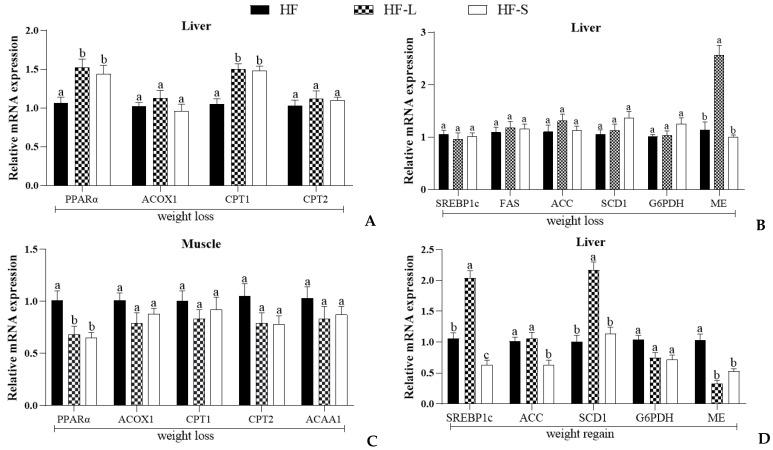
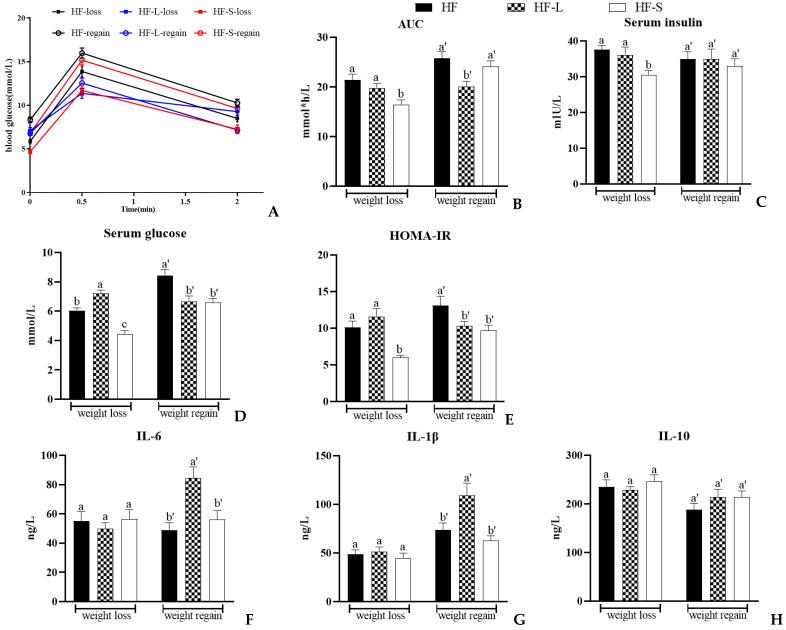
Dietary supplementation of sea cucumber saponins and calorie restriction have been proved to be effective in alleviating obesity, but the differences of anti-obesity effects between sea cucumber saponins and energy restriction during weight loss and weight regain are still unknown. In the present study, high-fat-induced obesity mice were randomly divided into three groups, including a high-fat diet group (HF), an energy restriction by 40% group (HF-L), and a sea cucumber saponins group (HF-S), to compare the effects of dietary sea cucumber saponins and energy restriction on the weight, glucose, and lipid metabolism of obese mice during weight loss and weight regain. The results showed that dietary 0.06% sea cucumber saponins and limiting energy intake by 40% had the same weight loss effect. Interestingly, sea cucumber saponins could alleviate impaired glucose tolerance and insulin resistance caused by obesity. In addition, the inhibited SREBP-1c mediated lipogenesis might lead to the alleviation of weight regain after resuming the high-fat diet even when sea cucumber saponins were no longer supplemented. In contrast, limiting energy intake tended to promote lipid synthesis in the liver and white adipose tissue after restoring a high-fat diet, and inflammation was also induced. The findings indicated that sea cucumber saponins could replace calorie restriction to prevent obesity and might be used as a functional food or drug to resist obesity and related diseases caused by obesity.
海参皂苷和能量限制的饮食补充已被证明可有效缓解肥胖,但海参皂苷和能量限制在减肥和体重恢复期间的抗肥胖效果的差异尚不清楚。在本研究中,高脂肪诱导肥胖的小鼠被随机分为三组,包括高脂肪饮食组(HF)、能量限制 40%组(HF-L)和海参皂苷组(HF-S),以比较饮食中海参皂苷和能量限制对肥胖小鼠在减肥和体重恢复期间的体重、葡萄糖和脂质代谢的影响。结果表明,饮食中海参皂苷 0.06%和能量限制 40%具有相同的减肥效果。有趣的是,海参皂苷可缓解肥胖引起的葡萄糖耐量受损和胰岛素抵抗。此外,抑制 SREBP-1c 介导的脂肪生成可能导致恢复高脂肪饮食后体重反弹减轻,即使不再补充海参皂苷也是如此。相比之下,能量限制在恢复高脂肪饮食后往往会促进肝脏和白色脂肪组织中的脂质合成,并引起炎症。研究结果表明,海参皂苷可以替代能量限制来预防肥胖,并可能被用作预防肥胖和由肥胖引起的相关疾病的功能性食品或药物。

 Zotero 插件