
肝癌可切除性的概念分类。
A Conceptual Classification of Resectability for Hepatocellular Carcinoma.
机构信息
Department of Surgery, Graduate School of Medicine, Kyoto University, 54 Kawahara-Cho, Shogoin, Sakyo-Ku, Kyoto, 606-8507, Japan.
出版信息
World J Surg. 2023 Mar;47(3):740-748. doi: 10.1007/s00268-022-06803-7. Epub 2022 Oct 26.
BACKGROUNDS
In the era of multidisciplinary treatment strategy, resectability for hepatocellular carcinoma (HCC) should be defined. This study aimed to propose and validate a resectability classification of HCC.
METHODS
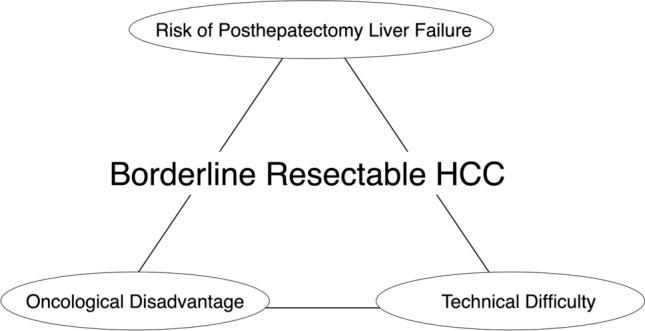
We proposed following the three groups; resectable-(R), borderline resectable-(BR), and unresectable (UR)-HCCs. Resectable two groups were sub-divided according to the value of indocyanine green clearance of remnant liver (ICG-Krem) and presence of macrovascular invasion (MVI); BR-HCC was defined as resectable HCCs with MVI and/or ICG-Krem≥0.03-<0.05, and R-HCC was the remaining. Consecutive patients with HCC who underwent liver resection (LR) and non-surgical treatment(s) (i.e., UR-HCC) between 2011 and 2017 were retrospectively analyzed to validate the proposed classification.
RESULTS
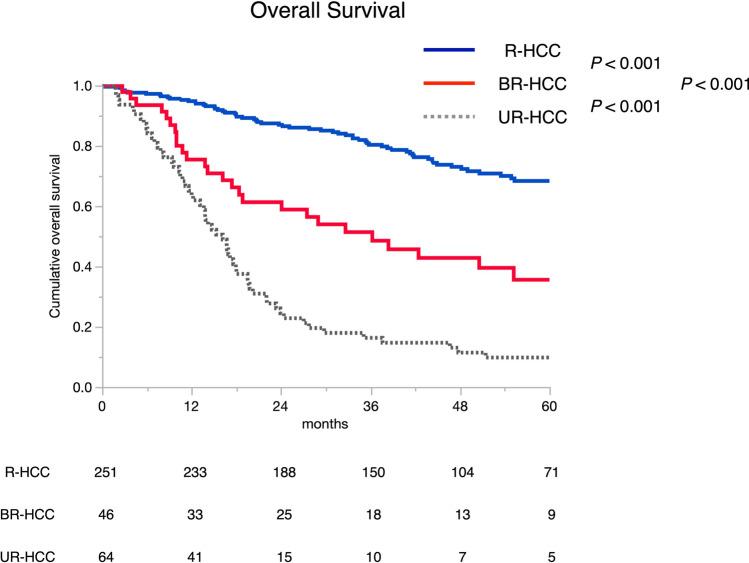
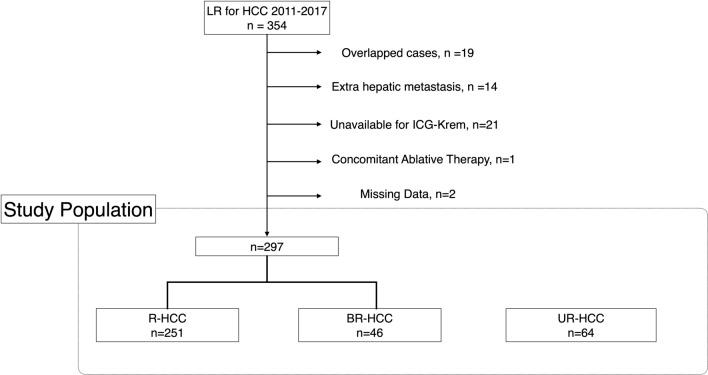
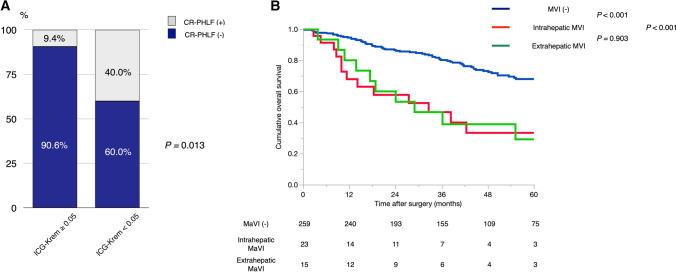
A total of 361 patients were enrolled in the study. Of these, R-, BR- and UR-HCC were found in 251, 46, and 64 patients, respectively. In patients with resected HCC, ICG-Krem≥0.05 was associated with decreased risk of clinically relevant posthepatectomy liver failure (p=0.013) and the presence of MVI was associated with worse overall survival (OS) (p<0.001). The 3-5-years OS rates according to the proposed classification were 80.3, and 68.3% versus 51.4, and 35.6%, in the R and BR groups, respectively (both p<0.001). Multivariate analysis showed BR-HCC was independently associated with poorer OS (p<0.001) after adjusting for known tumor prognostic factors. Meanwhile, BR-HCC was associated with benefit in terms of OS compared with UR-HCC (p<0.001).
CONCLUSION
Our proposal of resectability for HCC allows for stratifying survival outcomes of HCC and may help to determine treatment strategy.
背景
在多学科治疗策略的时代,肝癌(HCC)的可切除性应该得到明确界定。本研究旨在提出并验证一种 HCC 可切除性分类方法。
方法
我们提出了以下三组:可切除(R)、边界可切除(BR)和不可切除(UR)HCC。可切除的两组根据残留肝脏吲哚菁绿清除率(ICG-Krem)的值和是否存在大血管侵犯(MVI)进一步细分;BR-HCC 定义为有 MVI 和/或 ICG-Krem≥0.03-<0.05 的可切除 HCC,R-HCC 则为剩余部分。回顾性分析了 2011 年至 2017 年间接受肝切除术(LR)和非手术治疗(即 UR-HCC)的连续 HCC 患者,以验证该分类方法的有效性。
结果
共纳入 361 例患者。其中,R-、BR-和 UR-HCC 患者分别为 251、46 和 64 例。在接受 HCC 切除术的患者中,ICG-Krem≥0.05 与降低临床相关肝切除术后肝功能衰竭风险相关(p=0.013),而 MVI 的存在与总体生存率(OS)降低相关(p<0.001)。根据提出的分类方法,R 和 BR 组的 3-5 年 OS 率分别为 80.3%和 68.3%,而 UR 组的 OS 率为 51.4%和 35.6%(均<0.001)。多因素分析显示,BR-HCC 与已知肿瘤预后因素调整后的 OS 较差独立相关(p<0.001)。同时,BR-HCC 与 UR-HCC 相比在 OS 方面具有获益(p<0.001)。
结论
我们提出的 HCC 可切除性分类方法可预测 HCC 的生存结局,并有助于确定治疗策略。

 Zotero 插件