
干细胞调控中的端粒与端粒酶
Telomeres and Telomerase in the Control of Stem Cells.
作者信息
Lupatov Alexey Yu, Yarygin Konstantin N
机构信息
Cell Biology Laboratory, Institute of Biomedical Chemistry, Pogodinskaya 10, 119121 Moscow, Russia.
出版信息
Biomedicines. 2022 Sep 20;10(10):2335. doi: 10.3390/biomedicines10102335.
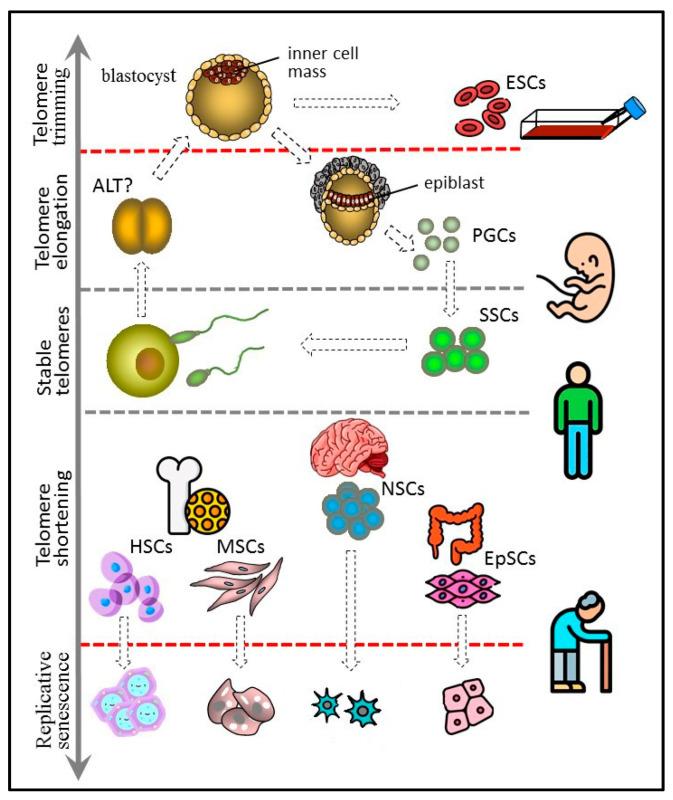
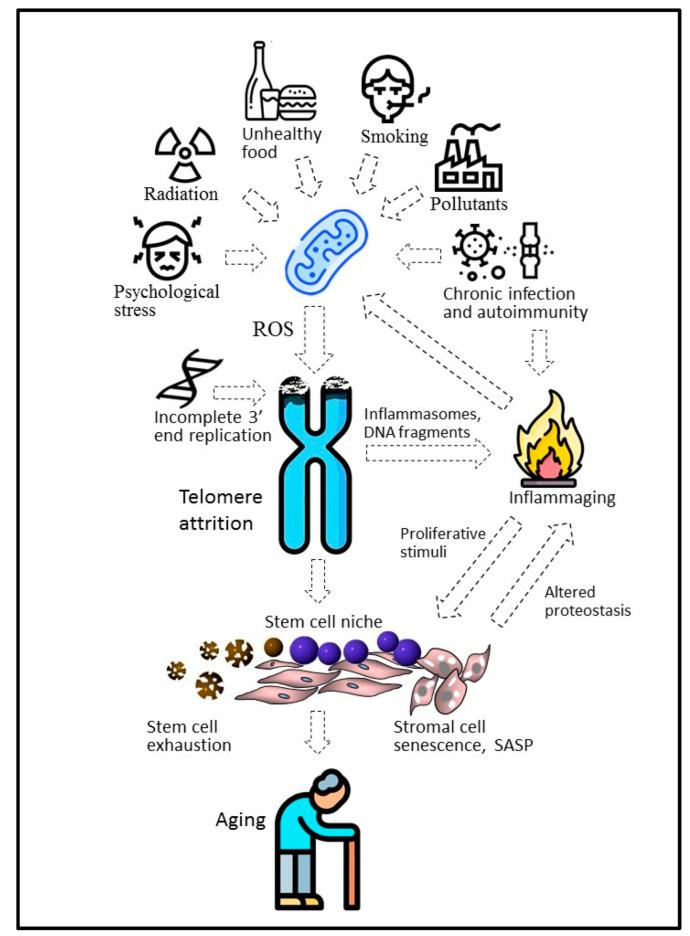
Stem cells serve as a source of cellular material in embryogenesis and postnatal growth and regeneration. This requires significant proliferative potential ensured by sufficient telomere length. Telomere attrition in the stem cells and their niche cells can result in the exhaustion of the regenerative potential of high-turnover organs, causing or contributing to the onset of age-related diseases. In this review, stem cells are examined in the context of the current telomere-centric theory of cell aging, which assumes that telomere shortening depends not just on the number of cell doublings (mitotic clock) but also on the influence of various internal and external factors. The influence of the telomerase and telomere length on the functional activity of different stem cell types, as well as on their aging and prospects of use in cell therapy applications, is discussed.
干细胞在胚胎发育、出生后生长和再生过程中作为细胞物质的来源。这需要足够的端粒长度来确保显著的增殖潜力。干细胞及其生态位细胞中的端粒磨损会导致高周转率器官的再生潜力耗尽,从而引发或促成与年龄相关疾病的发生。在这篇综述中,我们在当前以端粒为中心的细胞衰老理论背景下审视干细胞,该理论认为端粒缩短不仅取决于细胞分裂的次数(有丝分裂时钟),还取决于各种内部和外部因素的影响。文中讨论了端粒酶和端粒长度对不同类型干细胞功能活性的影响,以及对其衰老和在细胞治疗应用中的使用前景的影响。


 Zotero 插件