
口罩中微塑料和邻苯二甲酸酯向水中的迁移
Migration of Microplastics and Phthalates from Face Masks to Water.
机构信息
Institute of Environmental Assessment and Water Research of the Spanish Research Council (IDAEA-CSIC), Jordi Girona 18-26, 08034 Barcelona, Spain.
出版信息
Molecules. 2022 Oct 13;27(20):6859. doi: 10.3390/molecules27206859.
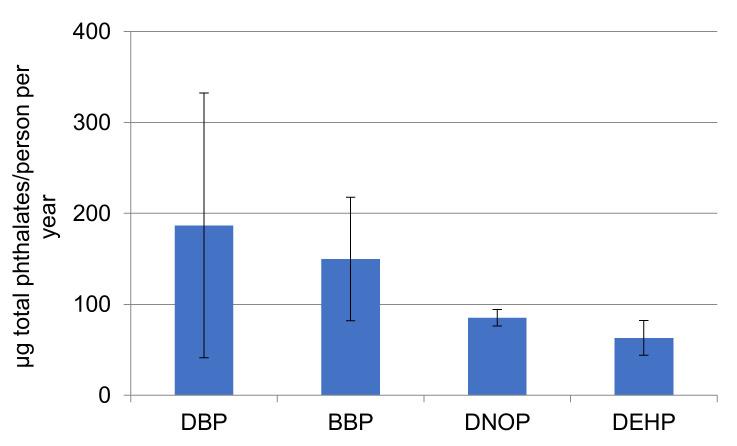
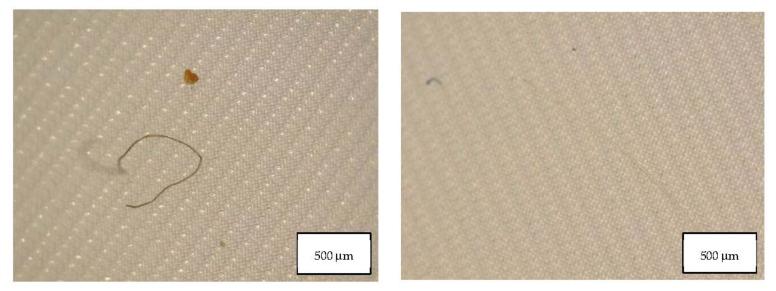
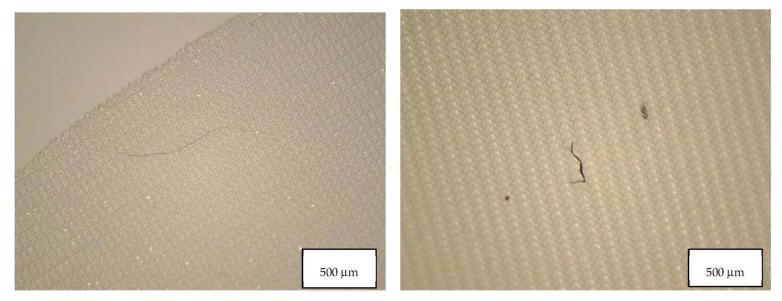
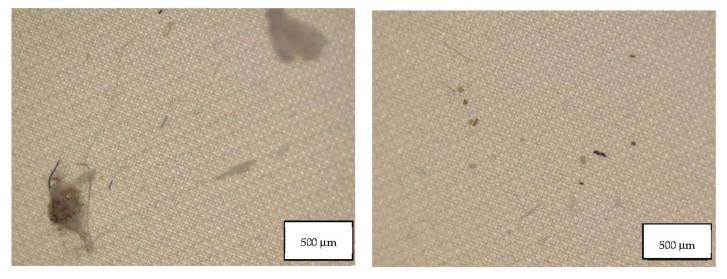
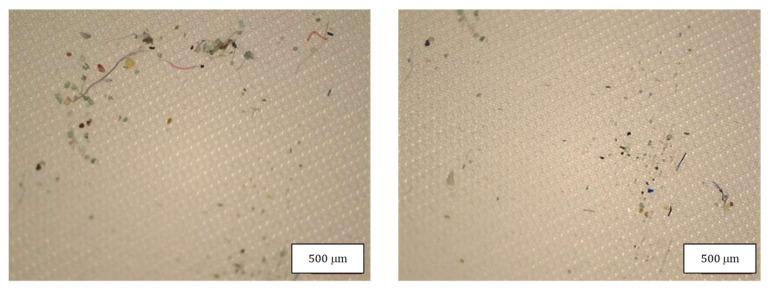
Since the outbreak of COVID-19, face masks have been introduced in the complex strategy of infection prevention and control. Face masks consist of plastic polymers and additives such as phthalates. The aim of this study was to evaluate the migration of microplastics (MP) and phthalates from face masks to water. Four types of masks including FFP2 masks and surgical were studied. Masks were first characterized to determine the different layers and the material used for their fabrication. Then, masks were cut into 20 pieces of 0.5 cm, including all their layers, placed in water, and the migration of MP and phthalates was evaluated according to the conditions stated in EU Regulation No 10/2011 on plastic materials and articles intended to come into contact with food. For MP, the morphological analysis (shape, dimension, particle count) was performed using a stereomicroscope, while the identification of both masks and MP released was conducted using μ-Fourier-transform infrared spectroscopy (µ-FT-IR). Migration of phthalates was assessed by ultra-high-performance liquid chromatography coupled to triple quadrupole mass spectrometer (UPLC-MS/MS). Face masks analyzed in the present study were made of atactic polypropylene (PP) as stated by the manufacturer. The μ-FT-IR confirmed that PP and polyamide (PA) were released as fragments, while both PP and polyester (PES) were released as fibers. In addition, 4 phthalates were identified at concentrations between 2.34 and 21.0 µg/mask. This study shows that the migration study can be applied to evaluate the potential release of MP and phthalates from face masks to water and could give a hint for the potential impact of their incorrect disposal on the aquatic resources.
自 COVID-19 爆发以来,口罩已被纳入感染防控的综合策略中。口罩由塑料聚合物和邻苯二甲酸酯等添加剂组成。本研究旨在评估口罩中的微塑料(MP)和邻苯二甲酸酯向水中的迁移。我们研究了包括 FFP2 口罩和外科口罩在内的四种类型的口罩。首先对口罩进行了特性描述,以确定其不同的层和用于制造它们的材料。然后,将口罩切成 20 块 0.5 厘米的小块,包括所有层,放入水中,并根据欧盟法规 No 10/2011 中规定的条件评估 MP 和邻苯二甲酸酯的迁移情况,该法规涉及与食品接触的塑料材料和物品。对于 MP,使用立体显微镜进行形态分析(形状、尺寸、颗粒计数),而口罩和释放的 MP 的鉴定则使用微傅里叶变换红外光谱(µ-FT-IR)进行。邻苯二甲酸酯的迁移通过超高效液相色谱-三重四极杆质谱联用(UPLC-MS/MS)进行评估。本研究中分析的口罩是制造商声称的无规聚丙烯(PP)制成的。µ-FT-IR 证实,PP 和聚酰胺(PA)以碎片的形式释放,而 PP 和聚酯(PES)则以纤维的形式释放。此外,在浓度为 2.34 到 21.0 µg/口罩之间,鉴定出了 4 种邻苯二甲酸酯。本研究表明,迁移研究可用于评估口罩中 MP 和邻苯二甲酸酯向水中的潜在释放,并为它们的不当处理对水生资源可能产生的潜在影响提供提示。






 Zotero 插件