
来自大西洋海岸的一种未充分利用的甲壳类动物的营养成分、重金属含量及其对人体肠道微生物群的影响。
Nutritional composition, heavy metal content and effect on the human gut microbiota of , an underutilized crustacean from the Atlantic coast.
作者信息
Lopez-Santamarina Aroa, Cardelle-Cobas Alejandra, Lamas Alexandre, Mondragon-Portocarrero Alicia, Cepeda Alberto, Miranda Jose Manuel
机构信息
Laboratorio de Higiene Inspección y Control de Alimentos, Departamento de Química Analítica, Nutrición y Bromatología, Universidade de Santiago de Compostela, Lugo, Spain.
出版信息
Front Nutr. 2022 Oct 13;9:943133. doi: 10.3389/fnut.2022.943133. eCollection 2022.
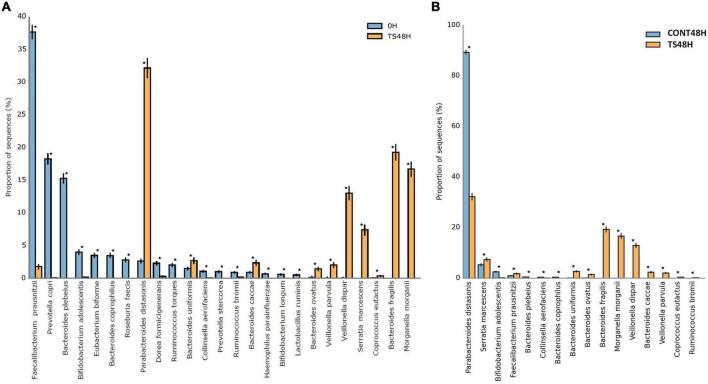
In this study, an undervalued marine crustacean () was characterized in terms of nutritional and heavy metal composition and its potential to affect human gut microbiota. Nutritional analysis of this crustacean revealed that it complies with the criteria established in European legislation to include nutritional claims in their labeling, such as "source of fiber," "low in fat," "low in sugars" and "high in protein." The analysis of the heavy metal content did not reveal any risk derived from the presence of Cd, Hg, or Pb, whereas essential metals contained in 100 g exceeded the minimum daily requirements recommended in Europe for Zn (19.78 mg/kg), Cu (2.28 mg/kg), and Fe (32.96 mg/kg). Using an system, the effect of on the human colonic microbiota shows some beneficial effects, such as fermentation-maintained populations of or , did not increase Firmicutes counts, decreased the Firmicutes/Bacteroidetes ratio, and stimulated 11 metabolic pathways with respect to baseline. These results are unusual in a high protein content-food. However, negative effects were also found in gut microbiota relative proportions, such as an increase in the Proteobacteria and especially some opportunistic bacteria from this , probably due to the antimicrobial effect of chitin on other groups more sensitive to its effect. This work shows for the first time the effect of on human colonic microbiota using and system. The presence of chitin in its composition could provide some beneficial effects by modulating the microbiota, but as is a high-protein food, more studies should be carried out showing these benefits.
在本研究中,对一种被低估的海洋甲壳类动物()进行了营养成分和重金属组成分析,并研究了其对人类肠道微生物群的潜在影响。对这种甲壳类动物的营养分析表明,它符合欧洲法规中规定的在标签上标注营养声明的标准,如“纤维来源”、“低脂肪”、“低糖”和“高蛋白”。重金属含量分析未发现镉、汞或铅存在带来的任何风险,而每100克中所含的必需金属超过了欧洲推荐的锌(19.78毫克/千克)、铜(2.28毫克/千克)和铁(32.96毫克/千克)的每日最低需求量。使用一个系统,研究了对人类结肠微生物群的影响,结果显示出一些有益效果,例如发酵维持的或种群数量、未增加厚壁菌门计数、降低厚壁菌门/拟杆菌门比率,以及相对于基线刺激了11条代谢途径。这些结果在高蛋白含量的食物中并不常见。然而,在肠道微生物群的相对比例方面也发现了负面影响,如变形菌门增加,尤其是来自该门的一些机会致病菌增加,这可能是由于几丁质对其他更敏感群体的抗菌作用。这项工作首次使用系统展示了对人类结肠微生物群的影响。其成分中几丁质的存在可能通过调节微生物群带来一些有益效果,但由于是高蛋白食物,应开展更多研究来证明这些益处。


 Zotero 插件