
基于肠道微生物群靶向的膳食纤维和益生菌对脑瘫儿童功能性便秘的作用
Dietary fiber and probiotics based on gut microbiota targeting for functional constipation in children with cerebral palsy.
作者信息
Huang Congfu, Lyu Jinli, Chu Chunuo, Ge Lan, Peng Yuanping, Yang Zhenyu, Xiong Shenghua, Wu Bin, Chen Xiao, Zhang Xiaowei
机构信息
Department of Pediatrics, Longgang District Maternity and Child Healthcare Hospital, Shenzhen, China.
Department of Obstetrics and Gynecology, Peking University Shenzhen Hospital, Shenzhen, China.
出版信息
Front Pediatr. 2022 Oct 6;10:1001789. doi: 10.3389/fped.2022.1001789. eCollection 2022.
UNLABELLED
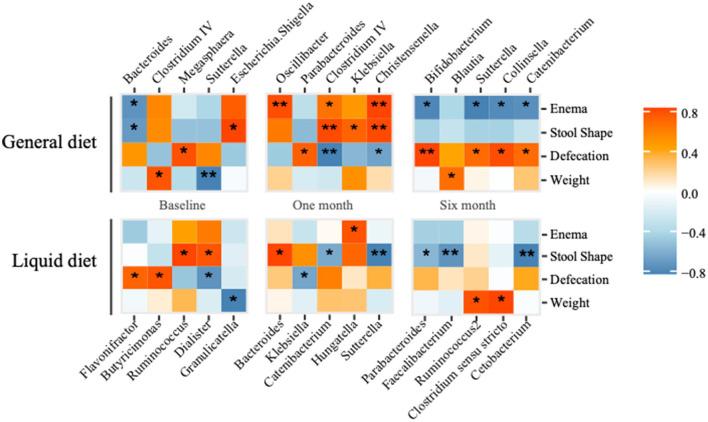
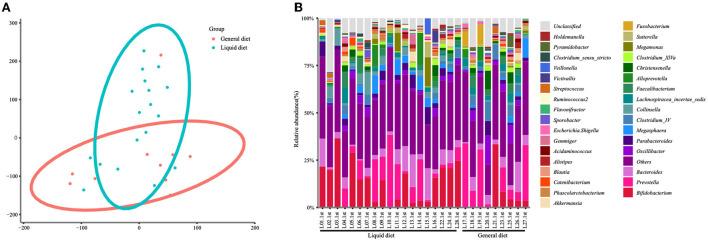
Gastrointestinal (GI) disorders are very common among children with cerebral palsy. Gut microbiota has been confirmed to maintain normal GI physiological function and further contributed to cerebral palsy through the gut-brain axis. Our study was to investigate the effect of dietary fiber combined with probiotics on functional constipated children with cerebral palsy. In total, 35 patient children were enrolled and divided into general diet group ( = 14) and liquid diet group ( = 21). All the participants received Compound Dietary Fiber (CDF) for 1 month and lactic acid-producing and butyric acid-producing probiotics for 6 months. After a 1-month intervention, the frequency of spontaneous and manual defecation, and Bristol score were all significantly improved ( < 0.001). The α-diversity of the gut microbiota was significantly increased after a 1-month intervention ( < 0.05), with a higher abundance of butyric acid-producing bacteria and a lower abundance of opportunistic pathogens ( < 0.05, FDR < 0.05). However, the impersistent effect of the 6-month intervention suggested the insufficient impact of intaking probiotics alone and the short duration of CDF intervention. Moreover, although the intervention had affected the constipation symptoms equally in cerebral palsy children with a general diet and liquid diet, the general diet group showed a greater and more durable change in gut microbiota and clinical phenotypes after intervention than the liquid diet group, which indicated that longer intervention time should be considered for liquid diet children. This study not only illustrated that supplementation of dietary fiber combined with probiotics can improve functional constipation in children with cerebral palsy, but also provides guidance for optimal intervention strategy for future studies, which will further benefit cerebral palsy children.
CLINICAL TRIAL REGISTRATION
http://www.chictr.org.cn/showproj.aspx?proj=46902, identifier: ChiCTR1900028257.
未标注
胃肠道(GI)疾病在脑瘫患儿中非常常见。肠道微生物群已被证实可维持正常的胃肠道生理功能,并通过肠-脑轴对脑瘫产生进一步影响。我们的研究旨在探讨膳食纤维联合益生菌对功能性便秘脑瘫患儿的影响。总共招募了35例患儿,分为普通饮食组(n = 14)和流质饮食组(n = 21)。所有参与者接受复合膳食纤维(CDF)干预1个月,产乳酸和产丁酸益生菌干预6个月。经过1个月的干预,自主排便和人工排便频率以及布里斯托评分均显著改善(P < 0.001)。肠道微生物群的α多样性在1个月的干预后显著增加(P < 0.05),产丁酸细菌丰度较高,机会性病原体丰度较低(P < 0.05,FDR < 0.05)。然而,6个月干预的效果不持久,表明单独摄入益生菌的影响不足以及CDF干预时间较短。此外,尽管干预对普通饮食和流质饮食的脑瘫患儿便秘症状的影响相同,但普通饮食组在干预后肠道微生物群和临床表型的变化比流质饮食组更大且更持久,这表明对流质饮食患儿应考虑更长的干预时间。本研究不仅表明补充膳食纤维联合益生菌可改善脑瘫患儿的功能性便秘,还为未来研究的最佳干预策略提供了指导,这将进一步使脑瘫患儿受益。
临床试验注册
http://www.chictr.org.cn/showproj.aspx?proj=46902,标识符:ChiCTR1900028257。


 Zotero 插件