
用于视网膜营养不良的CRISPR/Cas基因组编辑工具的递送策略:挑战与机遇
Delivery strategies for CRISPR/Cas genome editing tool for retinal dystrophies: challenges and opportunities.
作者信息
Lohia Aayushi, Sahel Deepak Kumar, Salman Mohd, Singh Vivek, Mariappan Indumathi, Mittal Anupama, Chitkara Deepak
机构信息
Department of Pharmacy, Birla Institute of Technology and Science, Pilani (BITS-Pilani), Vidya Vihar Campus, Pilani 333031, India.
Prof. Brien Holden Eye Research Center, Champalimaud Translational Centre for Eye Research, L.V. Prasad Eye Institute, Kallam Anji Reddy Campus, Hyderabad 500034, India.
出版信息
Asian J Pharm Sci. 2022 Mar;17(2):153-176. doi: 10.1016/j.ajps.2022.02.001. Epub 2022 Feb 13.
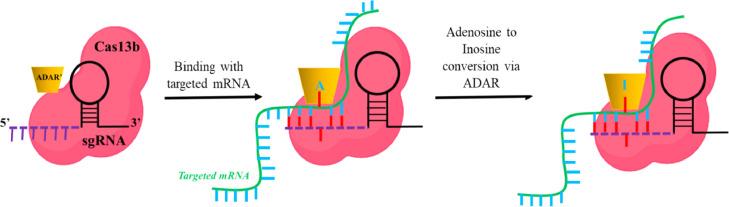
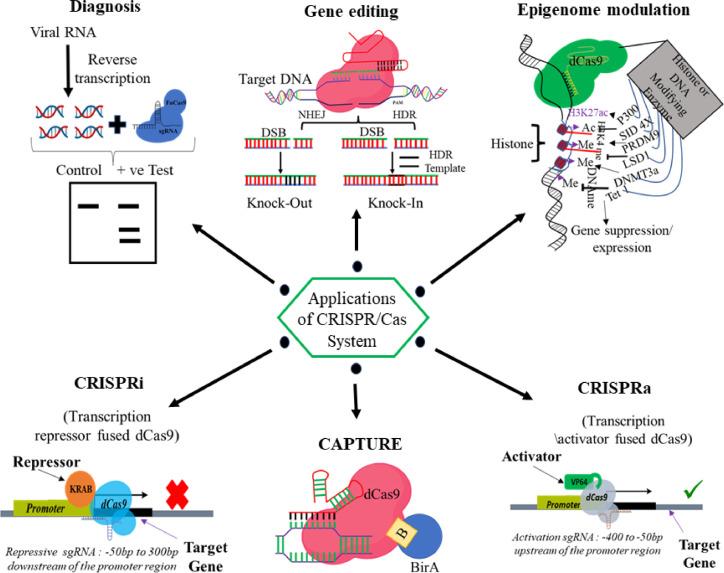
CRISPR/Cas, an adaptive immune system in bacteria, has been adopted as an efficient and precise tool for site-specific gene editing with potential therapeutic opportunities. It has been explored for a variety of applications, including gene modulation, epigenome editing, diagnosis, mRNA editing, etc. It has found applications in retinal dystrophic conditions including progressive cone and cone-rod dystrophies, congenital stationary night blindness, X-linked juvenile retinoschisis, retinitis pigmentosa, age-related macular degeneration, leber's congenital amaurosis, etc. Most of the therapies for retinal dystrophic conditions work by regressing symptoms instead of reversing the gene mutations. CRISPR/Cas9 through indel could impart beneficial effects in the reversal of gene mutations in dystrophic conditions. Recent research has also consolidated on the approaches of using CRISPR systems for retinal dystrophies but their delivery to the posterior part of the eye is a major concern due to high molecular weight, negative charge, and stability of CRISPR components. Recently, non-viral vectors have gained interest due to their potential in tissue-specific nucleic acid (miRNA/siRNA/CRISPR) delivery. This review highlights the opportunities of retinal dystrophies management using CRISPR/Cas nanomedicine.
CRISPR/Cas是细菌中的一种适应性免疫系统,已被用作一种高效且精确的位点特异性基因编辑工具,具有潜在的治疗机会。它已被探索用于多种应用,包括基因调控、表观基因组编辑、诊断、mRNA编辑等。它已在视网膜营养不良病症中得到应用,包括进行性视锥和视锥-视杆营养不良、先天性静止性夜盲、X连锁青少年视网膜劈裂症、色素性视网膜炎、年龄相关性黄斑变性、莱伯先天性黑蒙等。大多数针对视网膜营养不良病症的疗法是通过缓解症状来起作用,而不是逆转基因突变。CRISPR/Cas9通过插入缺失可以在逆转营养不良病症中的基因突变方面产生有益效果。最近的研究也巩固了使用CRISPR系统治疗视网膜营养不良的方法,但由于CRISPR组件的高分子量、负电荷和稳定性,将它们递送至眼后部是一个主要问题。最近,非病毒载体因其在组织特异性核酸(miRNA/siRNA/CRISPR)递送方面的潜力而受到关注。本综述强调了使用CRISPR/Cas纳米药物管理视网膜营养不良的机会。




 Zotero 插件