
关于基于废水的流行病学监测(WBEM)与临床诊断测试(CDT)用于检测社区新冠病毒感染高流行区域的意见。
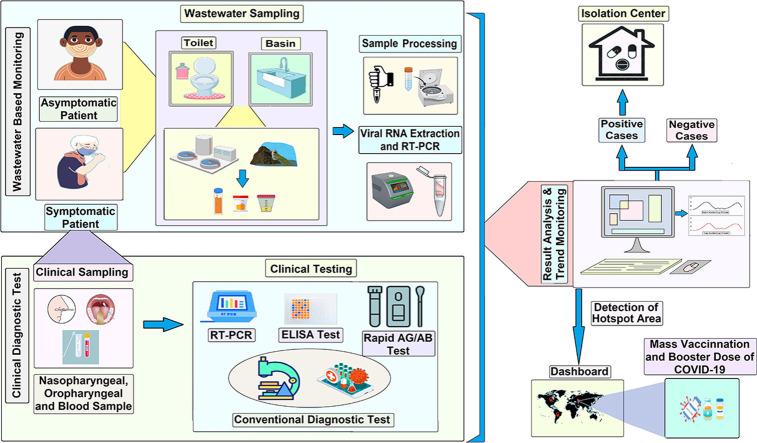
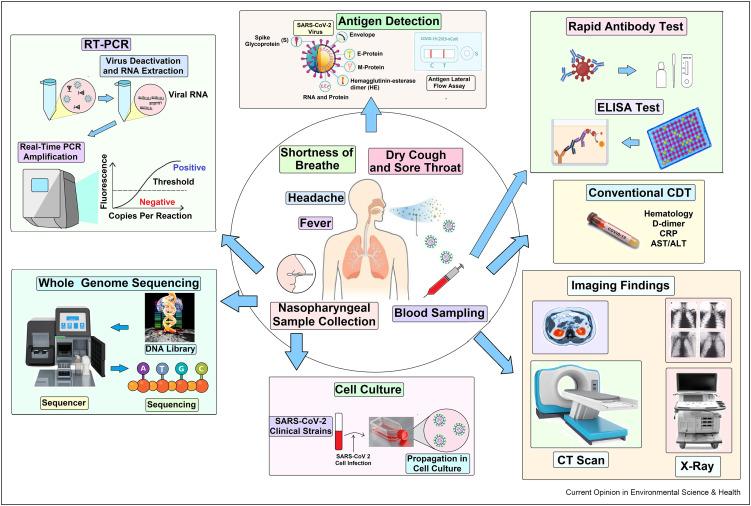
An opinion on Wastewater-Based Epidemiological Monitoring (WBEM) with Clinical Diagnostic Test (CDT) for detecting high-prevalence areas of community COVID-19 Infections.
作者信息
Islam Aminul, Hossen Foysal, Rahman Arifur, Sultana Khandokar Fahmida, Hasan Mohammad Nayeem, Haque Atiqul, Sosa-Hernández Juan Eduardo, Oyervides-Muñoz Mariel Araceli, Parra-Saldívar Roberto, Ahmed Tanvir, Islam Tahmidul, Dhama Kuldeep, Sangkham Sarawut, Bahadur Newaz Mohammed, Reza Hasan Mahmud, Al Marzan Abdullah, Bhattacharya Prosun, Sonne Christian, Ahmed Firoz
机构信息
COVID-19 Diagnostic Lab, Department of Microbiology, Noakhali Science and Technology University, Noakhali-3814, Bangladesh.
Advanced Molecular Lab, Department of Microbiology, President Abdul Hamid Medical College, Karimganj, Kishoreganj, Bangladesh.
出版信息
Curr Opin Environ Sci Health. 2022 Oct 6:100396. doi: 10.1016/j.coesh.2022.100396.
Wastewater-Based Epidemiological Monitoring (WBEM) is an efficient surveillance tool during the COVID-19 pandemic as it meets all requirements of a complete monitoring system including early warning, tracking the current trend, prevalence of the disease, detection of genetic diversity as well asthe up-surging SARS-CoV-2 new variants with mutations from the wastewater samples. Subsequently, Clinical Diagnostic Test is widely acknowledged as the global gold standard method for disease monitoring, despite several drawbacks such as high diagnosis cost, reporting bias, and the difficulty of tracking asymptomatic patients (silent spreaders of the COVID-19 infection who manifest nosymptoms of the disease). In this current reviewand opinion-based study, we first propose a combined approach) for detecting COVID-19 infection in communities using wastewater and clinical sample testing, which may be feasible and effective as an emerging public health tool for the long-term nationwide surveillance system. The viral concentrations in wastewater samples can be used as indicatorsto monitor ongoing SARS-CoV-2 trends, predict asymptomatic carriers, and detect COVID-19 hotspot areas, while clinical sampleshelp in detecting mostlysymptomaticindividuals for isolating positive cases in communities and validate WBEM protocol for mass vaccination including booster doses for COVID-19.
基于废水的流行病学监测(WBEM)是新冠疫情期间一种有效的监测工具,因为它满足了一个完整监测系统的所有要求,包括早期预警、追踪当前趋势、疾病流行情况、检测基因多样性以及从废水样本中检测出具有突变的新冠病毒新变体。随后,临床诊断测试被广泛认为是疾病监测的全球金标准方法,尽管存在一些缺点,如诊断成本高、报告偏差以及追踪无症状患者(新冠感染的无症状传播者,即没有疾病症状的人)困难。在这项基于综述和观点的研究中,我们首先提出一种结合方法,即使用废水和临床样本检测来检测社区中的新冠感染,这作为一种新兴的公共卫生工具,对于长期的全国监测系统可能是可行且有效的。废水样本中的病毒浓度可用作指标,以监测新冠病毒的当前趋势、预测无症状携带者并检测新冠热点地区,而临床样本有助于检测大多数有症状的个体,以便在社区中隔离阳性病例,并验证用于大规模疫苗接种(包括新冠疫苗加强针)的WBEM方案。

 Zotero 插件