
影响胶质母细胞瘤放射反应的因素。
Factors affecting the radiation response in glioblastoma.
作者信息
Aiyappa-Maudsley Radhika, Chalmers Anthony J, Parsons Jason L
机构信息
Department of Molecular and Clinical Cancer Medicine, University of Liverpool, William Henry Duncan Building, Liverpool, L7 8TX, UK.
Institute of Cancer Sciences, College of Medical Veterinary and Life Sciences, University of Glasgow, Glasgow, UK.
出版信息
Neurooncol Adv. 2022 Sep 25;4(1):vdac156. doi: 10.1093/noajnl/vdac156. eCollection 2022 Jan-Dec.
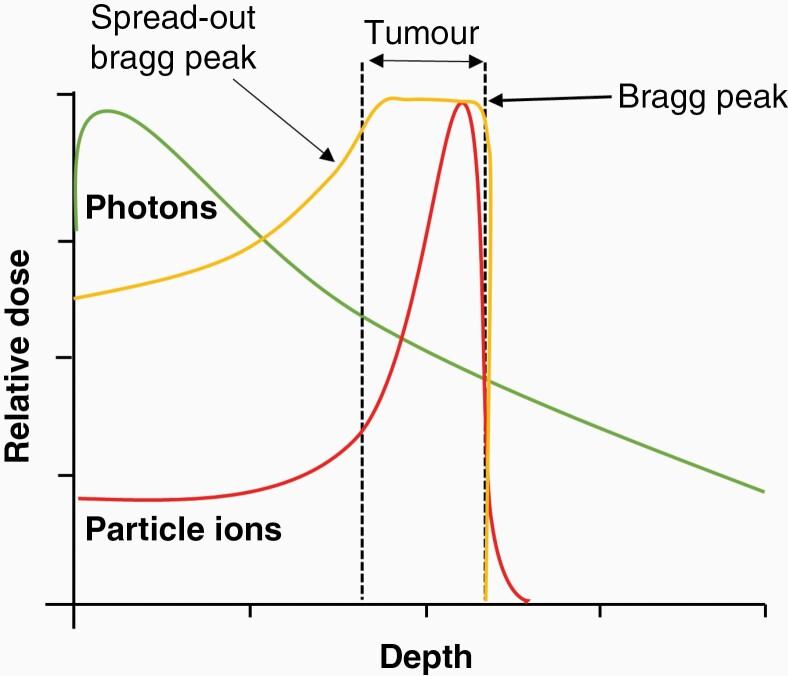
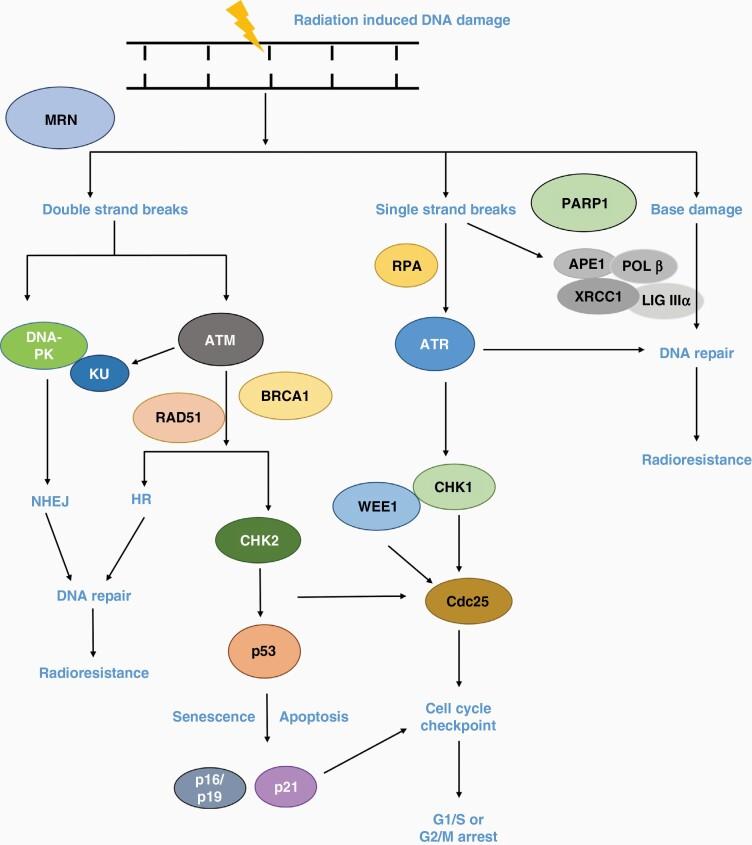
Glioblastoma (GBM) is a highly invasive primary brain tumor in adults with a 5-year survival rate of less than 10%. Conventional radiotherapy with photons, along with concurrent and adjuvant temozolomide, is the mainstay for treatment of GBM although no significant improvement in survival rates has been observed over the last 20 years. Inherent factors such as tumor hypoxia, radioresistant GBM stem cells, and upregulated DNA damage response mechanisms are well established as contributing to treatment resistance and tumor recurrence. While it is understandable that efforts have focused on targeting these factors to overcome this phenotype, there have also been striking advances in precision radiotherapy techniques, including proton beam therapy and carbon ion radiotherapy (CIRT). These enable higher doses of radiation to be delivered precisely to the tumor, while minimizing doses to surrounding normal tissues and organs at risk. These alternative radiotherapy techniques also benefit from increased biological effectiveness, particularly in the case of CIRT. Although not researched extensively to date, combining these new radiation modalities with radio-enhancing agents may be particularly effective in improving outcomes for patients with GBM.
胶质母细胞瘤(GBM)是一种侵袭性很强的成人大脑原发性肿瘤,5年生存率低于10%。传统的光子放疗,联合同步和辅助替莫唑胺治疗,是GBM治疗的主要手段,不过在过去20年里生存率并未有显著提高。诸如肿瘤缺氧、耐辐射的GBM干细胞以及上调的DNA损伤反应机制等内在因素,已被确认为导致治疗抵抗和肿瘤复发的原因。虽然致力于靶向这些因素以克服这种表型是可以理解的,但精确放疗技术也取得了显著进展,包括质子束疗法和碳离子放疗(CIRT)。这些技术能够将更高剂量的辐射精确地传递到肿瘤,同时将对周围正常组织和危险器官的剂量降至最低。这些替代放疗技术还得益于更高的生物学效应,尤其是在CIRT的情况下。尽管迄今为止尚未进行广泛研究,但将这些新的放疗方式与放射增敏剂联合使用,可能对改善GBM患者的治疗效果特别有效。
 Zotero 插件