
茶黄素-3,3'-二没食子酸酯通过 MAPK 通路在人骨肉瘤细胞系和异种移植瘤中发挥 ROS 介导的双重作用在铁死亡和细胞凋亡中。
Theaflavin-3,3'-Digallate Plays a ROS-Mediated Dual Role in Ferroptosis and Apoptosis via the MAPK Pathway in Human Osteosarcoma Cell Lines and Xenografts.
机构信息
Chongqing Medical University, Chongqing 400016, China.
Department of Orthopedics, The First Affiliated Hospital of Chongqing Medical University, Chongqing 400016, China.
出版信息
Oxid Med Cell Longev. 2022 Oct 25;2022:8966368. doi: 10.1155/2022/8966368. eCollection 2022.
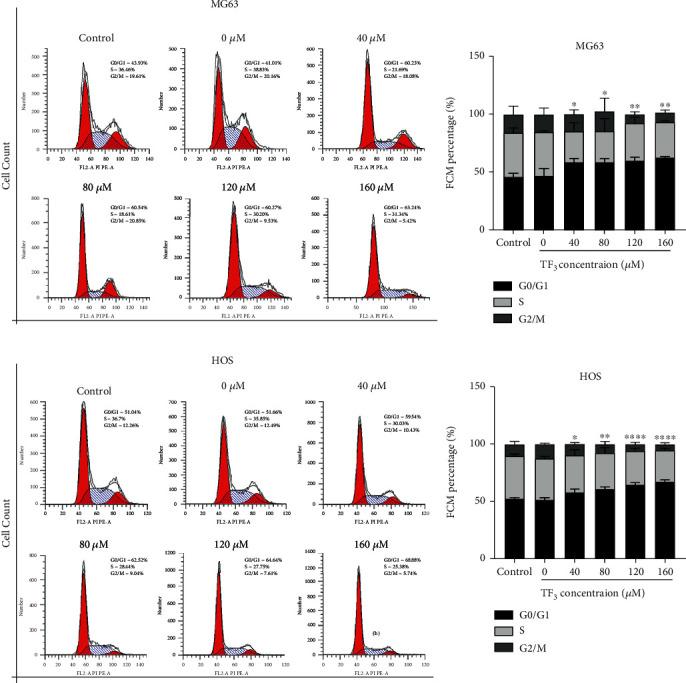
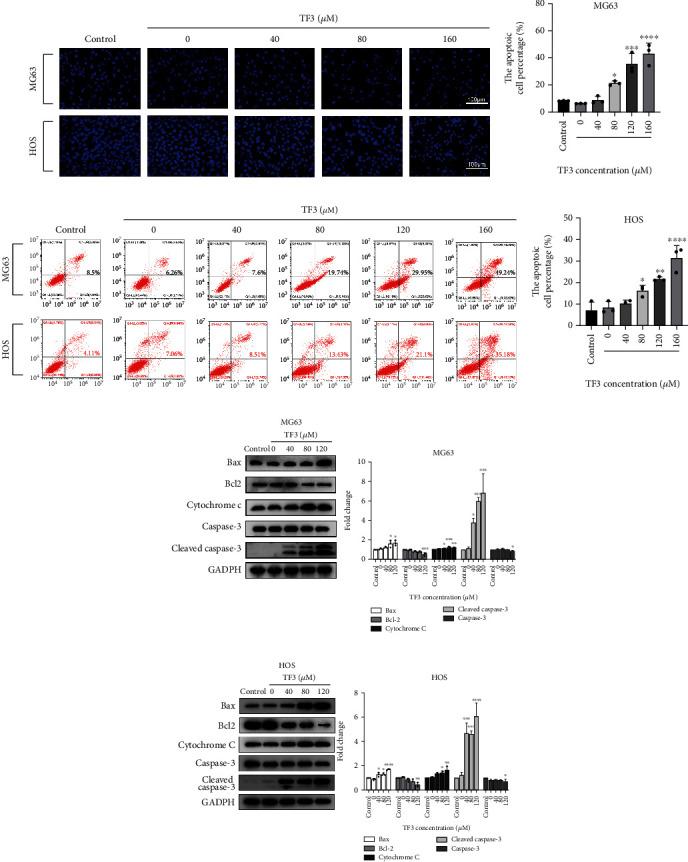
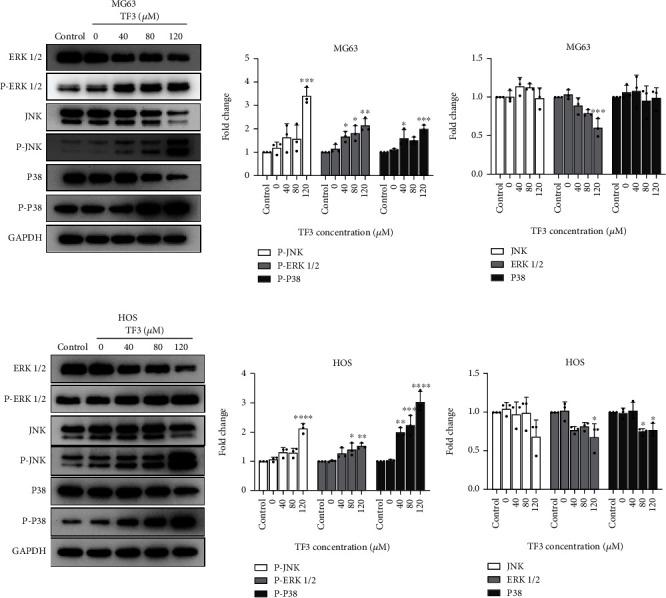
Globally, osteosarcoma (OS) is the most prevalent form of primary bone cancer in children and adolescents. Traditional neoadjuvant chemotherapy regimens have reached a bottleneck; thus, OS survivors have unsatisfactory outcomes. Theaflavin-3,3'-digallate (TF3) exhibits potent anticancer properties against many human cancers. Nevertheless, the biological effects and the underlying molecular mechanism of TF3 in human OS remain unclear. The objective of this study was to investigate the effects of TF3 on human OS cell lines and mouse xenograft models. The results showed that TF3 reduced cell viability, suppressed cell proliferation, and caused G0/G1 cell cycle arrest in both MG63 and HOS cell lines in a concentration-dependent manner. TF3 also altered the homeostatic mechanisms for iron storage in the examined cell lines, resulting in an excess of labile iron. Unsurprisingly, TF3 caused oxidative stress through reduced glutathione (GSH) exhaustion, reactive oxygen species (ROS) accumulation, and the Fenton reaction, which triggered ferroptosis and apoptosis in the cells. TF3 also induced MAPK signalling pathways, including the ERK, JNK, and p38 MAPK pathways. Furthermore, oxidative stress was shown to be the primary reason for TF3-induced proliferation inhibition, programmed cell death, and MAPK pathway activation in vitro. Moreover, TF3 exhibited markedly strong antitumour efficacy in vivo in mouse models. In summary, this study demonstrates that TF3 concomitantly plays dual roles in apoptotic and ferroptotic cell death by triggering the ROS and MAPK signalling pathways in both in vitro and in vivo models.
在全球范围内,骨肉瘤(OS)是儿童和青少年中最常见的原发性骨癌。传统的新辅助化疗方案已经达到瓶颈;因此,骨肉瘤幸存者的治疗效果并不理想。茶黄素-3,3'-二没食子酸酯(TF3)对许多人类癌症具有强大的抗癌特性。然而,TF3 对人骨肉瘤的生物学效应和潜在分子机制仍不清楚。本研究旨在探讨 TF3 对人骨肉瘤细胞系和小鼠异种移植模型的影响。结果表明,TF3 以浓度依赖性方式降低 MG63 和 HOS 细胞系中的细胞活力,抑制细胞增殖,并导致 G0/G1 细胞周期停滞。TF3 还改变了所检查的细胞系中铁储存的动态平衡机制,导致不稳定铁过量。不出所料,TF3 通过还原型谷胱甘肽(GSH)耗竭、活性氧(ROS)积累和 Fenton 反应引起氧化应激,从而触发细胞中的铁死亡和细胞凋亡。TF3 还诱导 MAPK 信号通路,包括 ERK、JNK 和 p38 MAPK 通路。此外,氧化应激被证明是 TF3 在体外诱导增殖抑制、程序性细胞死亡和 MAPK 通路激活的主要原因。此外,TF3 在体内小鼠模型中表现出明显强大的抗肿瘤功效。总之,这项研究表明,TF3 通过触发 ROS 和 MAPK 信号通路,在体外和体内模型中同时发挥促凋亡和铁死亡细胞死亡的双重作用。




 Zotero 插件