
基于 CAR.CD123-NK 细胞的即用型免疫疗法治疗急性髓系白血病的安全性和有效性。
Safe and effective off-the-shelf immunotherapy based on CAR.CD123-NK cells for the treatment of acute myeloid leukaemia.
机构信息
Department of Oncology-Haematology, and Cell and Gene Therapy, Bambino Gesù Children Hospital, IRCCS, Rome, Italy.
Department of Molecular Medicine, Sapienza University of Rome, Rome, Italy.
出版信息
J Hematol Oncol. 2022 Nov 5;15(1):163. doi: 10.1186/s13045-022-01376-3.
BACKGROUND
Paediatric acute myeloid leukaemia (AML) is characterized by poor outcomes in patients with relapsed/refractory disease, despite the improvements in intensive standard therapy. The leukaemic cells of paediatric AML patients show high expression of the CD123 antigen, and this finding provides the biological basis to target CD123 with the chimeric antigen receptor (CAR). However, CAR.CD123 therapy in AML is hampered by on-target off-tumour toxicity and a long "vein-to-vein" time.
METHODS
We developed an off-the-shelf product based on allogeneic natural killer (NK) cells derived from the peripheral blood of healthy donors and engineered them to express a second-generation CAR targeting CD123 (CAR.CD123).
RESULTS
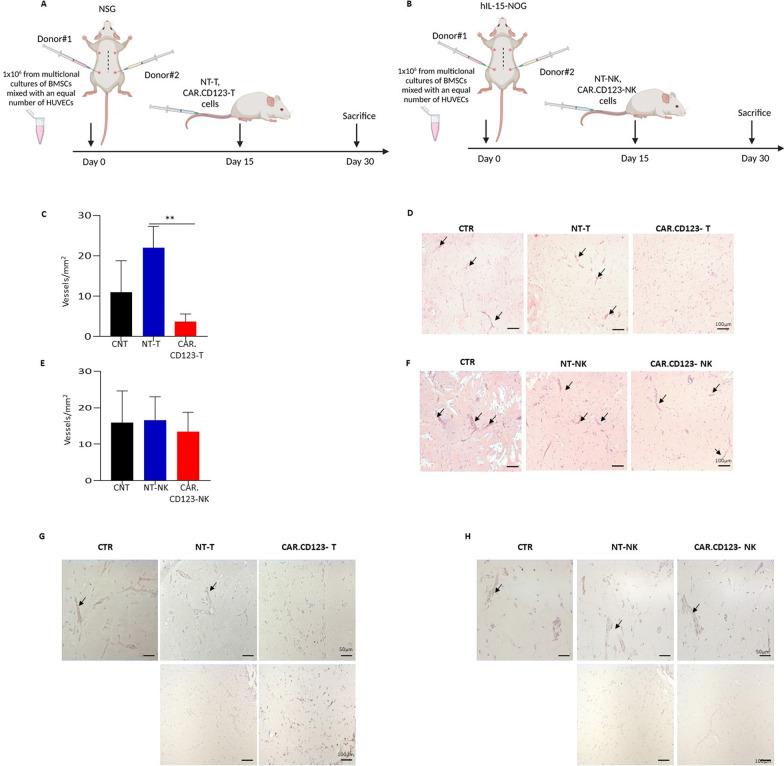
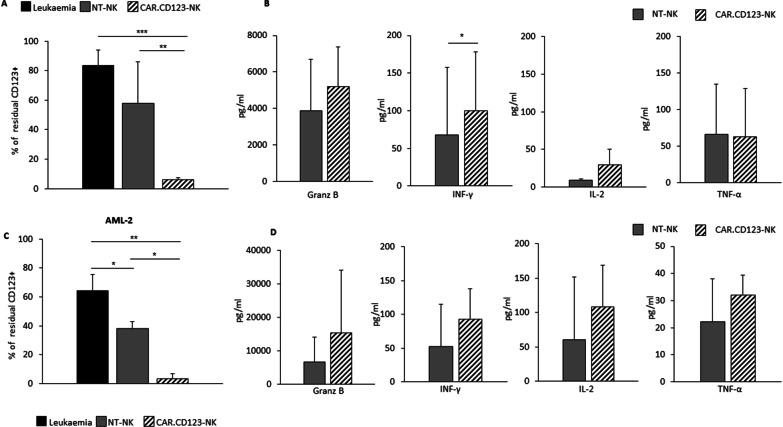
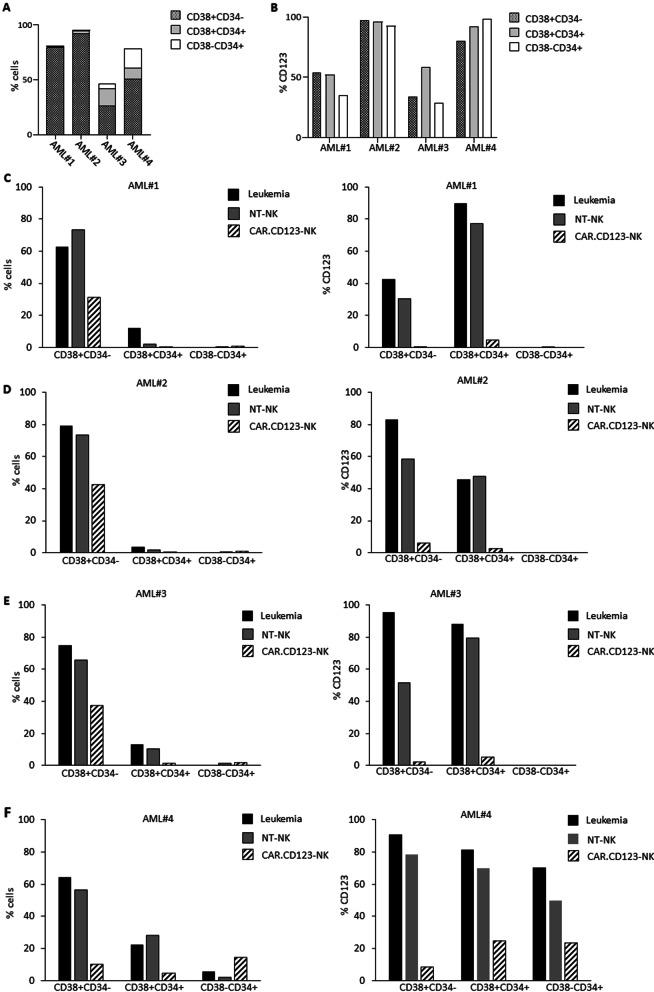
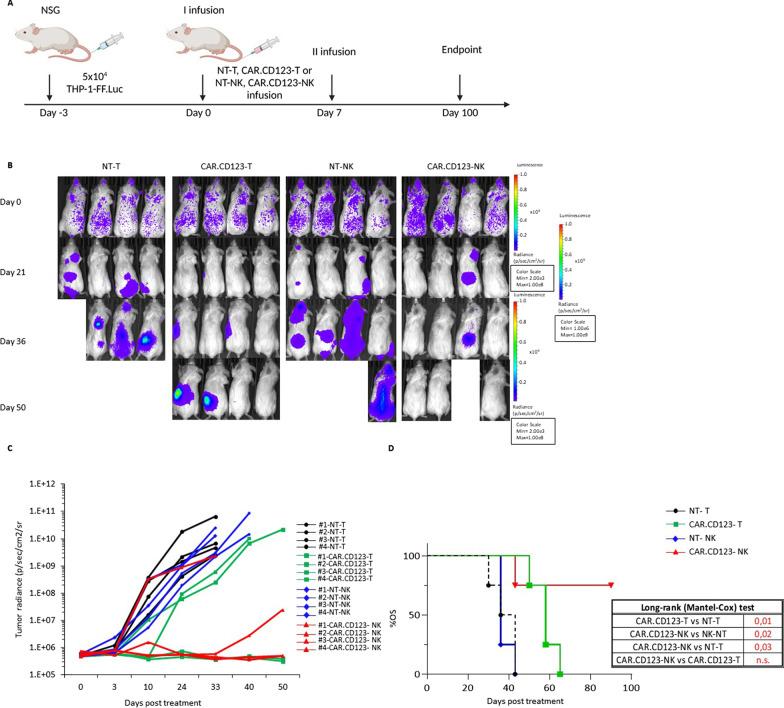
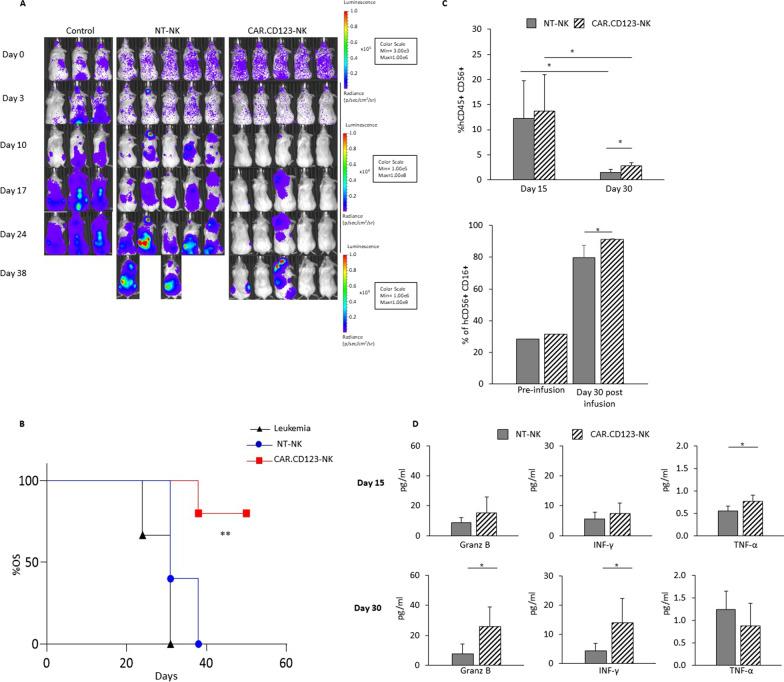
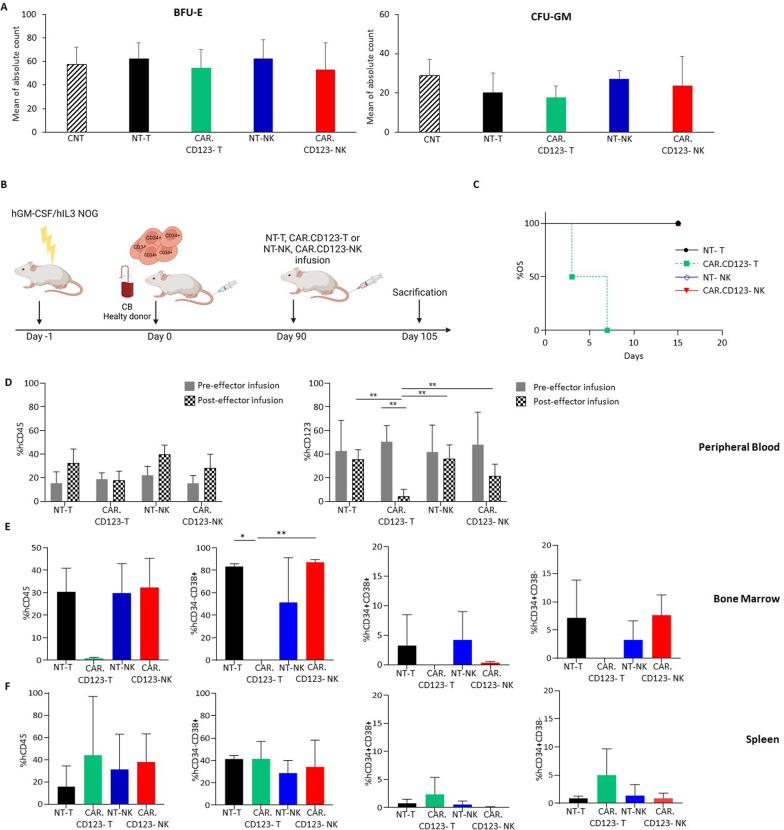
CAR.CD123-NK cells showed significant anti-leukaemia activity not only in vitro against CD123 AML cell lines and CD123 primary blasts but also in two animal models of human AML-bearing immune-deficient mice. Data on anti-leukaemia activity were also corroborated by the quantification of inflammatory cytokines, namely granzyme B (Granz B), interferon gamma (IFN-γ) and tumour necrosis factor alpha (TNF-α), both in vitro and in the plasma of mice treated with CAR.CD123-NK cells. To evaluate and compare the on-target off-tumour effects of CAR.CD123-T and NK cells, we engrafted human haematopoietic cells (hHCs) in an immune-deficient mouse model. All mice infused with CAR.CD123-T cells died by Day 5, developing toxicity against primary human bone marrow (BM) cells with a decreased number of total hCD45 cells and, in particular, of hCD34CD38 stem cells. In contrast, treatment with CAR.CD123-NK cells was not associated with toxicity, and all mice were alive at the end of the experiments. Finally, in a mouse model engrafted with human endothelial tissues, we demonstrated that CAR.CD123-NK cells were characterized by negligible endothelial toxicity when compared to CAR.CD123-T cells.
CONCLUSIONS
Our data indicate the feasibility of an innovative off-the-shelf therapeutic strategy based on CAR.CD123-NK cells, characterized by remarkable efficacy and an improved safety profile compared to CAR.CD123-T cells. These findings open a novel intriguing scenario not only for the treatment of refractory/resistant AML patients but also to further investigate the use of CAR-NK cells in other cancers characterized by highly difficult targeting with the most conventional T effector cells.
背景
儿科急性髓系白血病(AML)患者的复发/难治性疾病预后较差,尽管强化标准治疗有所改善。儿科 AML 患者的白血病细胞高表达 CD123 抗原,这一发现为使用嵌合抗原受体(CAR)靶向 CD123 提供了生物学基础。然而,CAR.CD123 疗法在 AML 中受到靶外肿瘤毒性和较长“血管到血管”时间的阻碍。
方法
我们开发了一种基于异体健康供体外周血来源的自然杀伤(NK)细胞的即用型产品,并对其进行工程改造,使其表达靶向 CD123 的第二代 CAR(CAR.CD123)。
结果
CAR.CD123-NK 细胞不仅在体外对 CD123 AML 细胞系和 CD123 原始细胞具有显著的抗白血病活性,而且在两种携带免疫缺陷小鼠人 AML 的动物模型中也具有显著的抗白血病活性。CAR.CD123-NK 细胞的抗白血病活性数据也通过定量分析体外和接受 CAR.CD123-NK 细胞治疗的小鼠血浆中的炎症细胞因子(即颗粒酶 B(Granz B)、干扰素 γ(IFN-γ)和肿瘤坏死因子 α(TNF-α))得到证实。为了评估和比较 CAR.CD123-T 和 NK 细胞的靶外肿瘤效应,我们将人造血细胞(hHCs)植入免疫缺陷小鼠模型中。所有输注 CAR.CD123-T 细胞的小鼠在第 5 天死亡,对原代人骨髓(BM)细胞产生毒性,导致总 hCD45 细胞数量减少,特别是 hCD34CD38 干细胞。相比之下,用 CAR.CD123-NK 细胞治疗与毒性无关,所有小鼠在实验结束时均存活。最后,在植入人内皮组织的小鼠模型中,我们证明与 CAR.CD123-T 细胞相比,CAR.CD123-NK 细胞的内皮毒性可忽略不计。
结论
我们的数据表明,基于 CAR.CD123-NK 细胞的创新型即用型治疗策略具有可行性,与 CAR.CD123-T 细胞相比,该策略具有显著的疗效和改善的安全性。这些发现不仅为治疗难治/耐药 AML 患者开辟了新的前景,而且为进一步研究在常规 T 效应细胞难以靶向的其他癌症中使用 CAR-NK 细胞提供了新的思路。


 Zotero 插件