
不同口腔治疗对龈上菌斑微生物群落组成的影响。
Impact of different oral treatments on the composition of the supragingival plaque microbiome.
作者信息
Rabe Alexander, Gesell Salazar Manuela, Michalik Stephan, Kocher Thomas, Below Harald, Völker Uwe, Welk Alexander
机构信息
Interfaculty Institute for Genetics and Functional Genomics, Department of Functional Genomics, University Medicine Greifswald, Felix-Hausdorff-Str. 8, 17475 Greifswald, Germany.
Center for Dentistry, Oral and Maxillofacial Medicine, Department of Restorative Dentistry, Periodontology, Endodontology, and Preventive and Pediatric Dentistry, Dental School of University Medicine Greifswald, Fleischmannstraße 42-44, 17489.
出版信息
J Oral Microbiol. 2022 Oct 31;14(1):2138251. doi: 10.1080/20002297.2022.2138251. eCollection 2022.
BACKGROUND
Dental plaque consists of a diverse microbial community embedded in a complex structure of exopolysaccharides. Dental biofilms form a natural barrier against pathogens but lead to oral diseases in a dysbiotic state.
OBJECTIVE
Using a metaproteome approach combined with a standard plaque-regrowth study, this pilot study examined the impact of different concentrations of lactoperoxidase (LPO) on early plaque formation, and active biological processes.
DESIGN
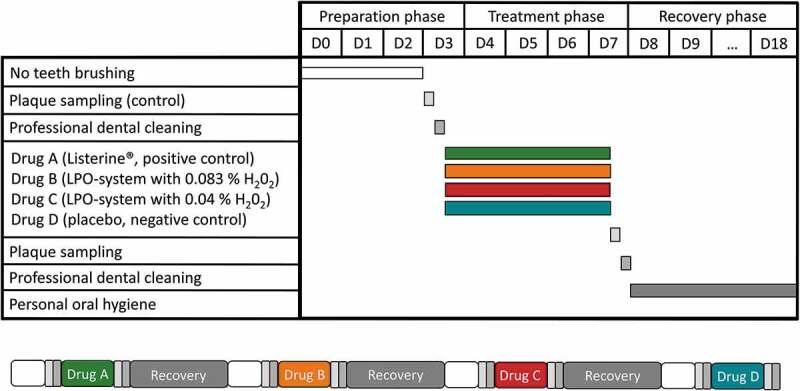
Sixteen orally healthy subjects received four local treatments as a randomized single-blind study based on a cross-over design. Two lozenges containing components of the LPO-system in different concentrations were compared to a placebo and Listerine®. The newly formed dental plaque was analyzed by mass spectrometry (nLC-MS/MS).
RESULTS
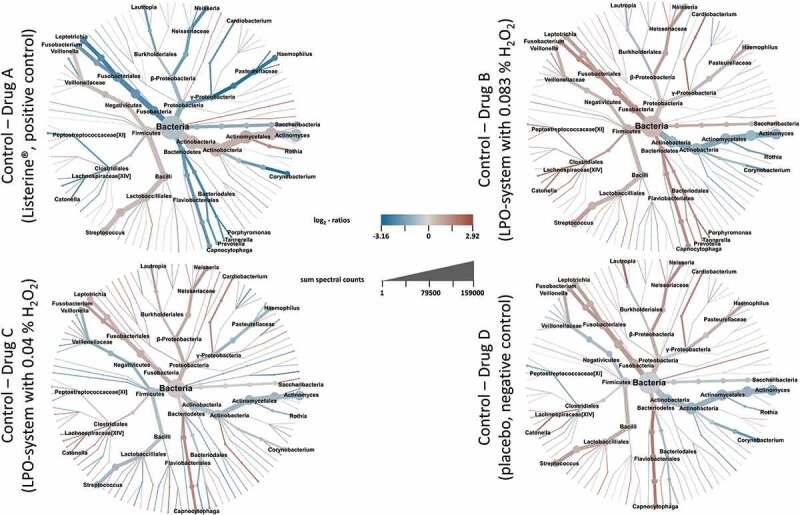
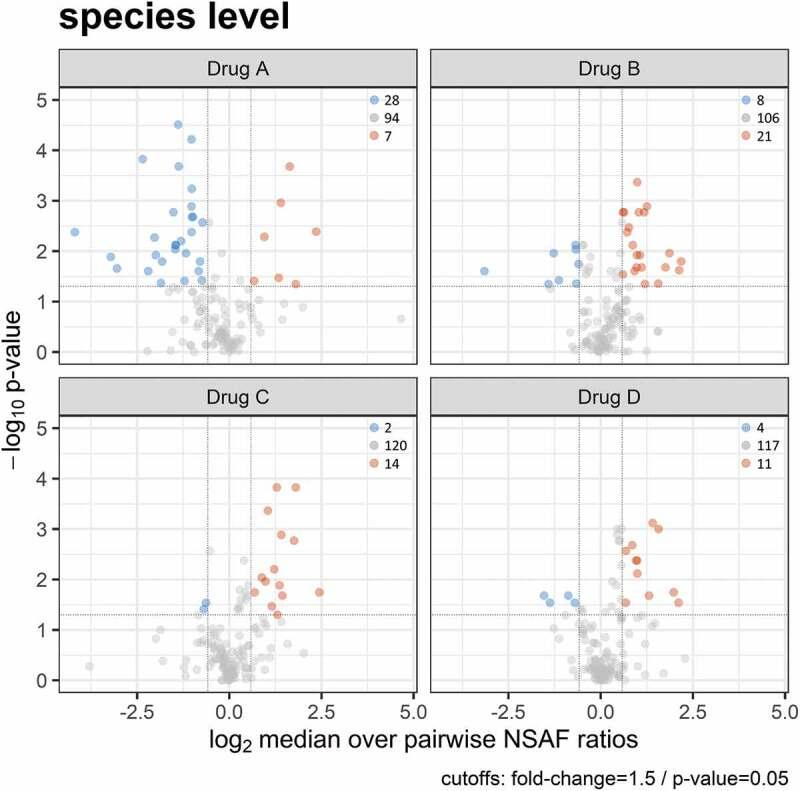
On average 1,916 metaproteins per sample were identified, which could be assigned to 116 genera and 1,316 protein functions. Listerine® reduced the number of metaproteins and their relative abundance, confirming the plaque inhibiting effect. The LPO-lozenges triggered mainly higher metaprotein abundances of early and secondary colonizers as well as bacteria associated with dental health but also periodontitis. Functional information indicated plaque biofilm growth.
CONCLUSION
In conclusion, the mechanisms on plaque biofilm formation of Listerine® and the LPO-system containing lozenges are different. In contrast to Listerine®, the lozenges led to a higher bacterial diversity.
背景
牙菌斑由嵌入胞外多糖复杂结构中的多种微生物群落组成。牙生物膜形成抵御病原体的天然屏障,但在生态失调状态下会导致口腔疾病。
目的
本初步研究采用元蛋白质组学方法结合标准的菌斑再生长研究,考察不同浓度的乳过氧化物酶(LPO)对早期菌斑形成及活跃生物学过程的影响。
设计
16名口腔健康受试者接受了基于交叉设计的随机单盲研究中的四种局部治疗。将两种含有不同浓度LPO系统成分的含片与一种安慰剂和利斯特林漱口水进行比较。通过质谱分析(nLC-MS/MS)对新形成的牙菌斑进行分析。
结果
每个样本平均鉴定出1916种元蛋白质,这些元蛋白质可归为116个属和1316种蛋白质功能。利斯特林漱口水减少了元蛋白质的数量及其相对丰度,证实了其抑制菌斑的作用。LPO含片主要引发早期和中期定植菌以及与牙齿健康和牙周炎相关细菌的元蛋白质丰度升高。功能信息表明菌斑生物膜生长。
结论
总之,利斯特林漱口水和含LPO系统的含片在菌斑生物膜形成上的机制不同。与利斯特林漱口水不同,含片导致更高的细菌多样性。



 Zotero 插件