
考虑到 COVID-19 大流行,对个人防护装备垃圾进行有效采样的时间因素。
Temporal considerations for an effective sampling of personal protective equipment litter derived from the COVID-19 pandemic.
机构信息
Departamento de Ciencias de la Sustentabilidad, El Colegio de la Frontera Sur, Unidad Villahermosa, Villahermosa, Tabasco, Mexico.
出版信息
Sci Total Environ. 2023 Feb 1;858(Pt 2):160047. doi: 10.1016/j.scitotenv.2022.160047. Epub 2022 Nov 8.
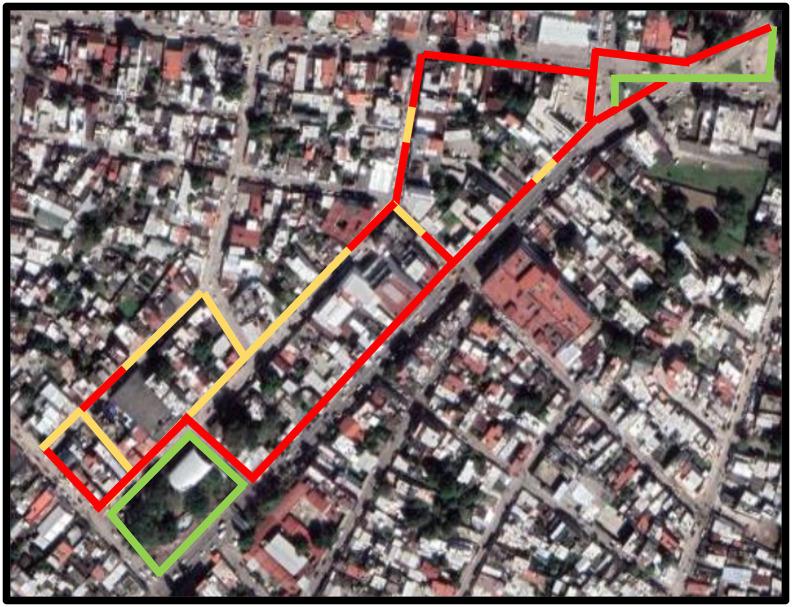
Personal protective equipment (PPE) has become a new pollutant derived from the COVID-19 pandemic. Much of the efforts to characterize PPE litter has focused on its spatial distribution (i.e., trying to identify hotspots of PPE litter), however, such efforts have been limited in the temporal domain, which might result in under- or overestimations in annual projections. Here, using 55 continuous days of sampling in an urban and tropical neighborhood in south east Mexico, I show that in order to have a robust and defensible average and variance values it is needed at least 22 days of random sampling. Nonetheless, this minimum number might change in different ecosystems and land use areas of the built environment due to the temporal variability of the human behavior and activities related to the surveyed areas, as well as the influence of weather conditions that might affect the mobility of people. Furthermore, I discuss how it is recommended to report the daily average density of PPE litter (items m day) and its variability (i.e., 95 % confidence intervals), rather than only the density of PPE litter (items m) in order to facilitate annual estimates of PPE litter disposal.
个人防护设备(PPE)已成为 COVID-19 大流行带来的一种新型污染物。对 PPE 垃圾特征的研究主要集中在其空间分布(即试图确定 PPE 垃圾的热点区域),然而,这种研究在时间域上受到限制,这可能导致对年度预测的低估或高估。在这里,我利用在墨西哥东南部一个城市和热带社区进行的 55 天连续采样,结果表明,为了获得可靠和合理的平均值和方差值,至少需要 22 天的随机采样。然而,由于与调查区域相关的人类行为和活动的时间变化,以及可能影响人员流动的天气条件的影响,这个最小数量在不同的生态系统和建成环境的土地利用区域可能会发生变化。此外,我还讨论了如何建议报告 PPE 垃圾的日平均密度(项 m-天)及其可变性(即 95%置信区间),而不仅仅是 PPE 垃圾的密度(项 m),以便于进行 PPE 垃圾处置的年度估计。



 Zotero 插件