
一种生物标志物方法作为生物指示商业鱼类物种对微塑料摄入的反应:评估组织与生化关系
A Biomarker Approach as Responses of Bioindicator Commercial Fish Species to Microplastic Ingestion: Assessing Tissue and Biochemical Relationships.
作者信息
Capó Xavier, Morató Merce, Alomar Carme, Rios-Fuster Beatriz, Valls Maria, Compa Montserrat, Deudero Salud
机构信息
Centro Oceanográfico de Baleares (IEO-CSIC), Muelle de Poniente s/n, 07015 Palma, Spain.
出版信息
Biology (Basel). 2022 Nov 8;11(11):1634. doi: 10.3390/biology11111634.
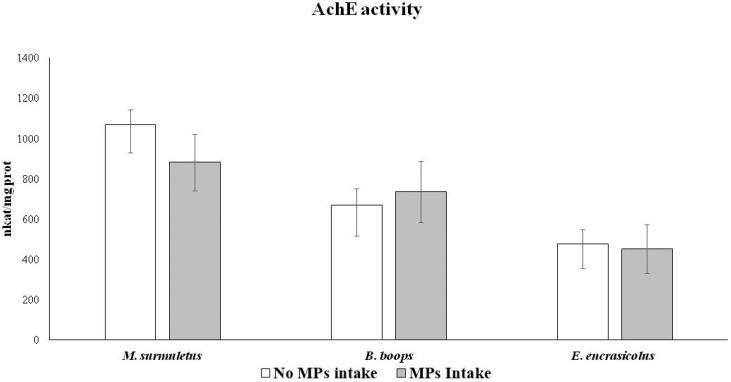
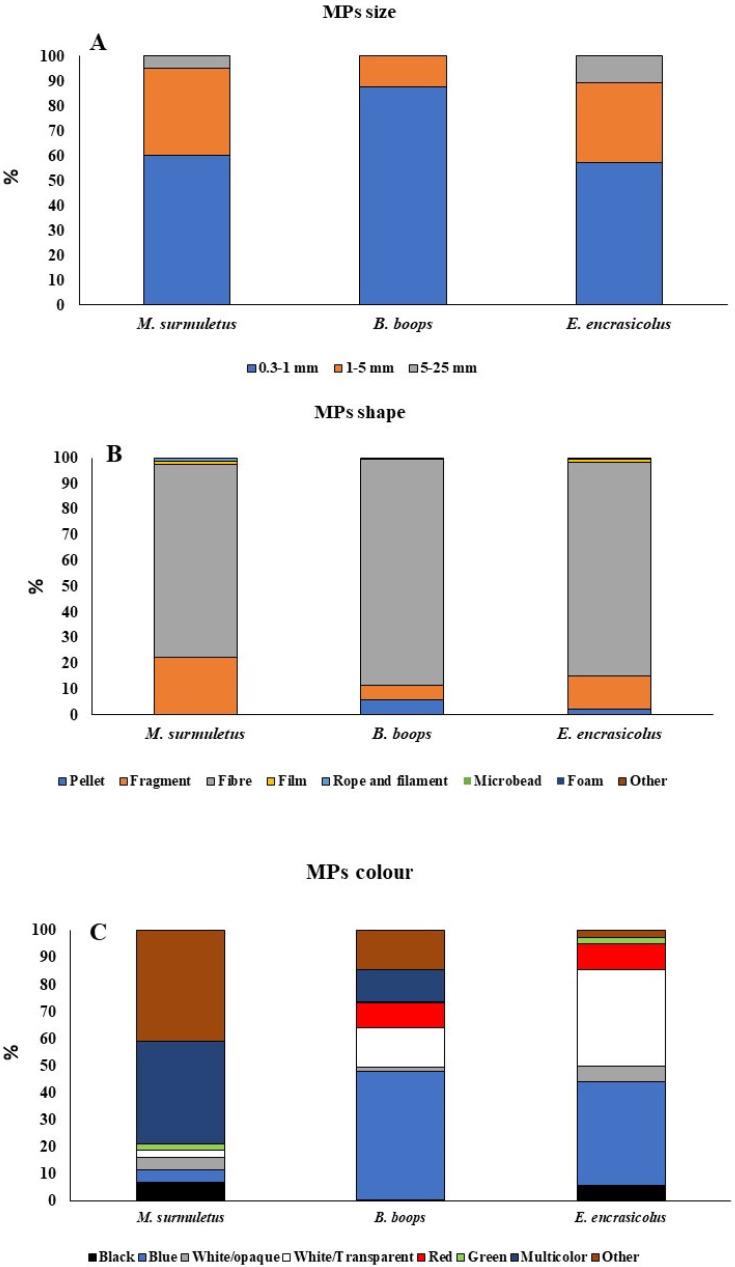
Plastic debris is a growing environmental problem on a global scale, as plastics and microplastics (MPs) can be ingested by marine organisms, inducing toxic effects. The aim of this study was to assess MP intake and antioxidant responses in three bioindicator species: red mullet, bogue, and anchovy (, and , respectively) for plastic contamination in the Mediterranean Sea. MP intake was assessed in the gastrointestinal tract of the fish. Further, several enzymes from both the liver and brain were analysed. The antioxidant defences, catalase (CAT) and superoxide dismutase (SOD), as well as the detoxifying enzyme glutathione-S-transferase (GST), were measured in both tissues. The acetylcholine esterase (AchE), as an indicator of neuronal damage, was measured in the brain. Malondialdehyde (MDA) was analysed as a marker of oxidative damage in the brain and liver samples. Total MP intake and MP typology differed between the three species, with showing the lowest intake of MPs, while showed the highest intake of MPs. An increase in both antioxidant enzymes was evidenced in liver activity with respect to MP intake. In brain samples, an increase in CAT activity was found in and as a consequence of MP ingestion. SOD activity in the brain increased in and that had ingested MPs. GST activity increased in the liver of s' and in brains of that had ingested MPs. The intake of MPs is species related, as well as being inherently linked to the habitat they live in and being able to induce a light activation of species-specific detoxifying and antioxidant mechanisms.
塑料碎片是一个在全球范围内日益严重的环境问题,因为塑料和微塑料(MPs)会被海洋生物摄入,从而产生毒性作用。本研究的目的是评估三种生物指示物种(分别为红鲻鱼、金头鲷和凤尾鱼)对地中海塑料污染的微塑料摄入量和抗氧化反应。通过分析鱼类胃肠道来评估微塑料摄入量。此外,还分析了肝脏和大脑中的几种酶。在这两个组织中测量了抗氧化防御酶过氧化氢酶(CAT)和超氧化物歧化酶(SOD),以及解毒酶谷胱甘肽 - S - 转移酶(GST)。在大脑中测量了作为神经元损伤指标的乙酰胆碱酯酶(AchE)。分析了丙二醛(MDA)作为大脑和肝脏样本氧化损伤的标志物。三种物种的微塑料总摄入量和微塑料类型有所不同,红鲻鱼的微塑料摄入量最低,而凤尾鱼的微塑料摄入量最高。就微塑料摄入量而言,红鲻鱼肝脏中两种抗氧化酶的活性均有所增加。在大脑样本中,由于摄入微塑料,金头鲷和凤尾鱼的CAT活性增加。摄入微塑料的红鲻鱼和凤尾鱼大脑中的SOD活性增加。摄入微塑料的红鲻鱼肝脏和凤尾鱼大脑中的GST活性增加。微塑料的摄入量与物种有关,并且与它们所生活的栖息地有着内在联系,并且能够引发物种特异性解毒和抗氧化机制的轻度激活。

 Zotero 插件