
镁甘氨酸异甘草酸盐通过 SIRT3 减少顺铂与线粒体 DNA 的靶结合量并减轻肾损伤。
Magnesium Isoglycyrrhizinate Reduces the Target-Binding Amount of Cisplatin to Mitochondrial DNA and Renal Injury through SIRT3.
机构信息
Key Laboratory of Drug Metabolism and Pharmacokinetics, Haihe Laboratory of Cell Ecosystem, China Pharmaceutical University, Nanjing 210009, China.
Institute of Clinical Pharmacology & Department of Pharmacy, General Hospital of Ningxia Medical University, Yinchuan 750004, China.
出版信息
Int J Mol Sci. 2022 Oct 28;23(21):13093. doi: 10.3390/ijms232113093.
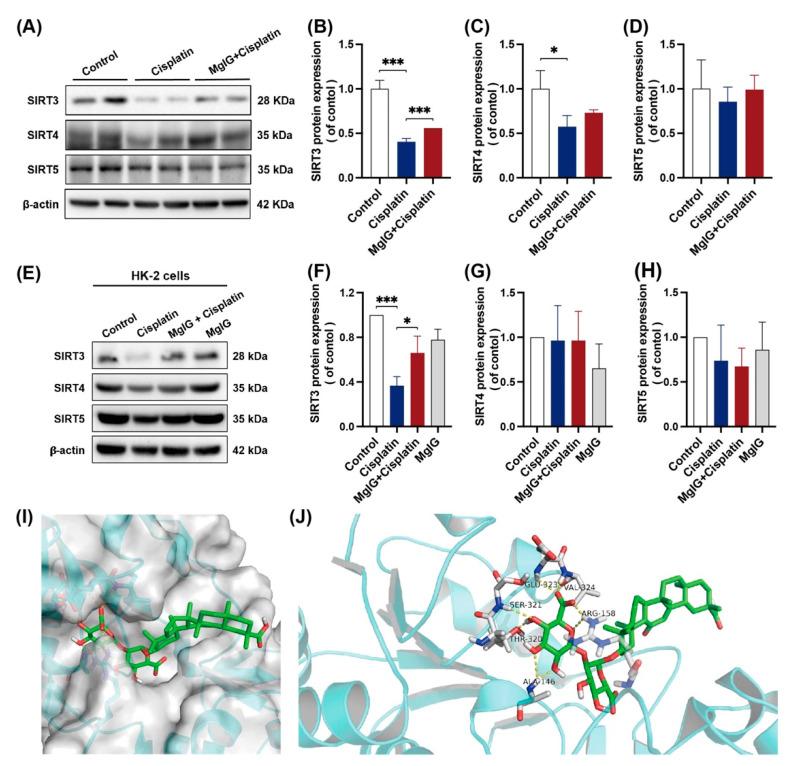
Nephrotoxicity is the dose-limiting factor of cisplatin treatment. Magnesium isoglycyrrhizinate (MgIG) has been reported to ameliorate renal ischemia-reperfusion injury. This study aimed to investigate the protective effect and possible mechanisms of MgIG against cisplatin-induced nephrotoxicity from the perspective of cellular pharmacokinetics. We found that cisplatin predominantly accumulated in mitochondria of renal tubular epithelial cells, and the amount of binding with mitochondrial DNA (mtDNA) was more than twice that with nuclear DNA (nDNA). MgIG significantly lowered the accumulation of cisplatin in mitochondria and, in particular, the degree of target-binding to mtDNA. MgIG notably ameliorated cisplatin-induced changes in mitochondrial membrane potential, morphology, function, and cell viability, while the magnesium donor drugs failed to work. In a mouse model, MgIG significantly alleviated cisplatin-caused renal dysfunction, pathological changes of renal tubules, mitochondrial ultrastructure variations, and disturbed energy metabolism. Both in vitro and in vivo data showed that MgIG recovered the reduction of NAD-related substances and NAD-dependent deacetylase sirtuin-3 (SIRT3) level caused by cisplatin. Furthermore, SIRT3 knockdown weakened the protective effect of MgIG on mitochondria, while SIRT3 agonist protected HK-2 cells from cisplatin and specifically reduced platinum-binding activity with mtDNA. In conclusion, MgIG reduces the target-binding amount of platinum to mtDNA and exerts a protective effect on cisplatin-induced renal injury through SIRT3, which may provide a new strategy for the treatment of cisplatin-induced nephrotoxicity.
肾毒性是顺铂治疗的剂量限制因素。甘草酸镁(MgIG)已被报道可改善肾缺血再灌注损伤。本研究旨在从细胞药代动力学的角度探讨 MgIG 对顺铂诱导的肾毒性的保护作用及其可能的机制。我们发现顺铂主要积聚在肾小管上皮细胞的线粒体中,与线粒体 DNA(mtDNA)的结合量是与核 DNA(nDNA)结合量的两倍多。MgIG 可显著降低顺铂在线粒体中的蓄积,尤其是与 mtDNA 的靶结合程度。MgIG 明显改善了顺铂诱导的线粒体膜电位、形态、功能和细胞活力的变化,而镁供体药物则无效。在小鼠模型中,MgIG 显著减轻了顺铂引起的肾功能障碍、肾小管病理变化、线粒体超微结构变化和能量代谢紊乱。体内外数据均表明,MgIG 恢复了顺铂引起的 NAD 相关物质和 NAD 依赖性去乙酰化酶 SIRT3(SIRT3)水平的降低。此外,SIRT3 敲低减弱了 MgIG 对线粒体的保护作用,而 SIRT3 激动剂可保护 HK-2 细胞免受顺铂的影响,并特异性降低与 mtDNA 的铂结合活性。总之,MgIG 通过 SIRT3 降低了铂对 mtDNA 的靶结合量,对顺铂诱导的肾损伤发挥保护作用,这可能为治疗顺铂诱导的肾毒性提供新策略。



 Zotero 插件