
心肌毒素诱导的肌肉损伤模型中的骨骼肌再生。
Skeletal Muscle Regeneration in Cardiotoxin-Induced Muscle Injury Models.
机构信息
School of Kinesiology, Shanghai University of Sport, Shanghai 200438, China.
出版信息
Int J Mol Sci. 2022 Nov 2;23(21):13380. doi: 10.3390/ijms232113380.
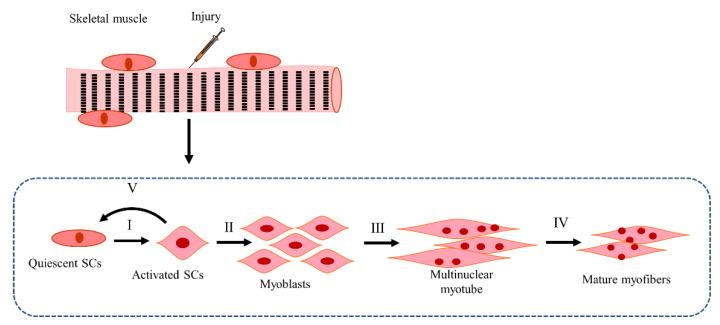
Skeletal muscle injuries occur frequently in daily life and exercise. Understanding the mechanisms of regeneration is critical for accelerating the repair and regeneration of muscle. Therefore, this article reviews knowledge on the mechanisms of skeletal muscle regeneration after cardiotoxin-induced injury. The process of regeneration is similar in different mouse strains and is inhibited by aging, obesity, and diabetes. Exercise, microcurrent electrical neuromuscular stimulation, and mechanical loading improve regeneration. The mechanisms of regeneration are complex and strain-dependent, and changes in functional proteins involved in the processes of necrotic fiber debris clearance, M1 to M2 macrophage conversion, SC activation, myoblast proliferation, differentiation and fusion, and fibrosis and calcification influence the final outcome of the regenerative activity.
骨骼肌损伤在日常生活和运动中经常发生。了解再生的机制对于加速肌肉的修复和再生至关重要。因此,本文综述了心脏毒素诱导损伤后骨骼肌再生的机制。在不同的小鼠品系中,再生过程是相似的,但会被衰老、肥胖和糖尿病所抑制。运动、微电流电神经肌肉刺激和机械加载可改善再生。再生的机制是复杂的,且依赖于品系,参与坏死纤维碎片清除、M1 向 M2 巨噬细胞转化、SCs 激活、成肌细胞增殖、分化和融合以及纤维化和钙化过程的功能蛋白的变化,影响再生活性的最终结果。



 Zotero 插件