
通过, 对银纳米粒子的绿色细胞外合成、生长及生物膜形成抑制活性及其与三种经典抗生素的协同作用。
Green Extracellular Synthesis of Silver Nanoparticles by , Their Growth and Biofilm-Formation Inhibitory Activities and Synergic Behavior with Three Classical Antibiotics.
机构信息
Department of Molecular Biology, Faculty of Sciences, Biology Building, Autonomous University of Madrid, Cantoblanco, 28049 Madrid, Spain.
出版信息
Molecules. 2022 Nov 5;27(21):7589. doi: 10.3390/molecules27217589.
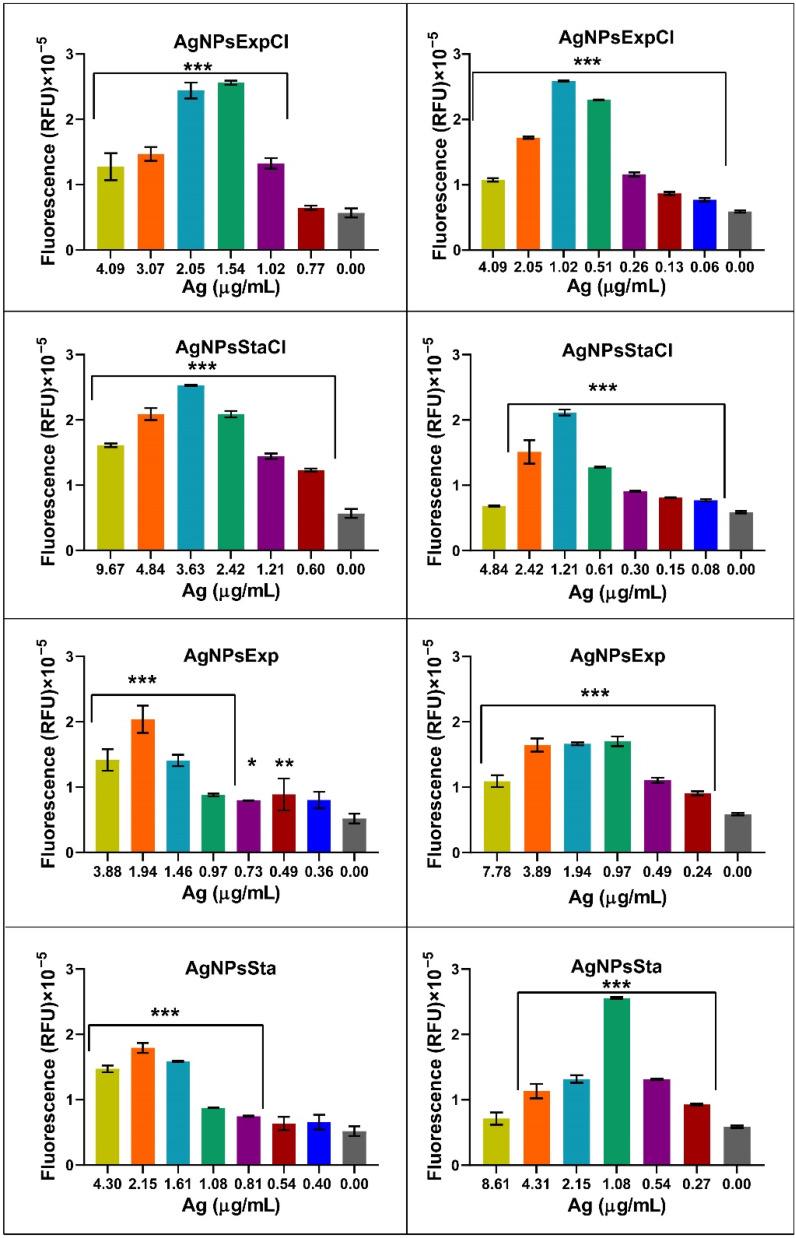
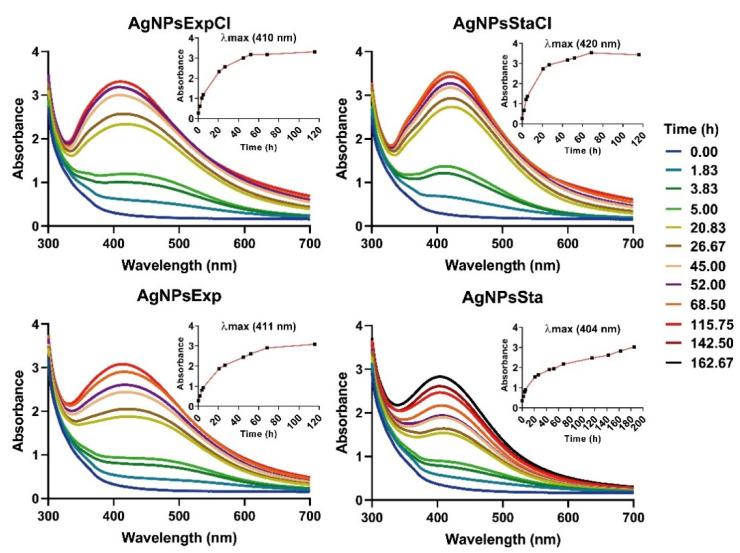
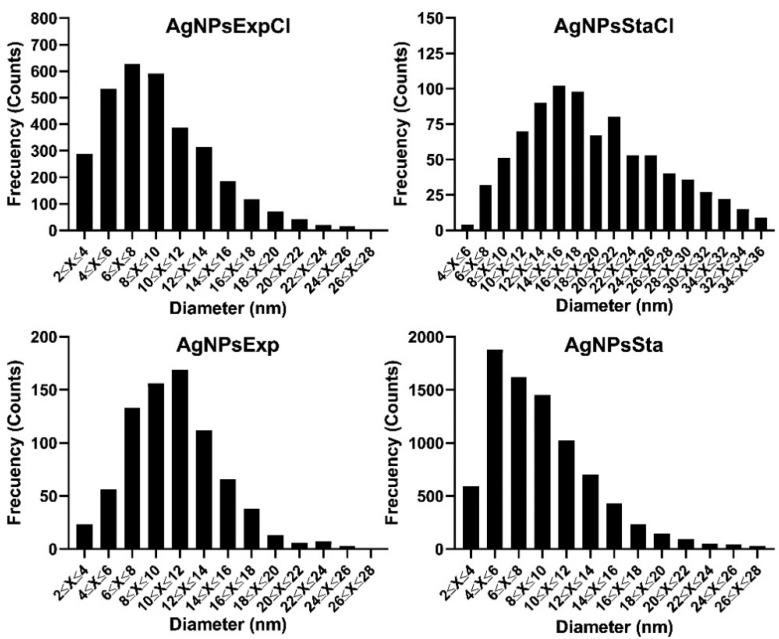
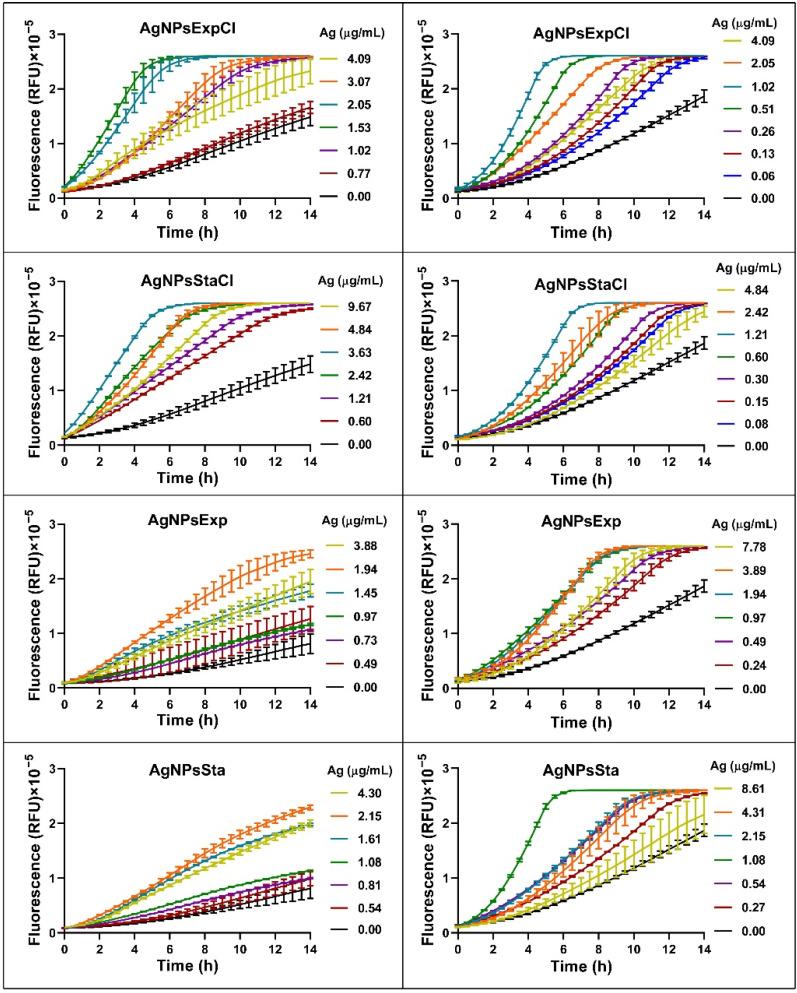
Bacterial resistance to antibiotics is on the rise and hinders the fight against bacterial infections, which are expected to cause millions of deaths by 2050. New antibiotics are difficult to find, so alternatives are needed. One could be metal-based drugs, such as silver nanoparticles (AgNPs). In general, chemical methods for AgNPs' production are potentially toxic, and the physical ones expensive, while green approaches are not. In this paper, we present the green synthesis of AgNPs using two B003 UAM culture broths, sampled from their exponential and stationary growth phases. AgNPs were physicochemically characterized by transmission electron microscopy (TEM), total reflection X-ray fluorescence (TXRF), infrared spectroscopy (FTIR), dynamic light scattering (DLS), and X-ray diffraction (XRD), showing differential characteristics depending on the synthesis method used. Antibacterial activity was tested in three assays, and we compared the growth and biofilm-formation inhibition of six test bacteria: , , , , , and . We also monitored nanoparticles' synergic behavior through the growth inhibition of and by three classical antibiotics: ampicillin, nalidixic acid, and streptomycin. The results indicate that very good AgNP activity was obtained with particularly low MICs for the three tested strains of . A good synergistic effect on streptomycin activity was observed for all the nanoparticles. For ampicillin, a synergic effect was detected only against . ROS production was found to be related to the AgNPs' antibacterial activity.
细菌对抗生素的耐药性正在上升,这阻碍了对抗细菌感染的斗争,预计到 2050 年,细菌感染将导致数百万人死亡。新的抗生素很难找到,因此需要替代品。一种可能的替代品是基于金属的药物,如银纳米粒子(AgNPs)。一般来说,AgNPs 的化学合成方法具有潜在的毒性,物理合成方法则昂贵,而绿色方法则不然。在本文中,我们使用两种 B003 UAM 培养物的发酵液(分别取自其指数和静止生长阶段)展示了 AgNPs 的绿色合成。通过透射电子显微镜(TEM)、全反射 X 射线荧光(TXRF)、红外光谱(FTIR)、动态光散射(DLS)和 X 射线衍射(XRD)对 AgNPs 进行了物理化学表征,结果表明,AgNPs 的合成方法不同,其特性也不同。我们在三种试验中测试了 AgNPs 的抗菌活性,并比较了六种受试细菌( 、 、 、 、 和 )的生长和生物膜形成抑制情况。我们还通过三种经典抗生素(氨苄青霉素、萘啶酸和链霉素)对 和 生长的抑制作用,监测了纳米颗粒的协同行为。结果表明,对于三种测试的 菌株,AgNPs 表现出非常好的活性,MIC 值特别低。所有纳米颗粒对链霉素的活性均表现出良好的协同作用。对于氨苄青霉素,仅在与 对抗时才检测到协同作用。ROS 产生与 AgNPs 的抗菌活性有关。




 Zotero 插件