
多组分综合护理对慢性心力衰竭患者的影响:系统评价和荟萃分析。
Multicomponent integrated care for patients with chronic heart failure: systematic review and meta-analysis.
机构信息
Department of Medicine, Faculty of Medicine, Universiti Malaya, Kuala Lumpur, Malaysia.
Department of Medicine and Therapeutics, The Chinese University of Hong Kong, Hong Kong, SAR, China.
出版信息
ESC Heart Fail. 2023 Apr;10(2):791-807. doi: 10.1002/ehf2.14207. Epub 2022 Nov 14.
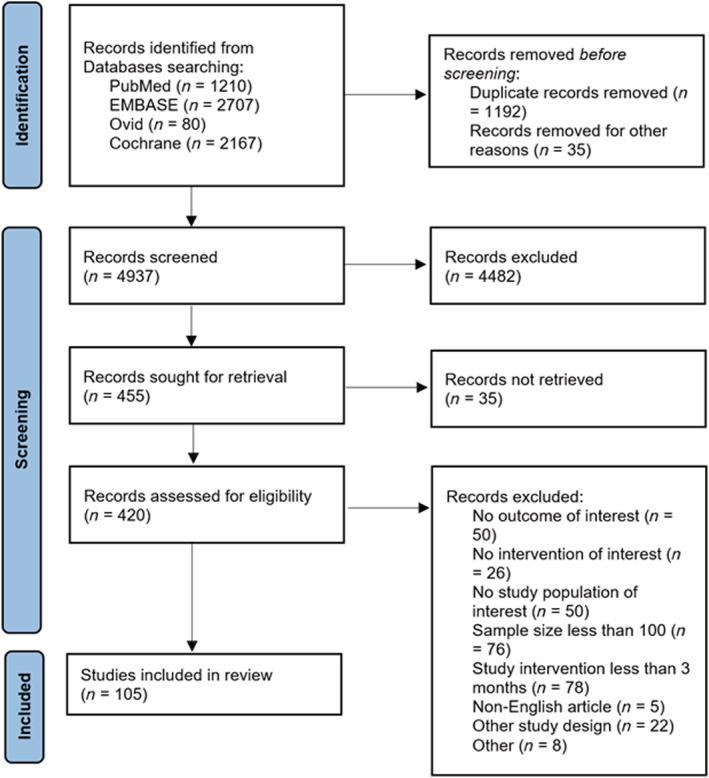
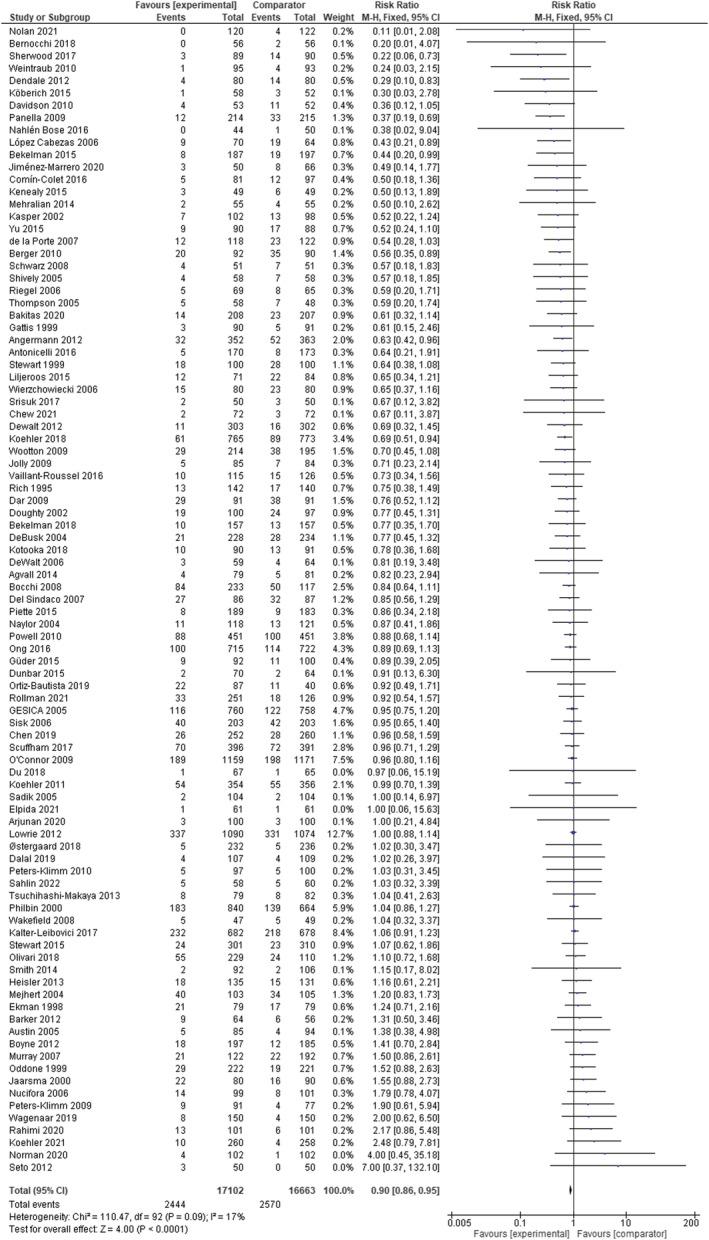
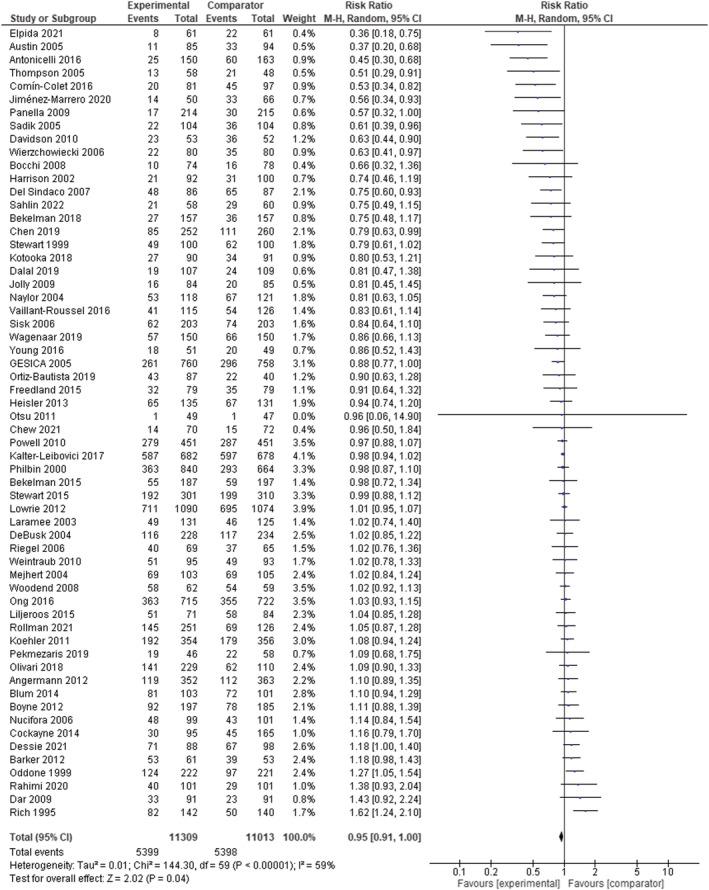
To investigate the effectiveness of multicomponent integrated care on clinical outcomes among patients with chronic heart failure. We conducted a meta-analysis of randomized clinical trials, published in English language from inception to 20 April 2022, with at least 3-month implementation of multicomponent integrated care (defined as two or more quality improvement strategies from different domains, viz. the healthcare system, healthcare providers, and patients). The study outcomes were mortality (all-cause or cardiovascular) and healthcare utilization (hospital readmission or emergency department visits). We pooled the risk ratio (RR) using Mantel-Haenszel test. A total of 105 trials (n = 37 607 patients with chronic heart failure; mean age 67.9 ± 7.3 years; median duration of intervention 12 months [interquartile range 6-12 months]) were analysed. Compared with usual care, multicomponent integrated care was associated with reduced risk for all-cause mortality [RR 0.90, 95% confidence interval (CI) 0.86-0.95], cardiovascular mortality (RR 0.73, 95% CI 0.60-0.88), all-cause hospital readmission (RR 0.95, 95% CI 0.91-1.00), heart failure-related hospital readmission (RR 0.84, 95% CI 0.79-0.89), and all-cause emergency department visits (RR 0.91, 95% CI 0.84-0.98). Heart failure-related mortality (RR 0.94, 95% CI 0.74-1.18) and cardiovascular-related hospital readmission (RR 0.90, 95% CI 0.79-1.03) were not significant. The top three quality improvement strategies for all-cause mortality were promotion of self-management (RR 0.86, 95% CI 0.79-0.93), facilitated patient-provider communication (RR 0.87, 95% CI 0.81-0.93), and e-health (RR 0.88, 95% CI 0.81-0.96). Multicomponent integrated care reduced risks for mortality (all-cause and cardiovascular related), hospital readmission (all-cause and heart failure related), and all-cause emergency department visits among patients with chronic heart failure.
研究多组分综合护理对慢性心力衰竭患者临床结局的影响。我们对截至 2022 年 4 月 20 日发表的英文随机临床试验进行了荟萃分析,多组分综合护理的实施时间至少为 3 个月(定义为来自不同领域的两种或多种质量改进策略,即医疗保健系统、医疗保健提供者和患者)。研究结果为死亡率(全因或心血管)和医疗保健利用(住院再入院或急诊就诊)。我们使用 Mantel-Haenszel 检验汇总风险比(RR)。共分析了 105 项试验(n=37607 例慢性心力衰竭患者;平均年龄 67.9±7.3 岁;干预中位时间 12 个月[四分位距 6-12 个月])。与常规护理相比,多组分综合护理可降低全因死亡率(RR 0.90,95%置信区间 [CI] 0.86-0.95)、心血管死亡率(RR 0.73,95% CI 0.60-0.88)、全因住院再入院(RR 0.95,95% CI 0.91-1.00)、心力衰竭相关住院再入院(RR 0.84,95% CI 0.79-0.89)和全因急诊就诊(RR 0.91,95% CI 0.84-0.98)。心力衰竭相关死亡率(RR 0.94,95% CI 0.74-1.18)和心血管相关住院再入院(RR 0.90,95% CI 0.79-1.03)无显著差异。全因死亡率的前三大质量改进策略为促进自我管理(RR 0.86,95% CI 0.79-0.93)、促进医患沟通(RR 0.87,95% CI 0.81-0.93)和电子健康(RR 0.88,95% CI 0.81-0.96)。多组分综合护理可降低慢性心力衰竭患者的死亡率(全因和心血管相关)、住院再入院(全因和心力衰竭相关)和全因急诊就诊风险。


 Zotero 插件