
T淋巴细胞中的RNA代谢
RNA Metabolism in T Lymphocytes.
作者信息
Choi Jin Ouk, Ham Jeong Hyeon, Hwang Soo Seok
机构信息
Department of Biochemistry and Molecular Biology, Graduate School of Medical Science, Severance Biomedical Science Institute and Brain Korea 21 Project, Yonsei University College of Medicine, Seoul 03722, Korea.
Chronic Intractable Disease Systems Medicine Research Center, Institute of Genetic Science, Institute for Immunology and Immunological Diseases, Yonsei University College of Medicine, Seoul 03722, Korea.
出版信息
Immune Netw. 2022 Oct 7;22(5):e39. doi: 10.4110/in.2022.22.e39. eCollection 2022 Oct.
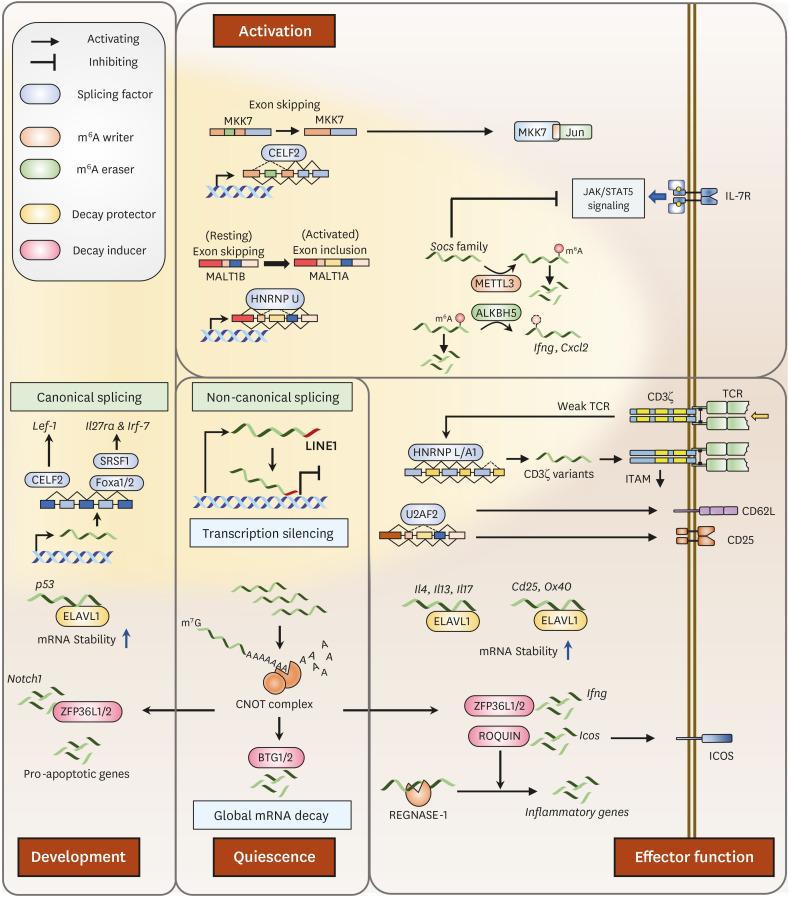
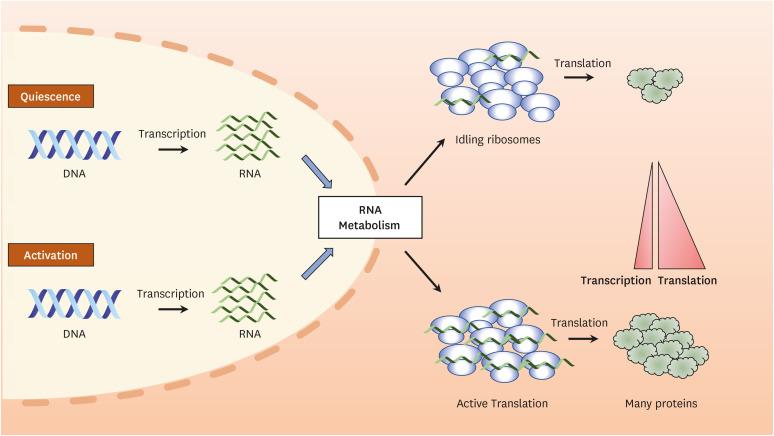
RNA metabolism plays a central role in regulating of T cell-mediated immunity. RNA processing, modifications, and regulations of RNA decay influence the tight and rapid regulation of gene expression during T cell phase transition. Thymic selection, quiescence maintenance, activation, differentiation, and effector functions of T cells are dependent on selective RNA modulations. Recent technical improvements have unveiled the complex crosstalk between RNAs and T cells. Moreover, resting T cells contain large amounts of untranslated mRNAs, implying that the regulation of RNA metabolism might be a key step in controlling gene expression. Considering the immunological significance of T cells for disease treatment, an understanding of RNA metabolism in T cells could provide new directions in harnessing T cells for therapeutic implications.
RNA代谢在调节T细胞介导的免疫中起核心作用。RNA加工、修饰以及RNA衰变的调控会影响T细胞阶段转换过程中基因表达的严格且快速调控。T细胞的胸腺选择、静止维持、激活、分化及效应功能均依赖于选择性RNA调节。最近的技术进步揭示了RNA与T细胞之间复杂的相互作用。此外,静息T细胞含有大量未翻译的mRNA,这意味着RNA代谢的调控可能是控制基因表达的关键步骤。考虑到T细胞对疾病治疗的免疫学意义,了解T细胞中的RNA代谢可为利用T细胞进行治疗提供新的方向。

 Zotero 插件