
胰腺导管腺癌中间充质可塑性的调控与免疫逃逸:代谢程序的重新布线
Orchestration of mesenchymal plasticity and immune evasiveness rewiring of the metabolic program in pancreatic ductal adenocarcinoma.
作者信息
Hashimoto Ari, Handa Haruka, Hata Soichiro, Hashimoto Shigeru
机构信息
Department of Molecular Biology, Hokkaido University Faculty of Medicine, Sapporo, Japan.
Division of Molecular Psychoimmunology, Institute for Genetic Medicine, Hokkaido University Faculty of Medicine, Sapporo, Japan.
出版信息
Front Oncol. 2022 Nov 3;12:1005566. doi: 10.3389/fonc.2022.1005566. eCollection 2022.
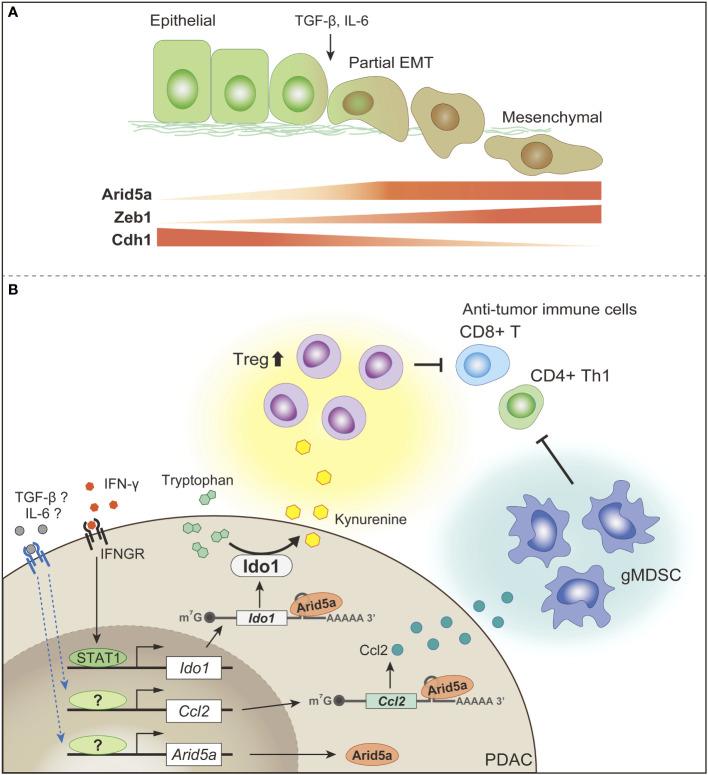
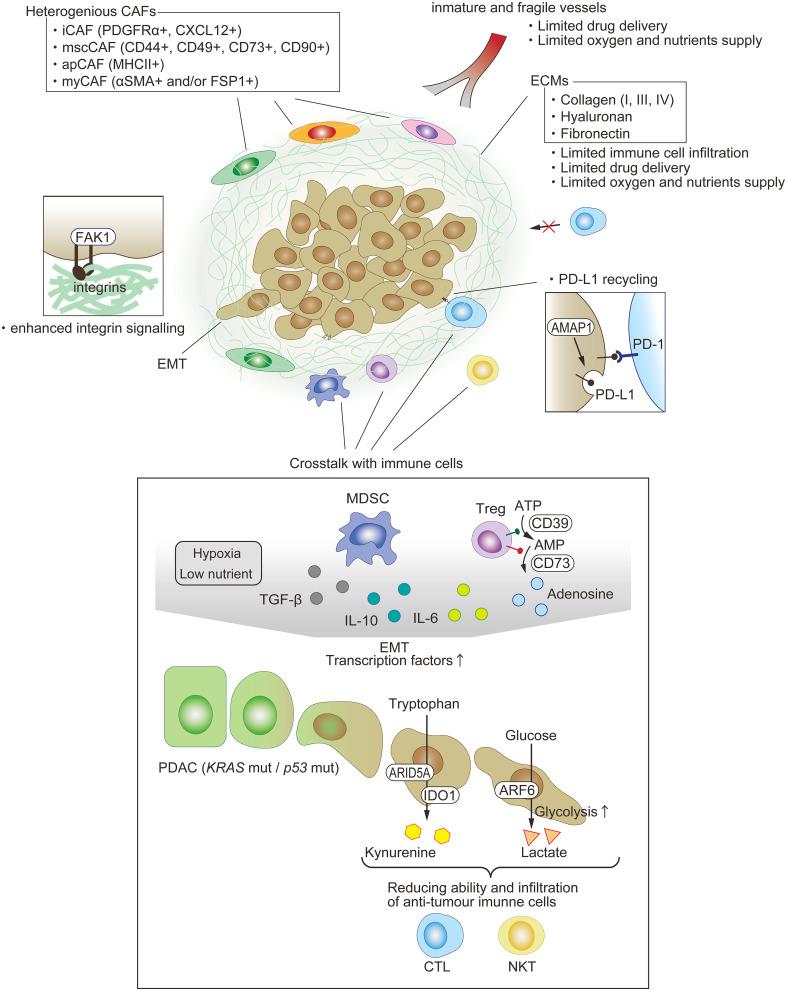
Pancreatic ductal adenocarcinoma (PDAC) is the most fatal cancer in humans, due to its difficulty of early detection and its high metastatic ability. The occurrence of epithelial to mesenchymal transition in preinvasive pancreatic lesions has been implicated in the early dissemination, drug resistance, and cancer stemness of PDAC. PDAC cells also have a reprogrammed metabolism, regulated by driver mutation-mediated pathways, a desmoplastic tumor microenvironment (TME), and interactions with stromal cells, including pancreatic stellate cells, fibroblasts, endothelial cells, and immune cells. Such metabolic reprogramming and its functional metabolites lead to enhanced mesenchymal plasticity, and creates an acidic and immunosuppressive TME, resulting in the augmentation of protumor immunity cancer-associated inflammation. In this review, we summarize our recent understanding of how PDAC cells acquire and augment mesenchymal features metabolic and immunological changes during tumor progression, and how mesenchymal malignancies induce metabolic network rewiring and facilitate an immune evasive TME. In addition, we also present our recent findings on the interesting relevance of the small G protein ADP-ribosylation factor 6-based signaling pathway driven by / mutations, inflammatory amplification signals mediated by the proinflammatory cytokine interleukin 6 and RNA-binding protein ARID5A on PDAC metabolic reprogramming and immune evasion, and finally discuss potential therapeutic strategies for the quasi-mesenchymal subtype of PDAC.
胰腺导管腺癌(PDAC)是人类最致命的癌症,因其早期检测困难且转移能力强。胰腺浸润前病变中上皮向间充质转化的发生与PDAC的早期播散、耐药性及癌症干性有关。PDAC细胞还具有重编程的代谢,受驱动突变介导的信号通路、促结缔组织增生性肿瘤微环境(TME)以及与包括胰腺星状细胞、成纤维细胞、内皮细胞和免疫细胞在内的基质细胞相互作用的调控。这种代谢重编程及其功能性代谢产物导致间充质可塑性增强,并形成酸性和免疫抑制性的TME,从而增强促肿瘤免疫和癌症相关炎症。在本综述中,我们总结了我们最近对PDAC细胞在肿瘤进展过程中如何通过代谢和免疫变化获得并增强间充质特征,以及间充质恶性肿瘤如何诱导代谢网络重新布线并促进免疫逃逸性TME的理解。此外,我们还介绍了我们最近关于由KRAS/突变驱动的基于小G蛋白ADP核糖基化因子6的信号通路、促炎细胞因子白细胞介素6和RNA结合蛋白ARID5A介导的炎症放大信号与PDAC代谢重编程和免疫逃逸有趣相关性的发现,最后讨论了PDAC准间充质亚型的潜在治疗策略。


 Zotero 插件