
两时期来自意大利大型医院实验室的研究结果证明 SARS-CoV-2 变异 PCR 检测方法的演变。
Two-Period Study Results from a Large Italian Hospital Laboratory Attesting SARS-CoV-2 Variant PCR Assay Evolution.
机构信息
Dipartimento di Scienze di Laboratorio e Infettivologiche, Fondazione Policlinico Universitario A. Gemelli IRCCS, Rome, Italy.
Dipartimento di Scienze Biotecnologiche di Base, Cliniche Intensivologiche e Perioperatorie, Università Cattolica del Sacro Cuore, Rome, Italy.
出版信息
Microbiol Spectr. 2022 Dec 21;10(6):e0292222. doi: 10.1128/spectrum.02922-22. Epub 2022 Nov 21.
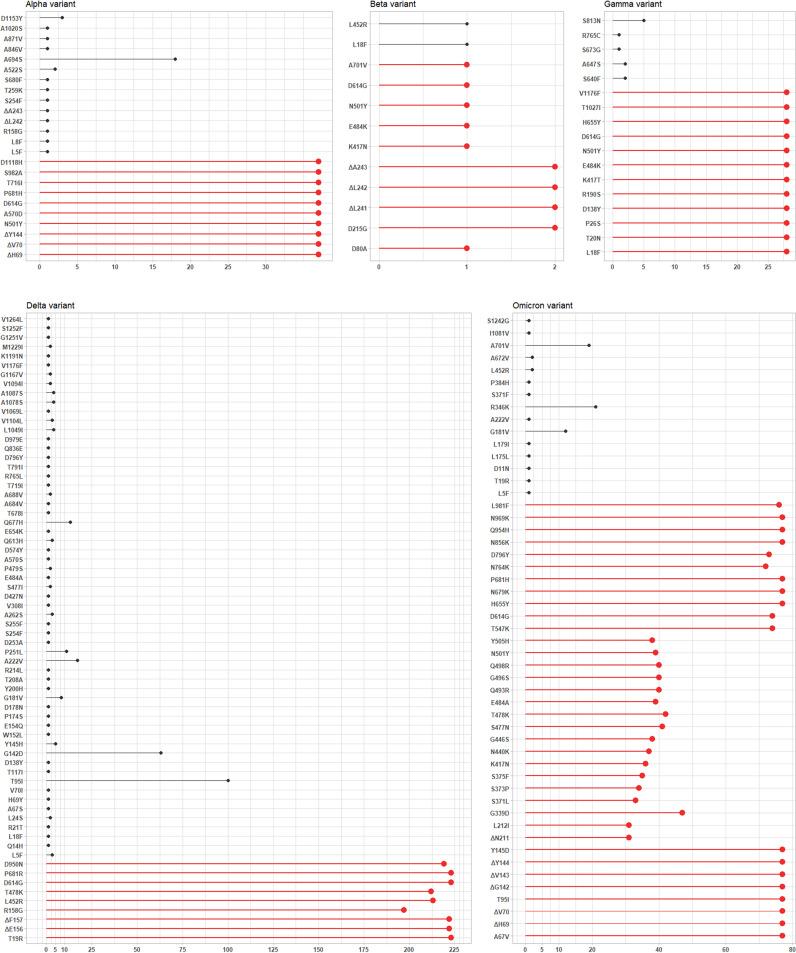
In keeping with the evolution of severe acute respiratory syndrome coronavirus 2 (SARS-CoV-2), the COVID-19 causative agent, PCR assays have been developed to rapidly detect SARS-CoV-2 variants, which have emerged since the first (Alpha) variant was identified. Based on specific assortment of SARS-CoV-2 spike-protein mutations (ΔH69/V70, E484K, N501Y, W152C, L452R, K417N, and K417T) among the major variants known to date, Seegene Allplex SARS-CoV-2 Variants I and Variants II assays have been available since a few months before the last (Omicron) variant became predominant. Using S gene next-generation sequencing (NGS) as the SARS-CoV-2 variant identification reference method, we assessed the results of SARS-CoV-2-positive nasopharyngeal swab samples from two testing periods, before (= 288, using only Variants I) and after (= 77, using both Variants I and Variants II) the appearance of Omicron. The Variants I assay allowed correct identification for Alpha (37/37), Beta/Gamma (28/30), or Delta (220/221) variant-positive samples. The combination of the Variants I and Variants II assays allowed correct identification for 61/77 Omicron variant-positive samples. While 16 samples had the K417N mutation undetected with the Variants II assay, 74/77 samples had both ΔH69/V70 and N501Y mutations detected with the Variants I assay. If considering only the results by the Variants I assay, 6 (2 Beta variant positive, 1 Delta variant positive, and 3 Omicron variant positive) of 365 samples tested in total provided incorrect identification. We showed that the Variants I assay alone might be more suitable than both the Variants I and Variants II assays to identify currently circulating SARS-CoV-2 variants. Inclusion of additional variant-specific mutations should be expected in the development of future assays. Omicron variants of SARS-CoV-2 pose more important public health concerns than the previously circulating Alpha or Delta variants, particularly regarding the efficacy of anti-SARS-CoV-2 vaccines and therapeutics. Precise identification of these variants highly requires performant PCR-based assays that allow us to reduce the reliance on NGS-based assays, which remain the reference method in this topic. While the current epidemiological SARS-CoV-2 pandemic context suggests that PCR assays such as the Seegene Variants II may be dispensable, we took advantage of NGS data obtained in this study to show that the array of SARS-CoV-2 spike protein mutations in the Seegene Variants II assay may be suboptimal. This reinforces the concept that initially developed PCR assays for SARS-CoV-2 variant detection could be no longer helpful if the SARS-CoV-2 pandemic evolves to newly emerging variants.
与严重急性呼吸综合征冠状病毒 2(SARS-CoV-2)的进化保持一致,PCR 检测方法已被开发出来,以快速检测自首次(阿尔法)变异株被发现以来出现的 SARS-CoV-2 变异株。根据目前已知的主要变异株中 SARS-CoV-2 刺突蛋白突变(ΔH69/V70、E484K、N501Y、W152C、L452R、K417N 和 K417T)的特定组合,自最后一个(奥密克戎)变异株成为优势株之前的几个月,Seegene Allplex SARS-CoV-2 变异株 I 和变异株 II 检测方法就已经可用。使用 S 基因下一代测序(NGS)作为 SARS-CoV-2 变异株鉴定参考方法,我们评估了两个检测期(前=288 个样本,仅使用变异株 I;后=77 个样本,同时使用变异株 I 和变异株 II)鼻拭子样本中 SARS-CoV-2 阳性样本的结果。变异株 I 检测方法可以正确鉴定阿尔法(37/37)、贝塔/伽马(28/30)或德尔塔(220/221)变异株阳性样本。变异株 I 和变异株 II 联合检测方法可以正确鉴定 61/77 个奥密克戎变异株阳性样本。虽然变异株 II 检测方法未检测到 16 个样本的 K417N 突变,但变异株 I 检测方法检测到了 74/77 个样本的 ΔH69/V70 和 N501Y 突变。如果仅考虑变异株 I 检测方法的结果,在总共检测的 365 个样本中,有 6 个(2 个贝塔变异株阳性、1 个德尔塔变异株阳性和 3 个奥密克戎变异株阳性)提供了错误的鉴定。我们表明,与变异株 I 和变异株 II 联合检测方法相比,单独使用变异株 I 检测方法可能更适合识别目前流行的 SARS-CoV-2 变异株。在未来检测方法的开发中,预计会包含更多的变异株特异性突变。与以前流行的阿尔法或德尔塔变异株相比,SARS-CoV-2 的奥密克戎变异株引起了更重要的公共卫生关注,特别是在抗 SARS-CoV-2 疫苗和治疗药物的疗效方面。准确识别这些变异株高度依赖于高性能的基于 PCR 的检测方法,这使我们能够减少对基于 NGS 的检测方法的依赖,后者仍然是该主题的参考方法。虽然目前的 SARS-CoV-2 大流行情况表明,PCR 检测方法(如 Seegene Variants II)可能不再需要,但我们利用本研究中获得的 NGS 数据表明,Seegene Variants II 检测方法中 SARS-CoV-2 刺突蛋白突变的排列可能不够理想。这进一步证实了一个概念,即最初开发的用于 SARS-CoV-2 变异检测的 PCR 检测方法如果 SARS-CoV-2 大流行演变为新出现的变异株,可能不再有用。

 Zotero 插件