
基因编辑与嵌合抗原受体自然杀伤细胞:自然杀伤细胞工程化用于免疫治疗的机遇与挑战
Gene-edited and CAR-NK cells: Opportunities and challenges with engineering of NK cells for immunotherapy.
作者信息
Wu Xinyu, Matosevic Sandro
机构信息
Department of Industrial and Physical Pharmacy, Purdue University, 575 Stadium Mall Drive RHPH 112E, West Lafayette, IN 47907, USA.
Center for Cancer Research, Purdue University, West Lafayette, IN, USA.
出版信息
Mol Ther Oncolytics. 2022 Nov 3;27:224-238. doi: 10.1016/j.omto.2022.10.011. eCollection 2022 Dec 15.
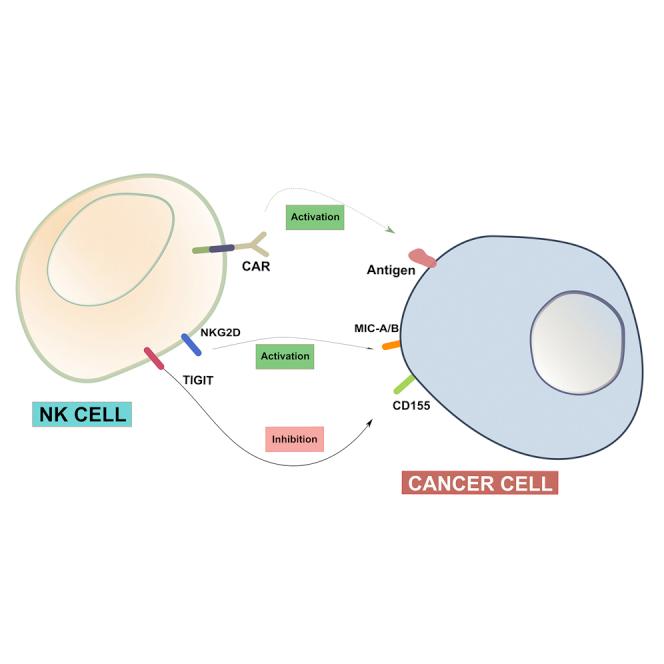
Treatment of many cancers, particularly those that remain difficult to treat or are refractive after standard-of-care therapies, has been challenging with cell-based therapies. Although relatively safe as allogeneic therapies and innately effective against cancers without the need for antigen sensitization, natural killer (NK) cells have necessitated use of genetic manipulation approaches to enhance their specificity, persistence, and homing. Chimeric antigen receptor (CAR) and gene-edited NK cell therapies have emerged as a potent treatment modality, addressing many of the issues that have plagued such gene-based therapies with other cell types. Early examples of engineered NK cell therapies have largely leveraged their activity against hematological malignancies in combination with conventional construct architectures or by editing putative genetic targets of immunosuppression. As the motivation to tackle more complex solid tumors grows, so has the sophistication and emergence of NK-specific constructs and engineering approaches. Multi-CARs, combinations with diverse genome editing technologies, as well as responsive and sensing CARs have appeared in the context of NK cell therapy. Here we discuss engineering approaches for NK cell therapy, the latest developments in the field, and what stands in the way of those promises en route to clinical translation.
对于许多癌症的治疗,尤其是那些仍然难以治疗或在标准治疗后出现耐药的癌症,基于细胞的疗法一直具有挑战性。尽管作为同种异体疗法相对安全,并且无需抗原致敏就能天然有效地对抗癌症,但自然杀伤(NK)细胞需要使用基因操作方法来提高其特异性、持久性和归巢能力。嵌合抗原受体(CAR)和基因编辑的NK细胞疗法已成为一种有效的治疗方式,解决了困扰其他细胞类型的此类基因疗法的许多问题。早期的工程化NK细胞疗法实例主要利用其对血液系统恶性肿瘤的活性,结合传统构建架构或通过编辑假定的免疫抑制基因靶点。随着攻克更复杂实体瘤的需求增加,NK特异性构建体和工程方法的复杂性和出现频率也在增加。多CAR、与多种基因组编辑技术的组合,以及响应性和传感CAR已出现在NK细胞治疗的背景下。在这里,我们讨论NK细胞治疗的工程方法及其最新进展,以及在临床转化过程中阻碍这些前景实现的因素。
 Zotero 插件