
基于空分复用技术的光纤球谐振器传感器同时检测方法:应用于折光仪和生物传感器。
Spatial-Division Multiplexing Approach for Simultaneous Detection of Fiber-Optic Ball Resonator Sensors: Applications for Refractometers and Biosensors.
机构信息
School of Engineering and Digital Sciences, Nazarbayev University, 53 Kabanbay Batyr, Astana 010000, Kazakhstan.
Department of Bioengineering and Nick Holonyak Micro and Nanotechnology Laboratory, University of Illinois at Urbana-Champaign, Urbana, IL 61801, USA.
出版信息
Biosensors (Basel). 2022 Nov 11;12(11):1007. doi: 10.3390/bios12111007.
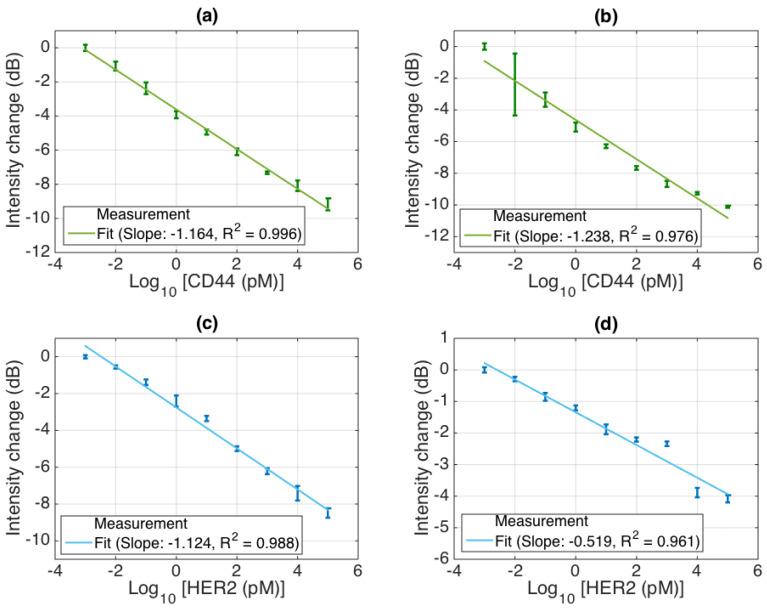
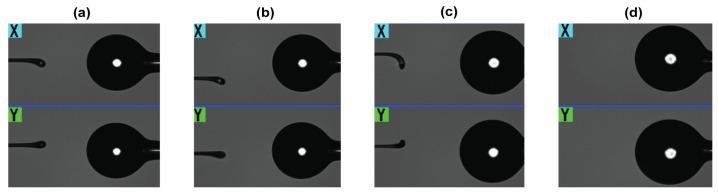
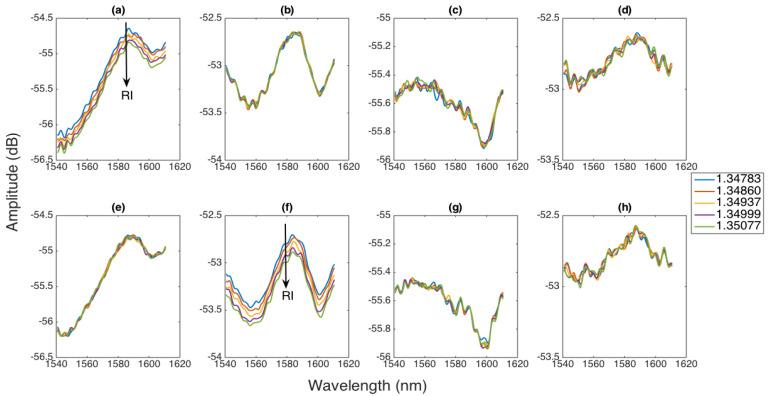
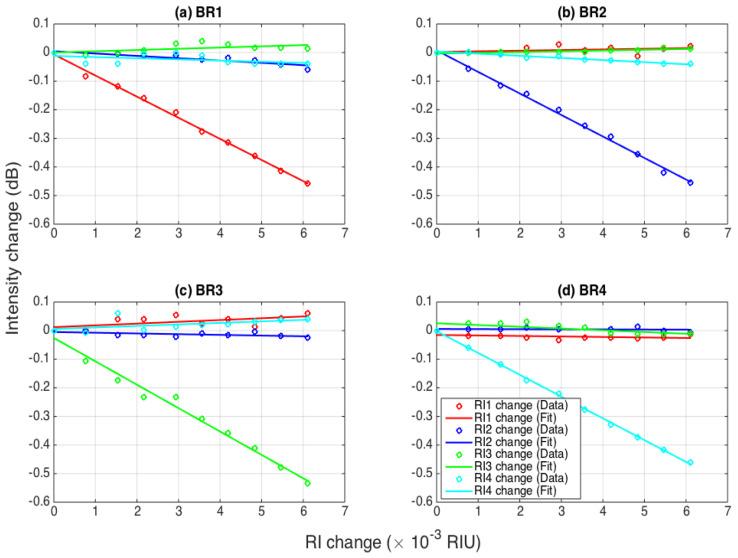
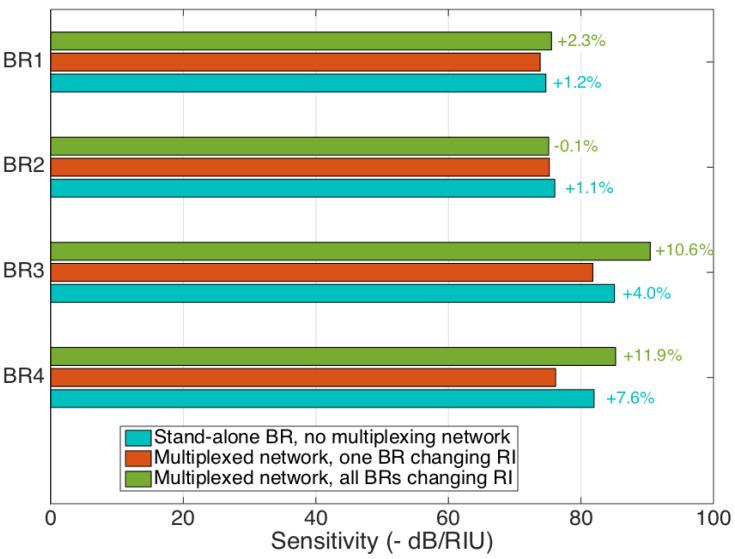
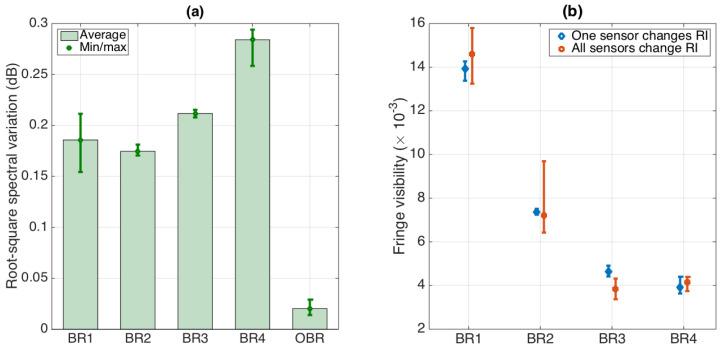
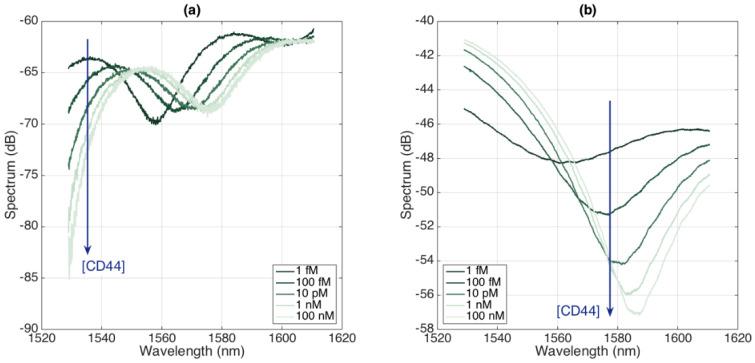
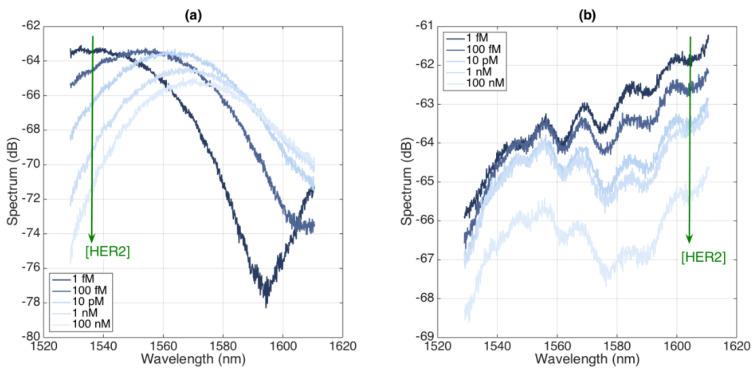
Fiber-optic ball resonators are an attractive technology for refractive index (RI) sensing and optical biosensing, as they have good sensitivity and allow for a rapid and repeatable manufacturing process. An important feature for modern biosensing devices is the multiplexing capacity, which allows for interrogating multiple sensors (potentially, with different functionalization methods) simultaneously, by a single analyzer. In this work, we report a multiplexing method for ball resonators, which is based on a spatial-division multiplexing approach. The method is validated on four ball resonator devices, experimentally evaluating both the cross-talk and the spectral shape influence of one sensor on another. We show that the multiplexing approach is highly efficient and that a sensing network with an arbitrary number of ball resonators can be designed with reasonable penalties for the sensing capabilities. Furthermore, we validate this concept in a four-sensor multiplexing configuration, for the simultaneous detection of two different cancer biomarkers across a widespread range of concentrations.
光纤球谐振器是一种有吸引力的折射率(RI)传感和光学生物传感技术,因为它们具有良好的灵敏度,并允许快速和可重复的制造工艺。对于现代生物传感设备的一个重要特征是复用能力,它允许通过单个分析仪同时询问多个传感器(可能采用不同的功能化方法)。在这项工作中,我们报告了一种基于空间分割复用方法的球谐振器复用方法。该方法在四个球谐振器设备上进行了验证,实验评估了一个传感器对另一个传感器的串扰和光谱形状影响。我们表明,该复用方法非常有效,并且可以设计具有任意数量的球谐振器的传感网络,而对传感性能的惩罚是合理的。此外,我们在一个四传感器复用配置中验证了这一概念,用于同时检测两个不同的癌症生物标志物在广泛浓度范围内的浓度。




 Zotero 插件