
洋蓟水提物可改善高脂饮食诱导的大鼠非酒精性脂肪肝。
Water extract from artichoke ameliorates high-fat diet-induced non-alcoholic fatty liver disease in rats.
机构信息
College of Life and Environmental Science, Hunan University of Arts and Science, Changde, 415000, China.
College of Chemical Engineering, Huaqiao University, Xiamen, 361021, China.
出版信息
BMC Complement Med Ther. 2022 Nov 24;22(1):308. doi: 10.1186/s12906-022-03794-9.
BACKGROUND
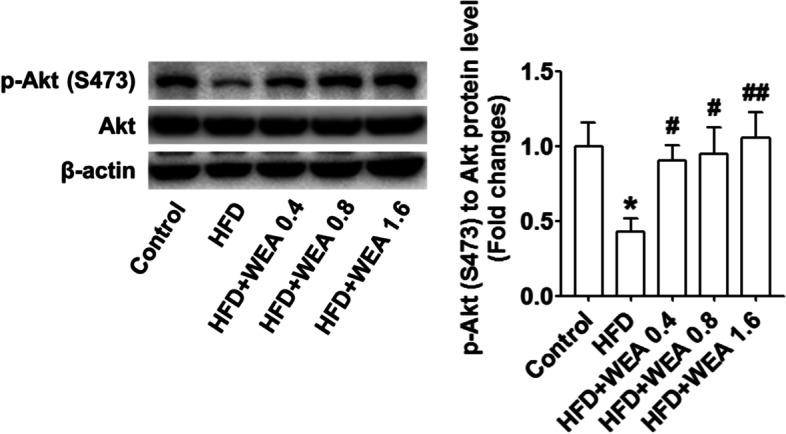
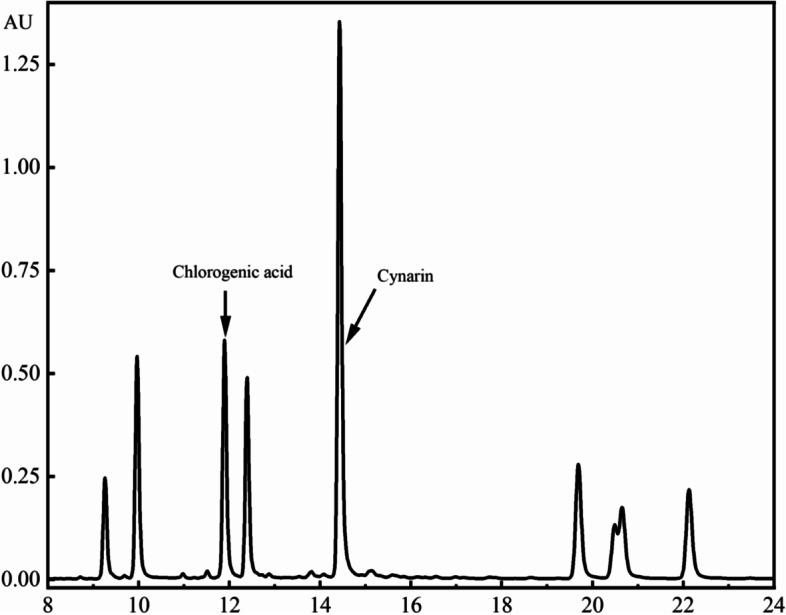
The "multiple-hit" hypothesis is currently the most widely accepted theory for non-alcoholic fatty liver disease (NAFLD) pathogenesis. The present study aimed to investigate the effects of the water extract of artichoke (WEA) on NAFLD and its underlying mechanism.
METHODS
Rats were fed a high-fat diet (HFD) for 8 weeks to induce NAFLD and then treated with WEA at three doses (0.4, 0.8, and 1.6 g/kg body weight, BW) for 8 weeks. At the end of the intervention, serum biochemical parameters, hepatic antioxidant capacity, hepatic levels of pro-inflammatory cytokines, liver histopathology, hepatic inflammatory gene and lipid metabolism gene expression, and Akt and p-Akt (S473) protein levels were determined.
RESULTS
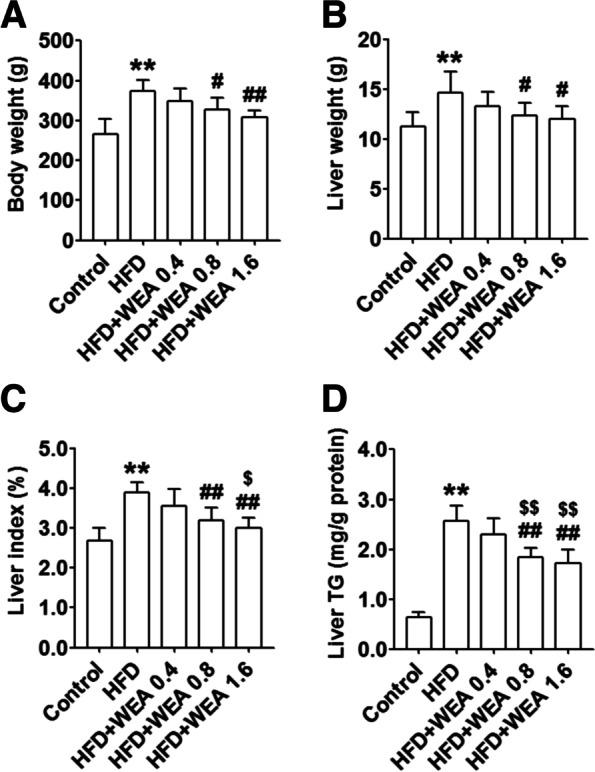
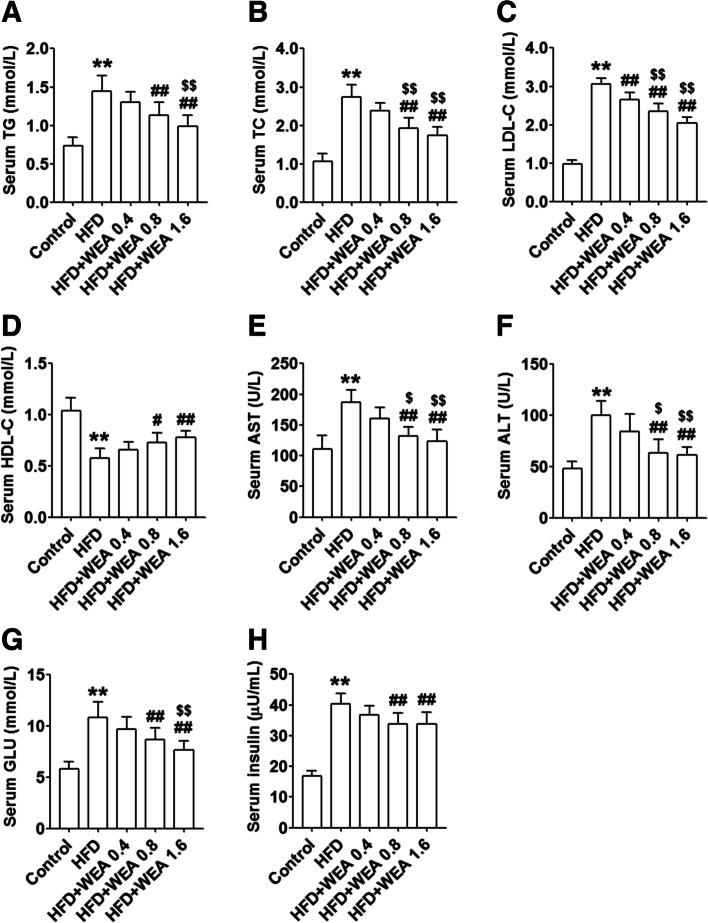
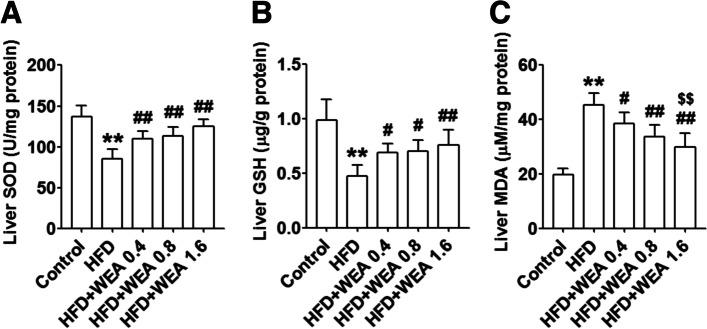
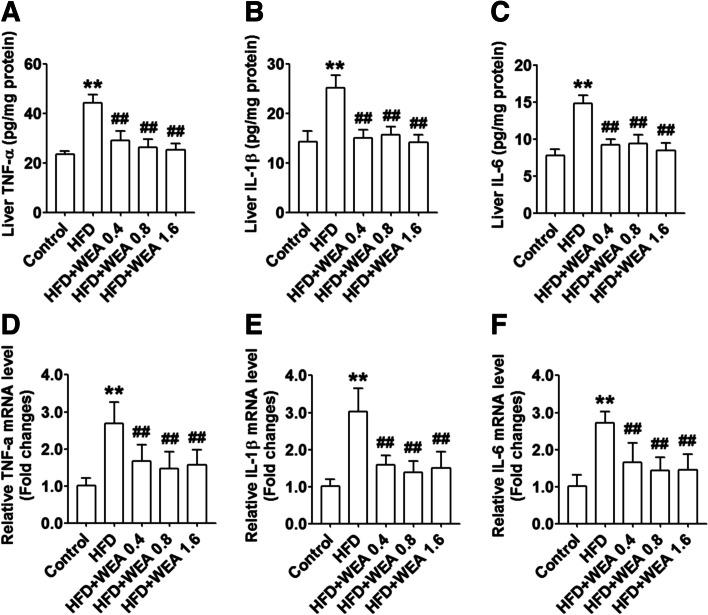
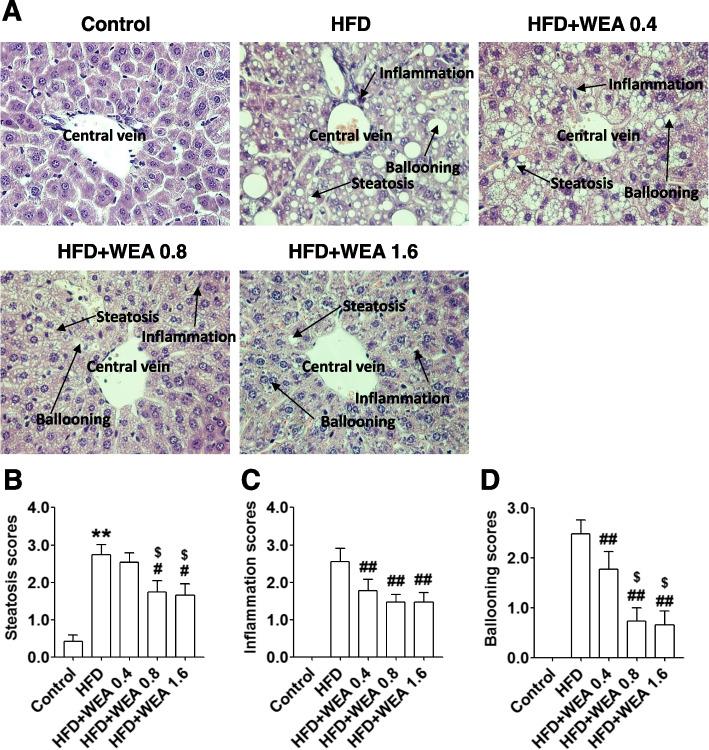
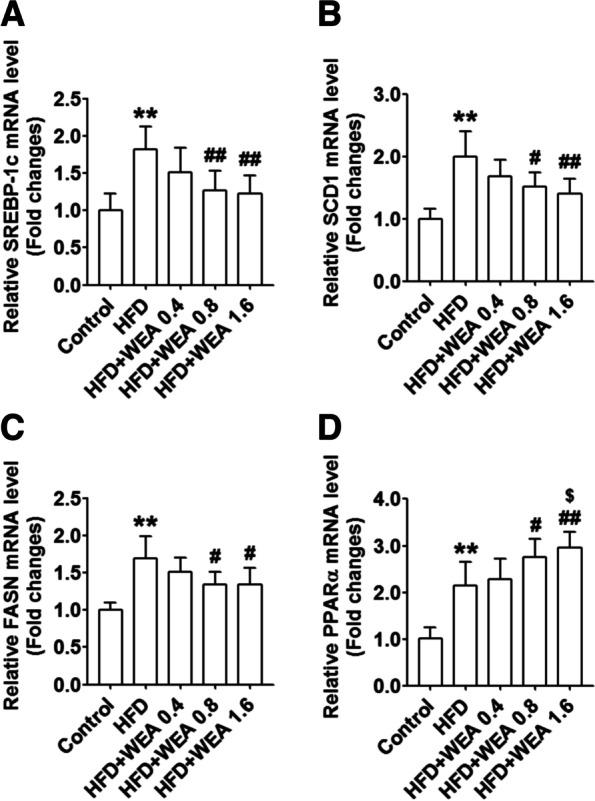
The body weight, liver weight, liver triglyceride (TG) and serum levels of TG, total cholesterol, low-density lipoprotein cholesterol, alanine aminotransferase, aspartate aminotransferase, glucose, and insulin were all significantly reduced in the WEA-treated groups (0.8 and 1.6 g/kg BW) compared with the HFD group (P < 0.01). A significant decrease in hepatic content of malondialdehyde (P < 0.01) and glutathione (P < 0.01), as well as a significant increase in liver superoxide dismutase activity (P < 0.01) were observed in WEA-treated groups (0.8 and 1.6 g/kg BW) compared to the HFD group. In addition, there was a marked decrease in the hepatic levels of pro-inflammatory cytokines (TNF-α, IL-1β, and IL-6) in the WEA-treated groups compared to the HFD group (P < 0.01). In line with these findings, the histopathology of the livers of rats treated with WEA (0.8 and 1.6 g/kg BW) showed a decrease in steatosis, ballooning, and lobular inflammation. Mechanistically, the reduced hepatic TG content might be related to the downregulation of lipogenic genes (SREBP1c, FASN, SCD1) and upregulation of lipolytic gene (PPARα), and the improved insulin signaling might be associated with the observed increase in antioxidant activity and reduction in inflammation in the WEA-treated groups.
CONCLUSION
The hepatoprotective role of WEA in NAFLD may be attributed to its anti-steatotic, antioxidant, anti-inflammatory, and anti-insulin resistance effects.
背景
“多次打击”假说目前是非酒精性脂肪性肝病(NAFLD)发病机制最广泛接受的理论。本研究旨在探讨朝鲜蓟水提物(WEA)对 NAFLD 的影响及其潜在机制。
方法
大鼠喂养高脂肪饮食(HFD)8 周以诱导 NAFLD,然后用 WEA 三种剂量(0.4、0.8 和 1.6 g/kg 体重)治疗 8 周。干预结束时,测定血清生化参数、肝抗氧化能力、肝内促炎细胞因子水平、肝组织病理学、肝炎症基因和脂质代谢基因表达以及 Akt 和 p-Akt(S473)蛋白水平。
结果
与 HFD 组相比,WEA 治疗组(0.8 和 1.6 g/kg BW)的体重、肝重、肝甘油三酯(TG)和血清 TG、总胆固醇、低密度脂蛋白胆固醇、丙氨酸转氨酶、天冬氨酸转氨酶、葡萄糖和胰岛素水平均显著降低(P<0.01)。WEA 治疗组(0.8 和 1.6 g/kg BW)肝组织丙二醛(P<0.01)和谷胱甘肽(P<0.01)含量显著降低,肝超氧化物歧化酶活性显著升高(P<0.01)。与 HFD 组相比,WEA 治疗组肝内促炎细胞因子(TNF-α、IL-1β和 IL-6)水平显著降低(P<0.01)。此外,WEA(0.8 和 1.6 g/kg BW)治疗组大鼠肝脏组织病理学显示脂肪变性、气球样变和小叶炎症减少。在机制上,肝 TG 含量的降低可能与脂肪生成基因(SREBP1c、FASN、SCD1)下调和脂肪分解基因(PPARα)上调有关,而胰岛素信号的改善可能与抗氧化活性的增加和炎症的减少有关。
结论
WEA 对 NAFLD 的肝保护作用可能归因于其抗脂肪变性、抗氧化、抗炎和抗胰岛素抵抗作用。
 Zotero 插件