
阿魏酸通过激活 Nrf2/HO-1 通路和抑制铁死亡来缓解脓毒症诱导的急性肺损伤中的肺泡上皮屏障功能障碍。
Ferulic acid alleviates alveolar epithelial barrier dysfunction in sepsis-induced acute lung injury by activating the Nrf2/HO-1 pathway and inhibiting ferroptosis.
机构信息
Department of Emergency Medicine, The Second Xiangya Hospital of Central South University, Emergency and Difficult Diseases Institute of Central South University, Changsha, P. R. China.
出版信息
Pharm Biol. 2022 Dec;60(1):2286-2294. doi: 10.1080/13880209.2022.2147549.
CONTEXT
Ferulic acid (FA) has antioxidative and anti-inflammatory effects, and is a promising drug to treat sepsis.
OBJECTIVE
To study the therapeutic effect of FA in sepsis-induced acute lung injury (ALI) and its underlying mechanisms.
MATERIALS AND METHODS
The caecal ligation and puncture (CLP) manoeuvre was applied to establish a murine model of sepsis-induced ALI, and female BALB/c mice (6 mice per group) were subjected to 100 mg/kg FA or 0.8 mg/kg ferrostatin-1 (Fer-1, ferroptosis inhibitor) treatment to clarify the role of FA in preserving alveolar epithelial barrier function and inhibiting ferroptosis. Lipopolysaccharide (LPS; 500 ng/mL)-induced cell models were prepared and subjected to FA (0.1 μM), sh-Nrf2, and Fe (Fe-citrate, ferroptosis inducer; 5 M) treatment to study the effect of FA on LPS-induced alveolar epithelial cell injury and the role of the Nrf2/HO-1 pathway.
RESULTS
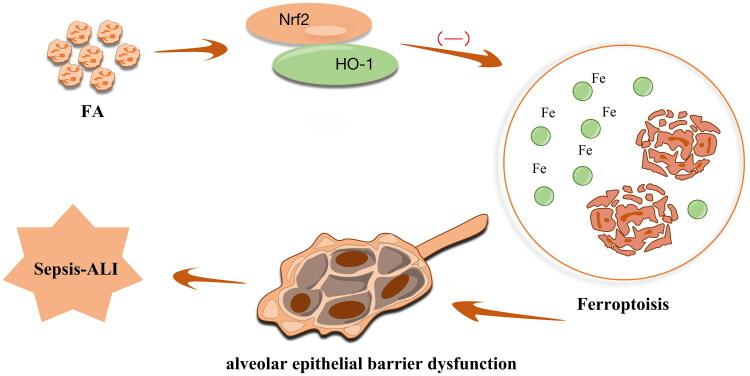
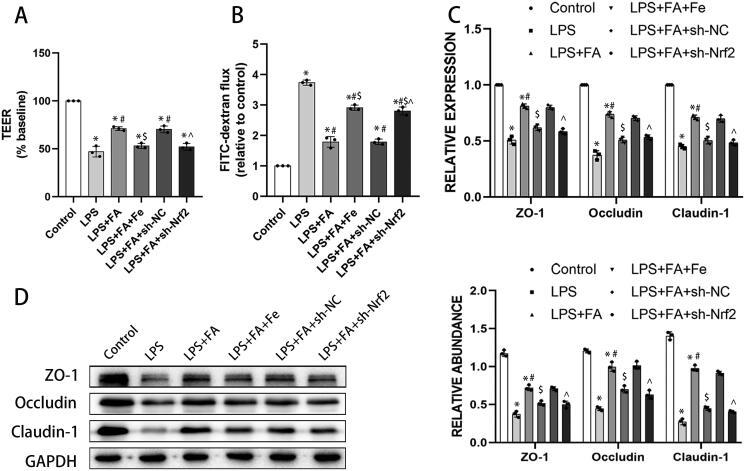
We found that FA decreased the lung injury score (48% reduction), lung wet/dry weight ratio (33% reduction), and myeloperoxidase activity (58% reduction) in sepsis-induced ALI. Moreover, FA inhibited ferroptosis of alveolar epithelial cells and improved alveolar epithelial barrier dysfunction. The protective role of FA against alveolar epithelial barrier dysfunction could be reversed by the ferroptosis inducer Fe-citrate, suggesting that FA alleviates alveolar epithelial barrier dysfunction by inhibiting ferroptosis. Mechanistically, we found that FA inhibited ferroptosis of alveolar epithelial cells by activating the Nrf2/HO-1 pathway.
CONCLUSION
Collectively, our data highlighted the alleviatory role of ferulic acid in sepsis-induced ALI by activating the Nrf2/HO-1 pathway and inhibiting ferroptosis, offering a new basis for sepsis treatment.
背景
阿魏酸(FA)具有抗氧化和抗炎作用,是治疗脓毒症的有前途的药物。
目的
研究 FA 治疗脓毒症诱导的急性肺损伤(ALI)的疗效及其机制。
材料和方法
采用盲肠结扎穿孔(CLP)手术建立脓毒症诱导的 ALI 小鼠模型,雌性 BALB/c 小鼠(每组 6 只)给予 100mg/kg FA 或 0.8mg/kg 铁抑素-1(Fer-1,铁死亡抑制剂)治疗,以阐明 FA 对维持肺泡上皮屏障功能和抑制铁死亡的作用。制备脂多糖(LPS;500ng/mL)诱导的细胞模型,并给予 FA(0.1μM)、sh-Nrf2 和 Fe(柠檬酸铁,铁死亡诱导剂;5μM)处理,以研究 FA 对 LPS 诱导的肺泡上皮细胞损伤的影响以及 Nrf2/HO-1 通路的作用。
结果
我们发现 FA 降低了脓毒症诱导的 ALI 中的肺损伤评分(降低 48%)、肺湿/干重比(降低 33%)和髓过氧化物酶活性(降低 58%)。此外,FA 抑制了肺泡上皮细胞的铁死亡,并改善了肺泡上皮屏障功能障碍。铁死亡诱导剂柠檬酸铁可逆转 FA 对肺泡上皮屏障功能障碍的保护作用,表明 FA 通过抑制铁死亡缓解肺泡上皮屏障功能障碍。机制上,我们发现 FA 通过激活 Nrf2/HO-1 通路抑制肺泡上皮细胞的铁死亡,从而发挥作用。
结论
总之,我们的数据强调了阿魏酸通过激活 Nrf2/HO-1 通路和抑制铁死亡在脓毒症诱导的 ALI 中的缓解作用,为脓毒症治疗提供了新的依据。


 Zotero 插件