
基于生物信息学和RNA测序转录组分析在两种大鼠肾纤维化模型中鉴定六个枢纽基因和两条关键通路
Identification of six hub genes and two key pathways in two rat renal fibrosis models based on bioinformatics and RNA-seq transcriptome analyses.
作者信息
Cai Yueqin, Chen Jingan, Liu Jingyan, Zhu Keyan, Xu Zhixing, Shen Jianan, Wang Dejun, Chu Lisheng
机构信息
School of Basic Medical Sciences, Zhejiang Chinese Medical University, Hangzhou, China.
Academy of Chinese Medical Sciences, Zhejiang Chinese Medical University, Hangzhou, China.
出版信息
Front Mol Biosci. 2022 Nov 9;9:1035772. doi: 10.3389/fmolb.2022.1035772. eCollection 2022.
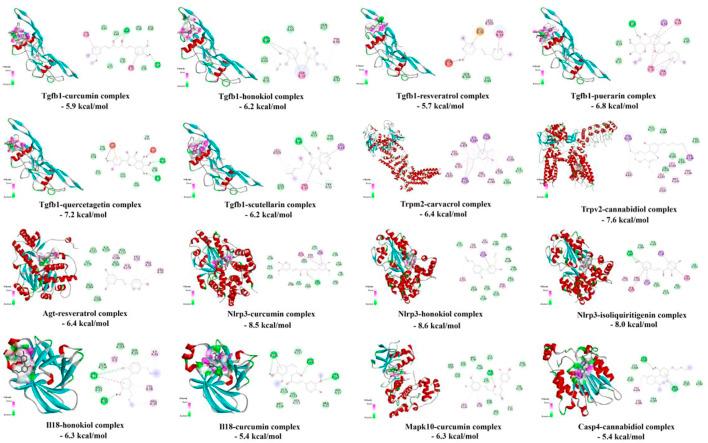
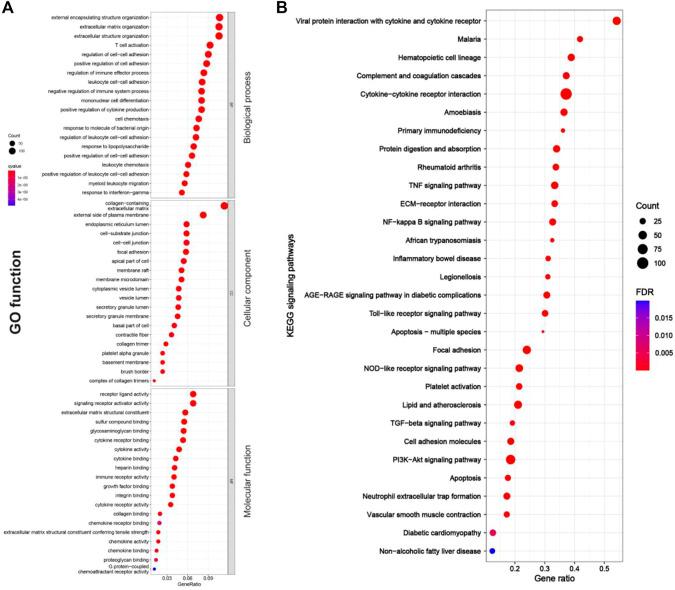
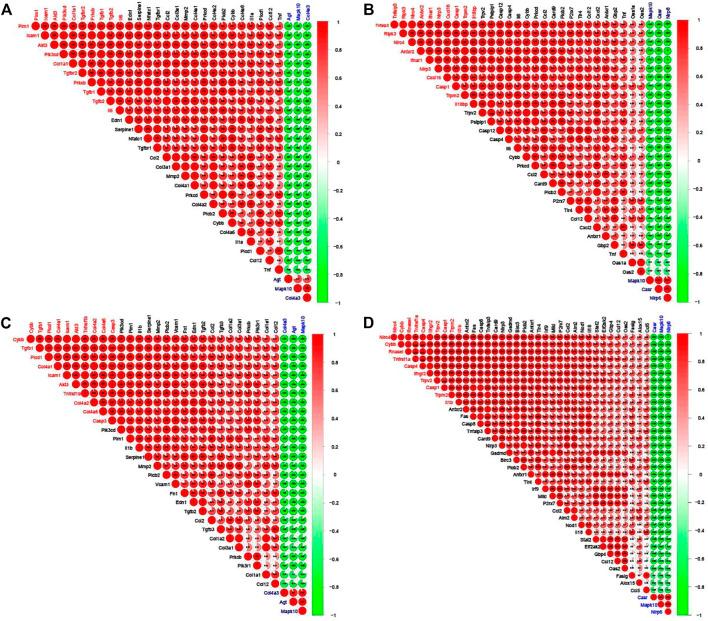
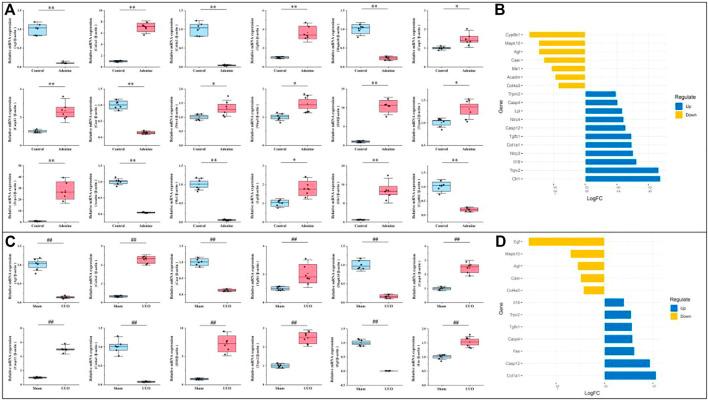
Renal fibrosis (RF) is the common pathological manifestation and central treatment target of multiple chronic kidney diseases with high morbidity and mortality. Currently, the molecular mechanisms underlying RF remain poorly understood, and exploration of RF-related hub targets and pathways is urgently needed. In this study, two classical RF rat models (adenine and UUO) were established and evaluated by HE, Masson and immunohistochemical staining. To clear molecular mechanisms of RF, differentially expressed genes (DEGs) were identified using RNA-Seq analysis, hub targets and pathways were screened by bioinformatics (functional enrichment analyses, PPI network, and co-expression analysis), the screening results were verified by qRT-PCR, and potential drugs of RF were predicted by network pharmacology and molecular docking. The results illustrated that renal structures were severely damaged and fibrotic in adenine- and UUO-induced models, as evidenced by collagen deposition, enhanced expressions of biomarkers (TGF-β1 and α-SMA), reduction of E-cadherin biomarker, and severe renal function changes (significantly decreased UTP, CREA, Ccr, and ALB levels and increased UUN and BUN levels), etc. 1189 and 1253 RF-related DEGs were screened in the adenine and UUO models, respectively. Two key pathways (AGE-RAGE and NOD-like receptor) and their hub targets (Tgfb1, Col1a1, Nlrc4, Casp4, Trpm2, and Il18) were identified by PPI networks, co-expressed relationships, and qRT-PCR verification. Furthermore, various reported herbal ingredients (curcumin, resveratrol, honokiol, etc.) were considered as important drug candidates due to the strong binding affinity with these hub targets. Overall, this study mainly identified two key RF-related pathways (AGE-RAGE and NOD-like receptor), screened hub targets (Tgfb1, Col1a1, Nlrc4, Casp4, Trpm2, and Il18) that involved inflammation, ECM formation, myofibroblasts generation, and pyroptosis, etc., and provided referable drug candidates (curcumin, resveratrol, honokiol, etc.) in basic research and clinical treatment of RF.
肾纤维化(RF)是多种慢性肾脏病常见的病理表现及核心治疗靶点,这些慢性肾脏病具有高发病率和高死亡率。目前,RF的分子机制仍知之甚少,迫切需要探索与RF相关的关键靶点和通路。在本研究中,通过HE、Masson和免疫组化染色建立并评估了两种经典的RF大鼠模型(腺嘌呤和单侧输尿管梗阻模型)。为了明确RF的分子机制,利用RNA测序分析鉴定差异表达基因(DEGs),通过生物信息学方法(功能富集分析、蛋白质-蛋白质相互作用网络和共表达分析)筛选关键靶点和通路,筛选结果通过qRT-PCR进行验证,并通过网络药理学和分子对接预测RF的潜在药物。结果表明,在腺嘌呤和单侧输尿管梗阻诱导的模型中,肾脏结构严重受损并发生纤维化,表现为胶原沉积、生物标志物(转化生长因子-β1和α-平滑肌肌动蛋白)表达增强、E-钙黏蛋白生物标志物减少以及严重的肾功能改变(尿总蛋白、肌酐、肌酐清除率和白蛋白水平显著降低,血尿素氮和尿素水平升高)等。在腺嘌呤和单侧输尿管梗阻模型中分别筛选出1189个和1253个与RF相关的DEGs。通过蛋白质-蛋白质相互作用网络、共表达关系和qRT-PCR验证,确定了两条关键通路(晚期糖基化终末产物-晚期糖基化终末产物受体和NOD样受体)及其关键靶点(转化生长因子-β1、Ⅰ型胶原α1链、NOD样受体家族CARD结构域含4、胱天蛋白酶4、瞬时受体电位阳离子通道蛋白2和白细胞介素18)。此外,由于与这些关键靶点具有较强的结合亲和力,各种已报道的草药成分(姜黄素、白藜芦醇、厚朴酚等)被视为重要的候选药物。总体而言,本研究主要确定了两条与RF相关的关键通路(晚期糖基化终末产物-晚期糖基化终末产物受体和NOD样受体),筛选出涉及炎症、细胞外基质形成、肌成纤维细胞生成和细胞焦亡等的关键靶点(转化生长因子-β1、Ⅰ型胶原α1链、NOD样受体家族CARD结构域含4、胱天蛋白酶4、瞬时受体电位阳离子通道蛋白2和白细胞介素18),并为RF的基础研究和临床治疗提供了可供参考的候选药物(姜黄素、白藜芦醇、厚朴酚等)。




 Zotero 插件