
全球范围内讲英语人群的自闭症相关语言偏好:一项混合方法研究。
Autism-related language preferences of English-speaking individuals across the globe: A mixed methods investigation.
机构信息
School of Psychology, University of Birmingham, Birmingham, UK.
School of Psychology, University of Auckland, Auckland, New Zealand.
出版信息
Autism Res. 2023 Feb;16(2):406-428. doi: 10.1002/aur.2864. Epub 2022 Dec 6.
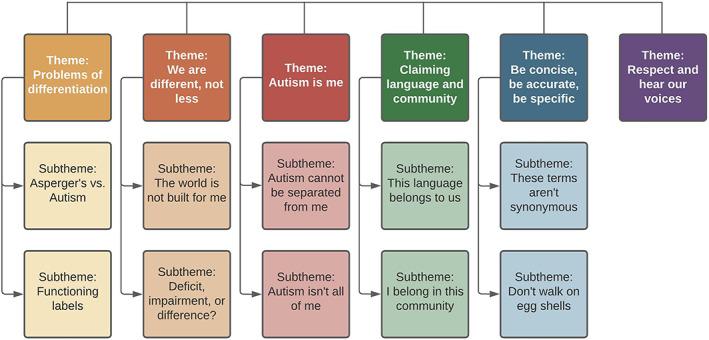
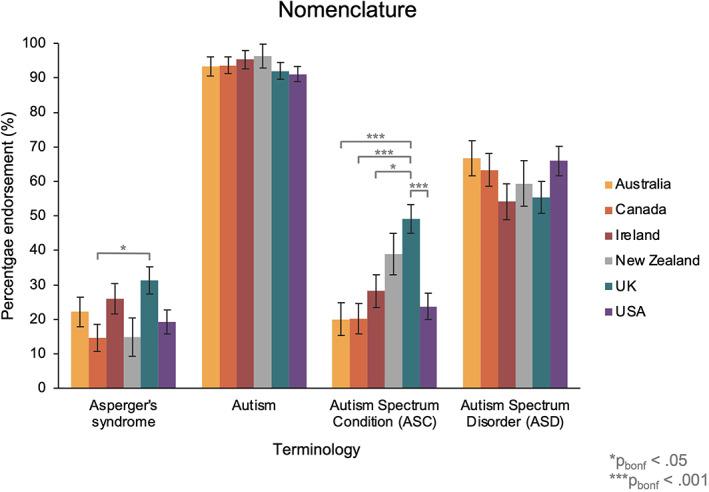
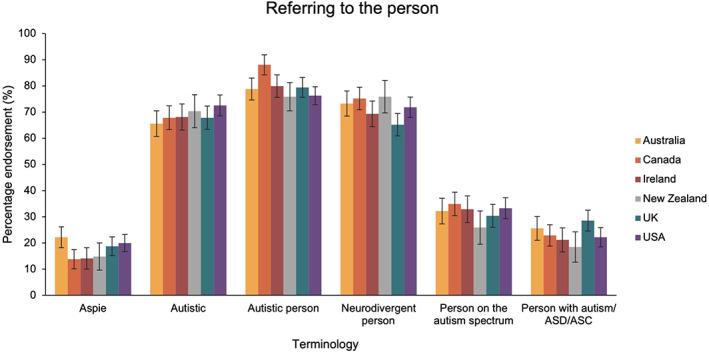
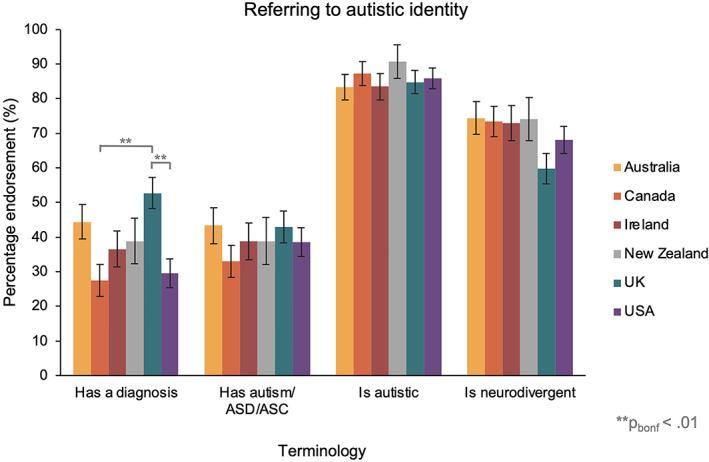
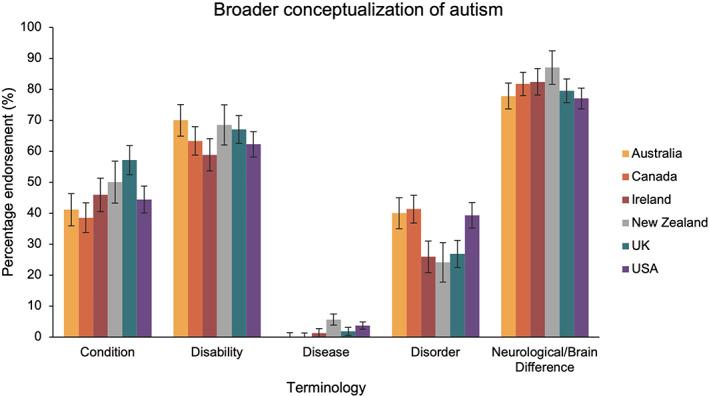
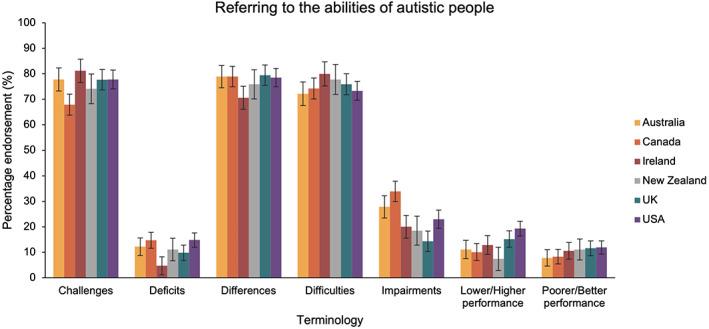
Over the past two decades, there have been increasing discussions around which terms should be used to talk about autism. Whilst these discussions have largely revolved around the suitability of identity-first language and person-first language, more recently this debate has broadened to encompass other autism-related terminology (e.g., 'high-functioning'). To date, academic studies have not investigated the language preferences of autistic individuals outside of the United Kingdom or Australia, nor have they compared levels of endorsement across countries. Hence, the current study adopted a mixed-methods approach, employing both quantitative and qualitative techniques, to explore the linguistic preferences of 654 English-speaking autistic adults across the globe. Despite variation in levels of endorsement between countries, we found that the most popular terms were similar-the terms 'Autism', 'Autistic person', 'Is autistic', 'Neurological/Brain Difference', 'Differences', 'Challenges', 'Difficulties', 'Neurotypical people', and 'Neurotypicals' were consistently favored across countries. Despite relative consensus across groups, both our quantitative and qualitative data demonstrate that there is no universally accepted way to talk about autism. Our thematic analysis revealed the reasons underlying participants' preferences, generating six core themes, and illuminated an important guiding principle-to respect personal preferences. These findings have significant implications for informing practice, research and language policy worldwide.
在过去的二十年中,人们对于应该使用哪些术语来描述自闭症的讨论越来越多。虽然这些讨论主要围绕着身份优先语言和以人为本语言的适用性展开,但最近这场辩论已经扩大到涵盖其他与自闭症相关的术语(例如“高功能”)。迄今为止,学术研究尚未调查英国或澳大利亚以外的自闭症患者的语言偏好,也没有比较不同国家的认可程度。因此,本研究采用混合方法,结合定量和定性技术,探索了全球 654 名英语自闭症成年人的语言偏好。尽管各国之间的认可程度存在差异,但我们发现最受欢迎的术语是相似的——术语“自闭症”、“自闭症患者”、“是自闭症”、“神经/大脑差异”、“差异”、“挑战”、“困难”、“神经典型人”和“神经典型人”在各国都受到青睐。尽管不同群体之间存在相对共识,但我们的定量和定性数据都表明,没有一种普遍接受的方式来谈论自闭症。我们的主题分析揭示了参与者偏好的背后原因,产生了六个核心主题,并阐明了一个重要的指导原则——尊重个人偏好。这些发现对全球的实践、研究和语言政策具有重要意义。


 Zotero 插件