
通过光和电双重响应的多金属氧酸盐基金属有机框架阐明单金属位点和团簇在 CO 还原反应中的作用。
Demystifying the roles of single metal site and cluster in CO reduction via light and electric dual-responsive polyoxometalate-based metal-organic frameworks.
机构信息
School of Chemistry, South China Normal University, Guangzhou 510006, P. R. China.
School of Chemistry and Materials Science, Nanjing Normal University, Nanjing 210023, P. R. China.
出版信息
Sci Adv. 2022 Dec 9;8(49):eadd5598. doi: 10.1126/sciadv.add5598.
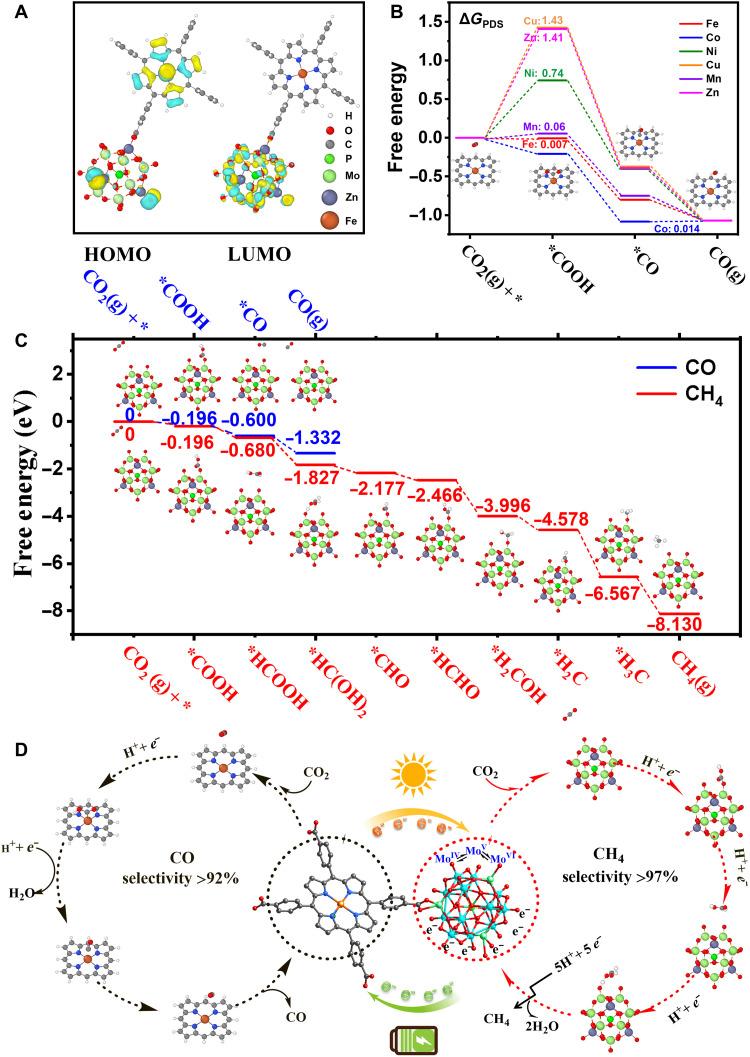
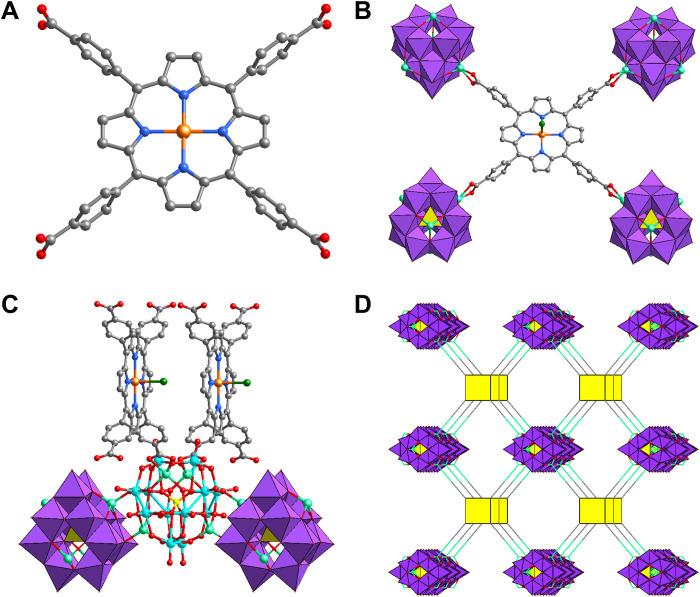
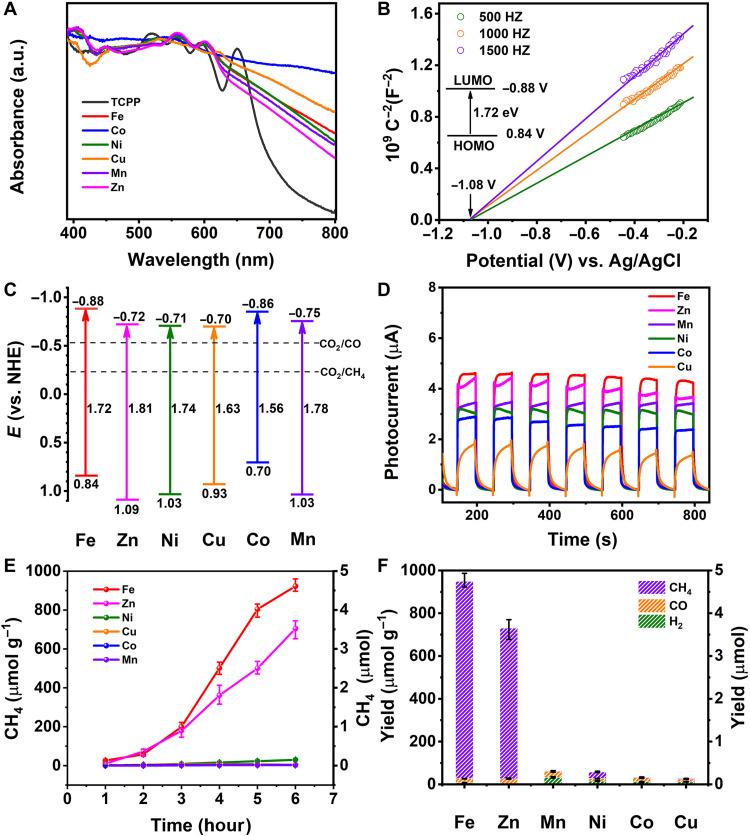
Photo- or electroreduction of carbon dioxide into highly valued products offers a promising strategy to achieve carbon neutrality. Here, a series of polyoxometalate-based metal-organic frameworks (M-POMOFs) were constructed by metalloporphyrins [tetrakis(4-carboxyphenyl)-porphyrin-M (M-TCPPs)] and reductive POM for photo- and electrocatalytic carbon dioxide reductions (PCR and ECR, respectively), and the mysteries between the roles of single metal site and cluster in catalysis were disclosed. Iron-POMOF exhibited an excellent selectivity (97.2%) with high methane production of 922 micromoles per gram in PCR, together with superior Faradaic efficiency for carbon dioxide to carbon monoxide (92.1%) in ECR. The underlying mechanisms were further clarified. Photogenerated electrons transferred from iron-TCPP to the POM cluster for methane generation under irradiation, while the abundant electrons flowed to the center of iron-TCPP for carbon monoxide formation under the applied electric field. The specific multielectron products generated on iron-POMOF through switching driving forces to control electron flow direction between single metal site and cluster catalysis.
将二氧化碳光或电还原为高附加值的产品为实现碳中和提供了一个很有前景的策略。在这里,一系列基于多金属氧酸盐的金属-有机骨架(M-POMOFs)是由金属卟啉[四(4-羧基苯基)-卟啉-M(M-TCPPs)]和还原性多酸构建而成,用于光催化和电催化二氧化碳还原(PCR 和 ECR),揭示了单个金属位点和簇在催化中作用的奥秘。铁-POMOF 在 PCR 中表现出优异的选择性(97.2%),甲烷生成量高达 922 微摩尔/克,同时在 ECR 中二氧化碳到一氧化碳的法拉第效率(FECO)也很高(92.1%)。进一步阐明了其潜在的机制。在光照下,光生电子从铁-TCPP 转移到 POM 簇以生成甲烷,而在施加电场下,大量电子流向铁-TCPP 的中心以生成一氧化碳。通过切换驱动力,在铁-POMOF 上生成特定的多电子产物,从而控制单金属位点和簇催化之间的电子流方向。


 Zotero 插件