
β-石竹烯通过调节细胞周期和细胞凋亡信号分子增强顺铂在肺癌细胞系中的抗肿瘤活性。
Beta-Caryophyllene Enhances the Anti-Tumor Activity of Cisplatin in Lung Cancer Cell Lines through Regulating Cell Cycle and Apoptosis Signaling Molecules.
机构信息
Biological Sciences Department, College of Science, King Faisal University, Al-Ahsa 31982, Saudi Arabia.
Laboratory of Molecular Physiology, Zoology Department, Faculty of Science, Assiut University, Assiut 71515, Egypt.
出版信息
Molecules. 2022 Nov 30;27(23):8354. doi: 10.3390/molecules27238354.
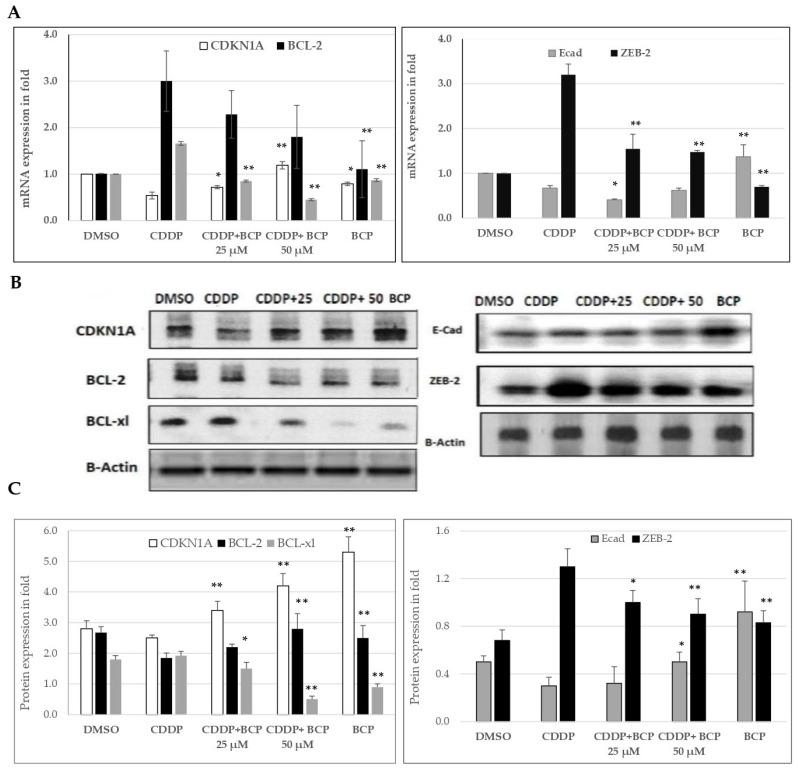
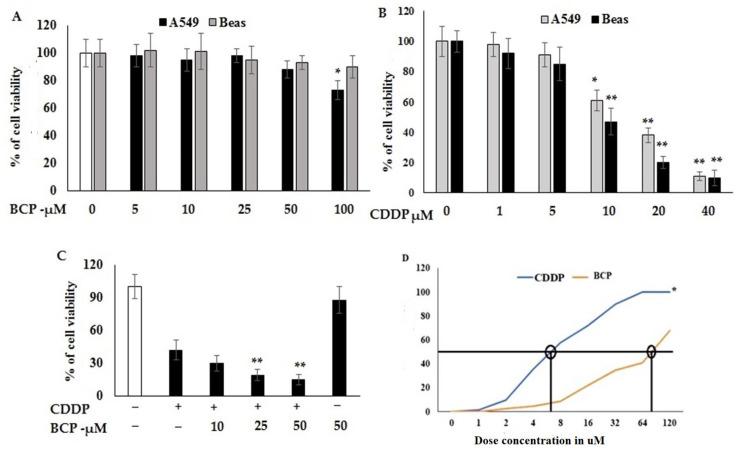
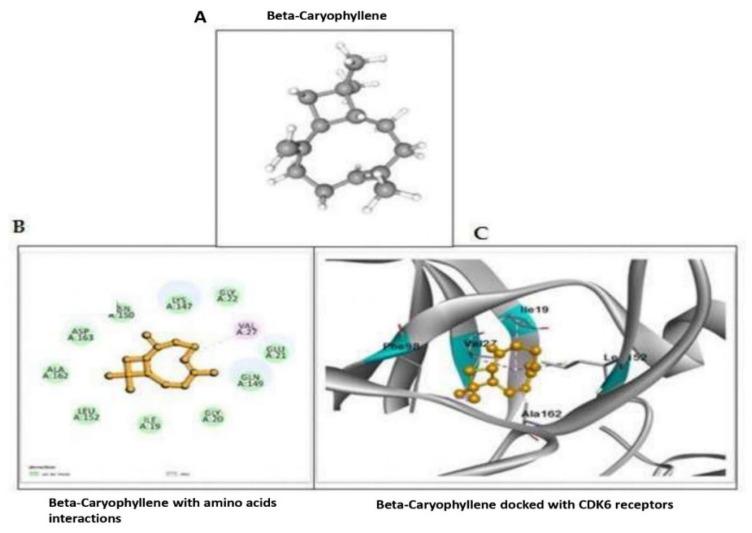
Beta-Caryophyllene (BCP), a natural bicyclic sesquiterpenes, is an abundant biomolecule in red pepper and other plants. Recently, it was reported to reduce the growth and the proliferation as well as enhance the apoptosis in numerous cancer cells, including colorectal, ovarian, bladder cancer and lung cancer. On the other hand, the combination therapy of cisplatin (CDDP) with other phytochemical compounds has synergistically enhanced the killing effect of CDDP on several types of cancer. In the current model, we have tested the role of BCP in enhancing the anti-tumor activity of CDDP on lung cancer cell lines. The results showed that BCP is not toxic at moderate doses and it can prevent lung cancer progression in doses above 75 µM. However, when being combined with CDDP, BCP improved the former chemotherapeutic function through regulating cell cycle, apoptosis and EMT signaling molecules. Gene and protein expression analysis showed that the combined treatment of CDDP and BCP significantly upregulated the level of the cyclin-dependent kinase inhibitor, CDKN1A, and the inhibitor of the apoptosis, BCL-xl2. In addition, the combination treatment reduced the protein level of the apoptosis regulator, BCL-2. Moreover, BCP appears to prohibit the EMT process that is associated with CDDP chemotherapy since the combination treatment induced a significant increase in the level of the epithelial cell marker E-cad that was reduced in CDDP-treated cells. In agreement with that, the combined treatment managed to modulate the effect of CDDP on the mesenchymal transcription factor ZEB-2. Additionally, molecular docking has been conducted to check the virtual interaction of BCP with these and other signaling molecules, but only cyclin-dependent kinase CDK6 was found to virtually bind with BCP, and at four sites with higher and stable biding energy (-7.8). Together, these data indicate that BCP enhances CDDP chemotherapeutic function through regulating the cell cycle, the apoptosis and EMT signaling molecules.
β-石竹烯(BCP)是一种天然的双环倍半萜烯,是红辣椒和其他植物中丰富的生物分子。最近,有报道称它可以减少包括结直肠癌、卵巢癌、膀胱癌和肺癌在内的许多癌细胞的生长和增殖,并促进其凋亡。另一方面,顺铂(CDDP)与其他植物化学化合物的联合治疗已协同增强了 CDDP 对几种类型癌症的杀伤作用。在当前的模型中,我们已经测试了 BCP 增强 CDDP 对肺癌细胞系的抗肿瘤活性的作用。结果表明,BCP 在中等剂量下没有毒性,在 75µM 以上的剂量下可以预防肺癌进展。然而,当与 CDDP 联合使用时,BCP 通过调节细胞周期、凋亡和 EMT 信号分子来改善前者的化疗功能。基因和蛋白质表达分析表明,CDDP 和 BCP 的联合治疗显著上调了细胞周期依赖性激酶抑制剂 CDKN1A 和凋亡抑制剂 BCL-xl2 的水平。此外,联合治疗降低了凋亡调节剂 BCL-2 的蛋白水平。此外,BCP 似乎阻止了 EMT 过程,因为联合治疗显著增加了上皮细胞标志物 E-cad 的水平,而 E-cad 在 CDDP 处理的细胞中降低。与此一致的是,联合治疗成功地调节了 CDDP 对间充质转录因子 ZEB-2 的作用。此外,还进行了分子对接以检查 BCP 与这些和其他信号分子的虚拟相互作用,但仅发现细胞周期依赖性激酶 CDK6 与 BCP 虚拟结合,并且在四个位点具有更高和稳定的结合能(-7.8)。总之,这些数据表明 BCP 通过调节细胞周期、凋亡和 EMT 信号分子增强了 CDDP 的化疗功能。
 Zotero 插件