
BL1是一种很有前景的益生菌,可预防喂食高脂饮食小鼠的肥胖并调节其肠道微生物群。
BL1, a promising probiotic, prevents obesity and modulates gut microbiota in mice fed a high-fat diet.
作者信息
Weng Guangying, Huang Jian, Ma Xianyong, Song Min, Yin Yulong, Deng Dun, Deng Jinping
机构信息
Guangdong Provincial Key Laboratory of Animal Nutrition Regulation, South China Agricultural University, Guangzhou, Guangdong, China.
State Key Laboratory of Livestock and Poultry Breeding, Key Laboratory of Animal Nutrition and Feed Science in South China, Ministry of Agriculture and Rural Affairs, Guangdong Provincial Key Laboratory of Animal Breeding and Nutrition, Institute of Animal Science, Guangdong Academy of Agricultural Sciences, Guangdong Engineering Technology Research Center of Animal Meat Quality and Safety Control and Evaluation, Guangzhou, China.
出版信息
Front Nutr. 2022 Nov 24;9:1050025. doi: 10.3389/fnut.2022.1050025. eCollection 2022.
SCOPE
Probiotics are a potential preventive strategy for obesity. However, with discrete efficacy and limited species of probiotics, there is a demand for novel strains with excellent anti-obesity properties. This study aimed to investigate the effects of Brevibacillus laterosporus BL1 on preventing obesity in high-fat diet (HFD)-fed mice.
METHODS AND RESULTS
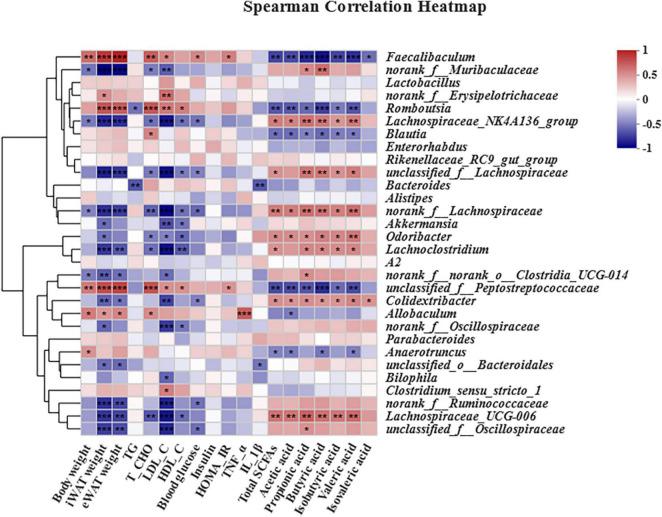
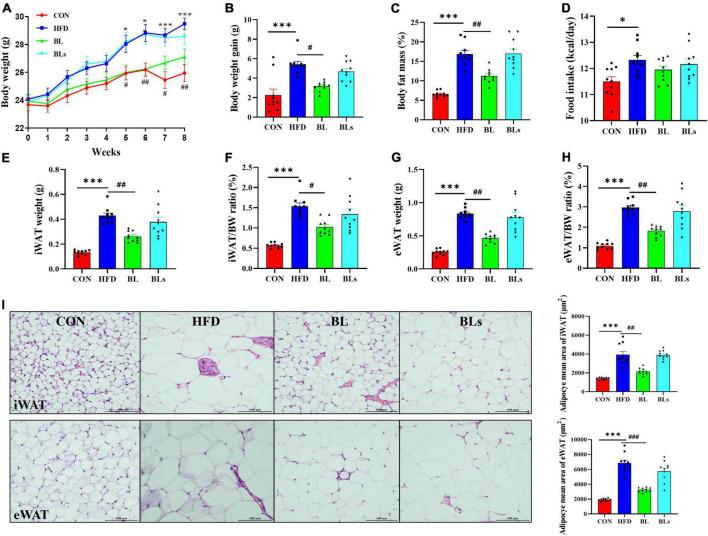
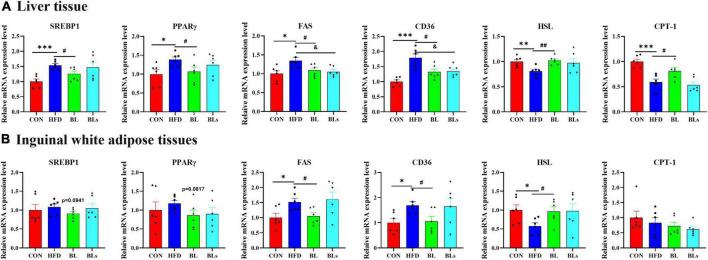
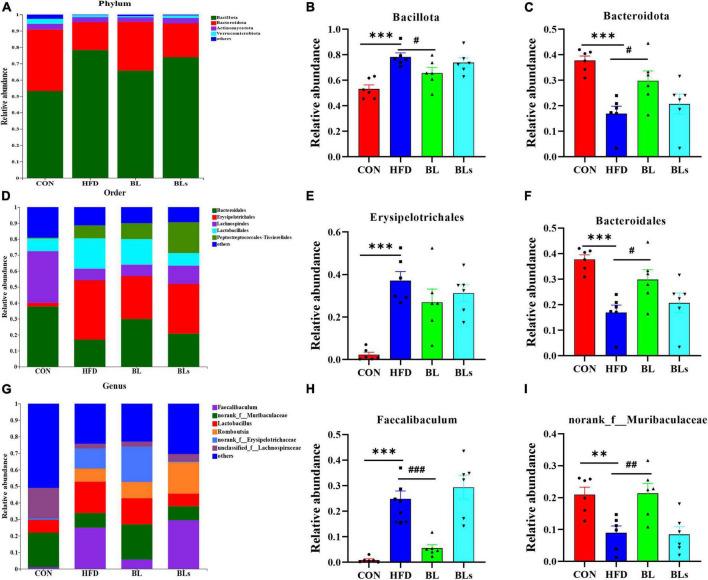
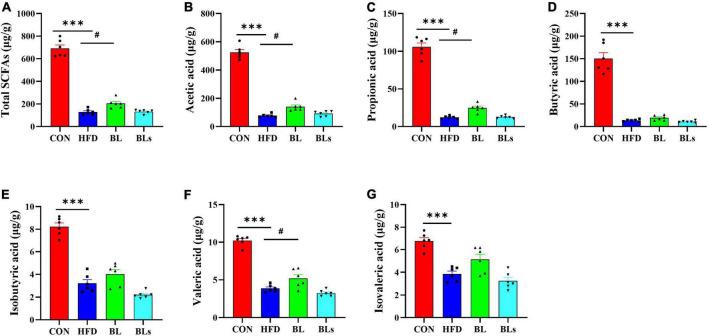
C57BL/6 male mice were randomly assigned to four groups ( = 10) and fed a control diet, HFD, HFD plus BL1, and HFD plus supernatant of BL1, respectively for 8 weeks. The results showed that prophylactic BL1 treatment reduced body weight gain by 41.26% in comparison to the HFD group, and this difference was accompanied by a reduction in body fat mass and the weight of inguinal white adipose tissues and epididymal white adipose tissue (-33.39%, -39.07%, and -43.75%, respectively). Moreover, the BL1-mediated improvements in lipid profile, insulin resistance, and chronic inflammation were associated with the regulation of gene expression related to lipid metabolism and enhancement of brown adipose tissue thermogenesis. Particularly, BL1 intervention significantly improved HFD-induced gut flora dysbiosis, as evidenced by a reverse in the relative abundance of Bacillota and Bacteroidota, as well as an increase in the relative abundance of bacteria that produce short-chain fatty acids (SCFAs), which in turn increased SCFAs levels.
CONCLUSION
Our findings found for the first time that BL1 may be a promising probiotic for prevention of obesity associated with the regulation of gut microbiota.
范围
益生菌是预防肥胖的一种潜在策略。然而,由于其功效不明确且益生菌种类有限,因此需要具有优异抗肥胖特性的新型菌株。本研究旨在探讨迟缓芽孢杆菌BL1对高脂饮食(HFD)喂养小鼠预防肥胖的作用。
方法与结果
将C57BL/6雄性小鼠随机分为四组(每组n = 10),分别给予对照饮食、高脂饮食、高脂饮食加BL1以及高脂饮食加BL1的上清液,持续喂养8周。结果表明,与高脂饮食组相比,预防性给予BL1可使体重增加降低41.26%,同时体脂量以及腹股沟白色脂肪组织和附睾白色脂肪组织的重量也有所减少(分别降低了-33.39%、-39.07%和-43.75%)。此外,BL1介导的脂质谱、胰岛素抵抗和慢性炎症的改善与脂质代谢相关基因表达的调节以及棕色脂肪组织产热的增强有关。特别是,BL1干预显著改善了高脂饮食诱导的肠道菌群失调,表现为芽孢杆菌门和拟杆菌门相对丰度的逆转,以及产生短链脂肪酸(SCFAs)的细菌相对丰度的增加,进而提高了SCFAs水平。
结论
我们的研究首次发现,BL1可能是一种有前景的益生菌,可通过调节肠道微生物群来预防肥胖。




 Zotero 插件