
失落之城之谜:化能自养原核生物驱动南海冷泉喷口已灭绝生态系统的碳、硫和氮循环。
Riddles of Lost City: Chemotrophic Prokaryotes Drives Carbon, Sulfur, and Nitrogen Cycling at an Extinct Cold Seep, South China Sea.
机构信息
Southern Marine Science and Engineering Guangdong Laboratory (Guangzhou), Guangzhou, Guangdong, People's Republic of China.
CAS Key Laboratory of Tropical Marine Bio-resources and Ecology, South China Sea Institute of Oceanology, Chinese Academy of Sciences, Guangzhou, Guangdong, People's Republic of China.
出版信息
Microbiol Spectr. 2023 Feb 14;11(1):e0333822. doi: 10.1128/spectrum.03338-22. Epub 2022 Dec 13.
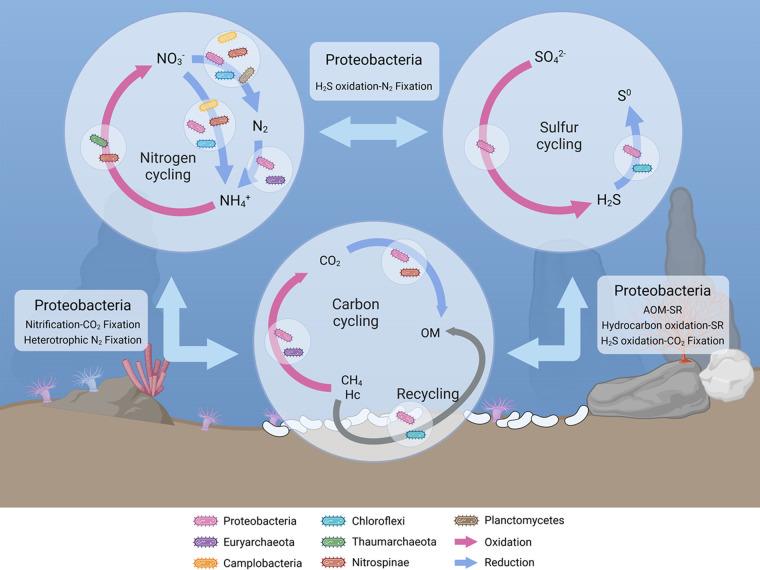
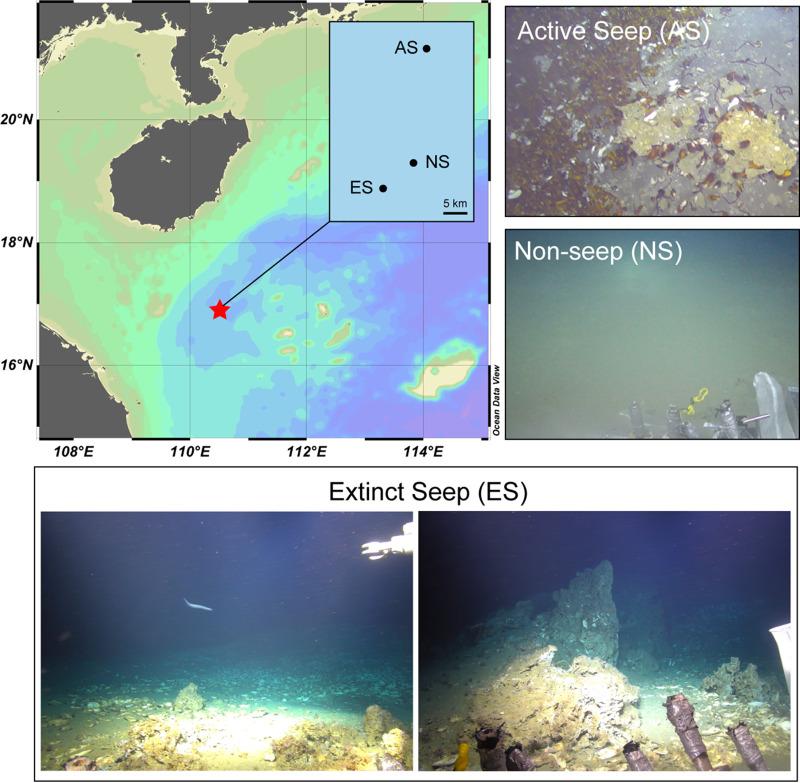
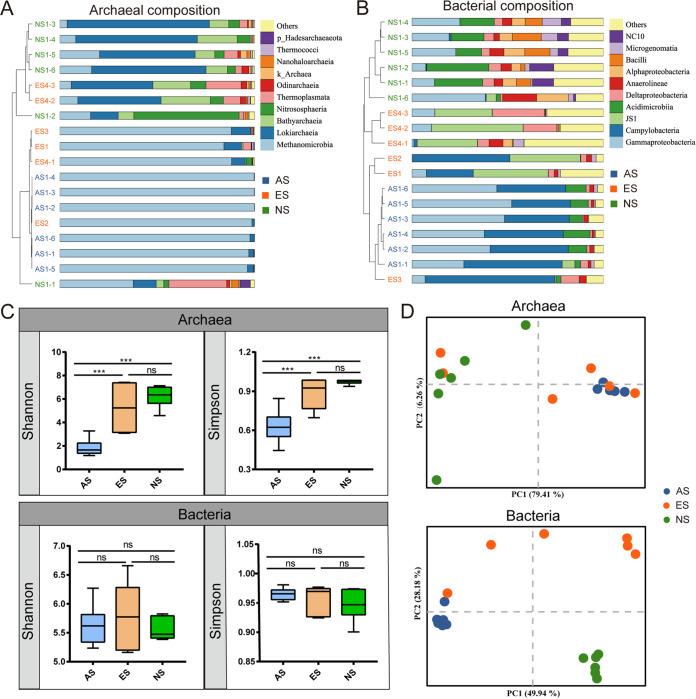
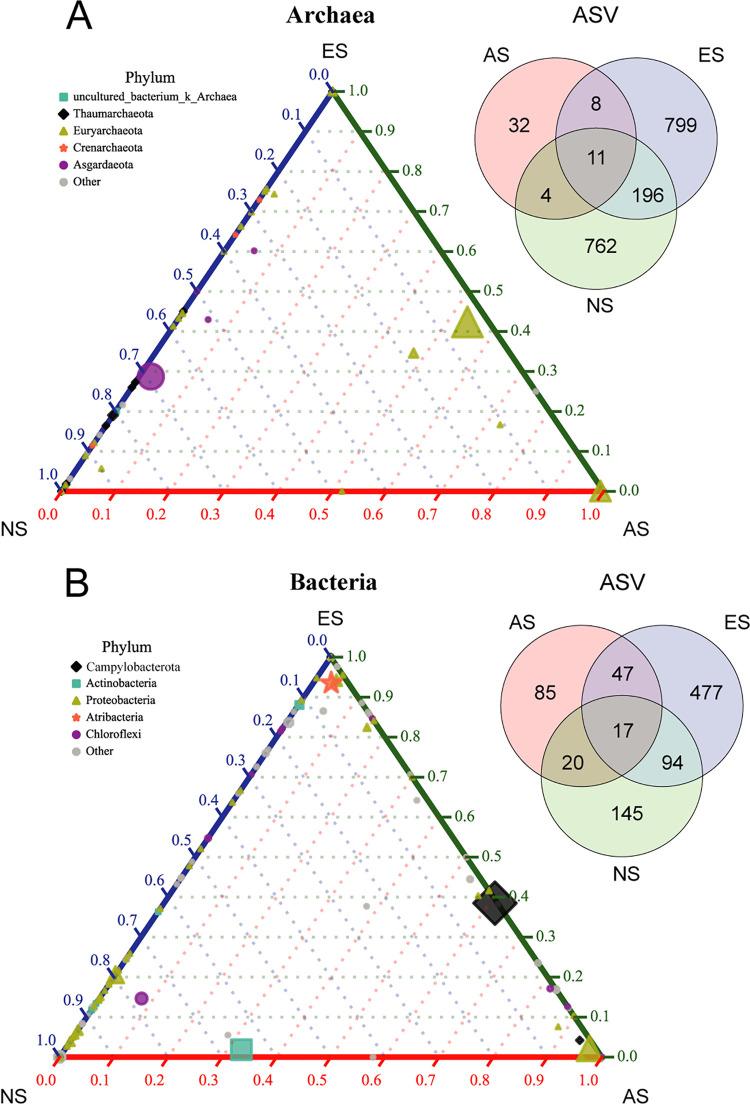
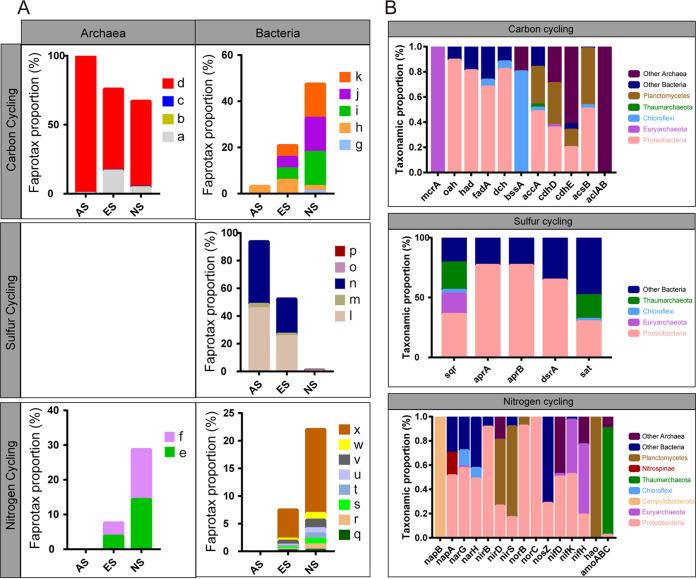
Deep-sea cold seeps are one of the most productive ecosystems that sustained by hydrocarbons carried by the fluid. Once the seep fluid ceases, the thriving autotrophic communities die out, terming as the extinct seep. But heterotrophic fauna can still survive even for thousands of years. The critical role of prokaryotes in active seeps are well defined, but their functions in extinct seeps are poorly understood to date. Here, we clarified the diversity, taxonomic specificity, interspecies correlation, and metabolic profiles of sediment prokaryotes at an extinct seep site of Haima cold seep, South China Sea. Alpha diversity of archaea significantly increased, while that of bacteria remained unchanged in extinct seep compared to active seep. However, archaea composition did not differ significantly at extinct seep from active or nonseep sites based on weighted-unifrac dissimilarity, while bacteria composition exhibited significant difference. Distribution of archaea and bacteria showed clear specificity to extinct seeps, indicating the unique life strategies here. Prokaryotes might live chemolithoautotrophically on cycling of inorganic carbon, sulfur, and nitrogen, or chemoorganotrophically on recycling of hydrocarbons. Notably, many of the extinct seep specific species and networked keystone lineages are classified as Proteobacteria. Regarding the functional diversity and metabolic flexibility of this clade, Proteobacteria is supposed to integrate the geochemical cycles and play a critical role in energy and resource supplement for microbiome in extinct seep. Collectively, our findings shed lights on the microbial ecology and functional diversity in extinct seeps, providing new understanding of biogeochemical cycling after fluid cessation. This research paper uncovered the potential mechanisms for microbiota mediated geochemical cycling in extinct cold seep, advancing our understanding in deep sea microbiology ecology.
深海冷泉是由流体携带的碳氢化合物支撑的最具生产力的生态系统之一。一旦冷泉流体停止,繁荣的自养生物群落就会死亡,称为灭绝冷泉。但异养动物群仍能存活数千年。原核生物在活跃冷泉中的关键作用已经得到很好的定义,但迄今为止,它们在灭绝冷泉中的功能仍知之甚少。在这里,我们阐明了南海海马冷泉灭绝冷泉点沉积物原核生物的多样性、分类特异性、种间相关性和代谢特征。与活跃冷泉相比,灭绝冷泉中古菌的α多样性显著增加,而细菌的α多样性则保持不变。然而,基于加权 UniFrac 不相似性,灭绝冷泉中的古菌组成与活跃冷泉或非冷泉点没有显著差异,而细菌组成则存在显著差异。古菌和细菌的分布显示出对灭绝冷泉的明显特异性,表明这里存在独特的生命策略。原核生物可能通过无机碳、硫和氮的循环,或通过碳氢化合物的再循环,以化能自养或化能异养的方式生活。值得注意的是,许多灭绝冷泉特有物种和网络关键谱系都被归为变形菌门。关于该分支的功能多样性和代谢灵活性,变形菌门被认为可以整合地球化学循环,并在灭绝冷泉中微生物组的能量和资源补充方面发挥关键作用。总的来说,我们的研究结果揭示了灭绝冷泉中的微生物生态学和功能多样性,为流体停止后生物地球化学循环提供了新的认识。这项研究揭示了微生物介导的灭绝冷泉地球化学循环的潜在机制,加深了我们对深海微生物生态学的理解。

 Zotero 插件