
T 细胞调节脑缺血时小胶质细胞的反应。
T cells modulate the microglial response to brain ischemia.
机构信息
Institute for Stroke and Dementia Research, University Hospital, LMU Munich, Munich, Germany.
Institute of Diabetes and Regeneration Research, Institute of Computational Biology, Helmholtz Zentrum München, Neuherberg, Germany.
出版信息
Elife. 2022 Dec 13;11:e82031. doi: 10.7554/eLife.82031.
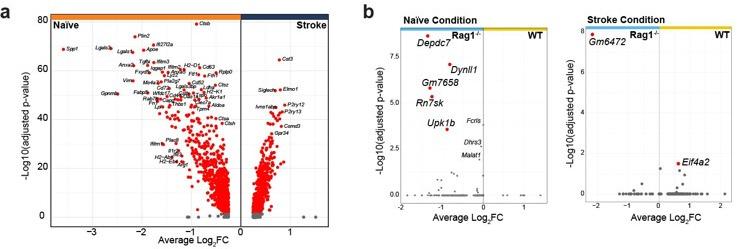
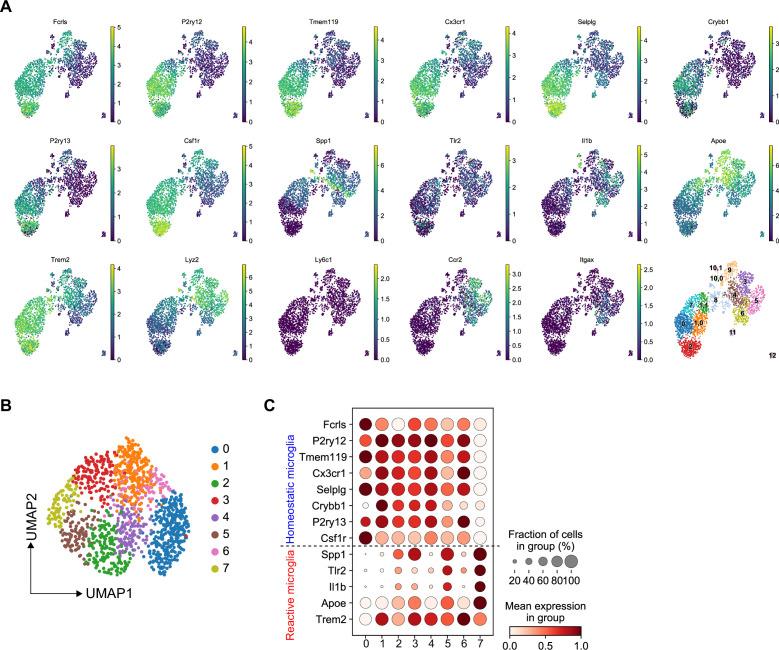
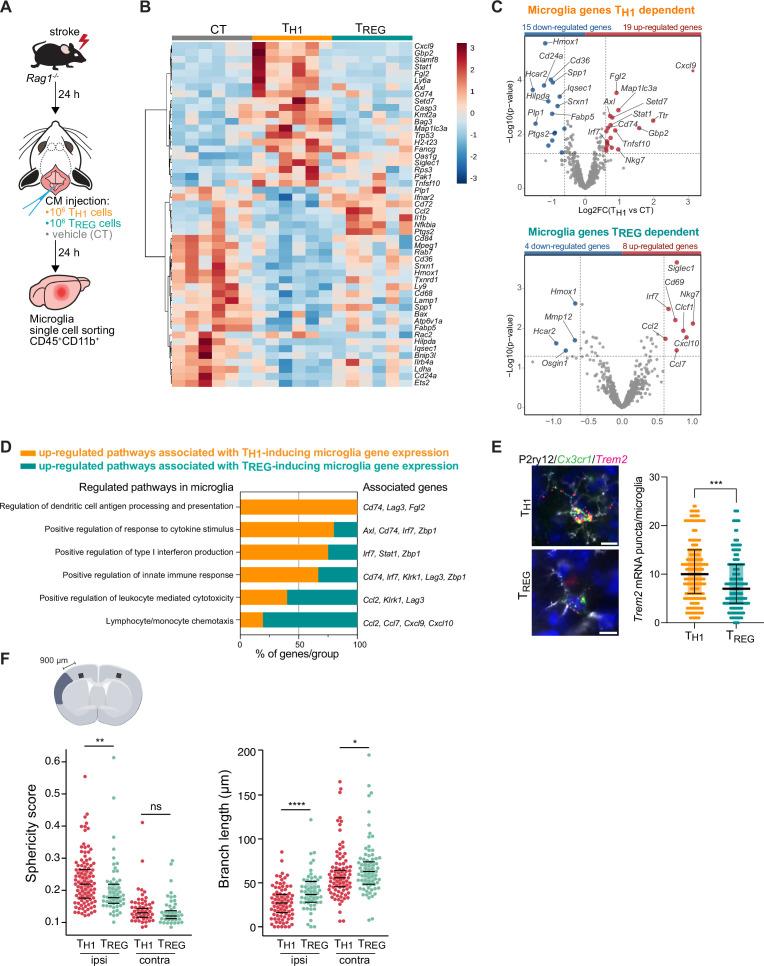
Neuroinflammation after stroke is characterized by the activation of resident microglia and the invasion of circulating leukocytes into the brain. Although lymphocytes infiltrate the brain in small number, they have been consistently demonstrated to be the most potent leukocyte subpopulation contributing to secondary inflammatory brain injury. However, the exact mechanism of how this minimal number of lymphocytes can profoundly affect stroke outcome is still largely elusive. Here, using a mouse model for ischemic stroke, we demonstrated that early activation of microglia in response to stroke is differentially regulated by distinct T cell subpopulations - with T cells inducing a type I INF signaling in microglia and regulatory T cells (T) cells promoting microglial genes associated with chemotaxis. Acute treatment with engineered T cells overexpressing IL-10 administered into the cisterna magna after stroke induces a switch of microglial gene expression to a profile associated with pro-regenerative functions. Whereas microglia polarization by T cell subsets did not affect the acute development of the infarct volume, these findings substantiate the role of T cells in stroke by polarizing the microglial phenotype. Targeting T cell-microglia interactions can have direct translational relevance for further development of immune-targeted therapies for stroke and other neuroinflammatory conditions.
中风后的神经炎症表现为驻留小胶质细胞的激活和循环白细胞浸润到大脑中。尽管淋巴细胞以少量浸润到大脑中,但它们一直被证明是导致继发性炎症性脑损伤的最有效白细胞亚群。然而,淋巴细胞数量如此之少如何能深刻影响中风的结果的具体机制仍很大程度上难以捉摸。在这里,我们使用缺血性中风的小鼠模型,证明了中风后小胶质细胞的早期激活是由不同的 T 细胞亚群差异调节的——T 细胞在小胶质细胞中诱导 I 型 IFN 信号,而调节性 T 细胞 (T) 细胞促进与趋化性相关的小胶质细胞基因。中风后脑脊液中急性给予过表达 IL-10 的工程 T 细胞的治疗会引起小胶质细胞基因表达向与促再生功能相关的表型的转变。尽管 T 细胞亚群对小胶质细胞的极化不会影响梗死体积的急性发展,但这些发现证实了 T 细胞在中风中的作用,即通过极化小胶质细胞表型。针对 T 细胞-小胶质细胞相互作用的靶向治疗可能对中风和其他神经炎症疾病的免疫靶向治疗的进一步发展具有直接的转化意义。






 Zotero 插件